Meet Our Graduates
Between 40 and 70 students major or minor in Art at Willamette, and many more take studio classes taught by Art department faculty in the general education curriculum or other departments like Film Studies & Arts, Technology & Multimedia. An example of the creative and enterprising spirit of Willamette Art majors and minors can be seen through the continuing pursuits of some current students and alumni.
Some of our successful graduated are highlighted below!
-
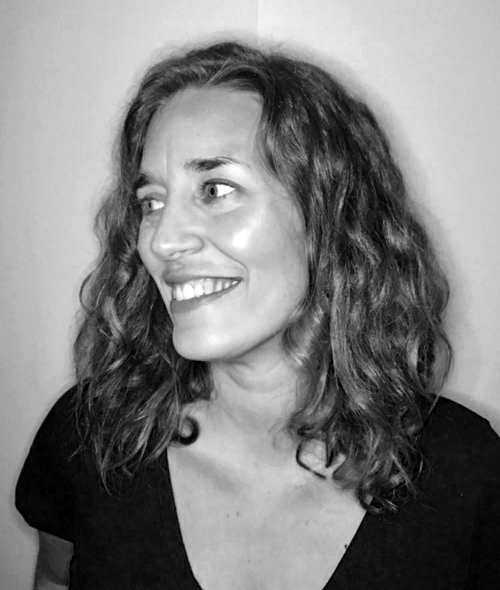
Kelda Martensen is a visual artist known for her work in printmaking, collage, book arts and murals. Her expansive and intimate gestures make adventurous use of space and explore the poetic nuance of longing. Her awards include the Bell Cramer Award in Printmaking and the Conceptual Visionary Award from Pratt Fine Art Center. Her teaching awards include the Dan Evans Innovation in Teaching Award, the John and Suanne Roueche Excellence Award, and Association of Women Faculty Graduate Award. Course work, grants, projects and residencies have taken her to Ireland, South Africa, Japan, France and Germany. She was an Artist-in-Residence at Cité Internationale des Arts in Paris, France in 2011 and at Pratt Fine Art Center in Seattle in 2016. Her prints and artist books are in private and public collections including the City of Tacoma, Google Corporate offices, Special Collections Library at Washington University in St. Louis, Southern Graphics Council International Archive, Bokartas Contemporary Art Center, Nancy Spirtas Kranzberg Studio for the Illustrated Book, University of Missouri and Willamette University.
Martensen is a tenured professor of art at North Seattle College where she teaches and serves as department chair of Visual Art. Martensen earned a BA with honors in Studio Art from Willamette University and an MFA with honors from the Sam Fox School of Design and Visual Arts at Washington University in St. Louis. She lives in Seattle, Washington.
-
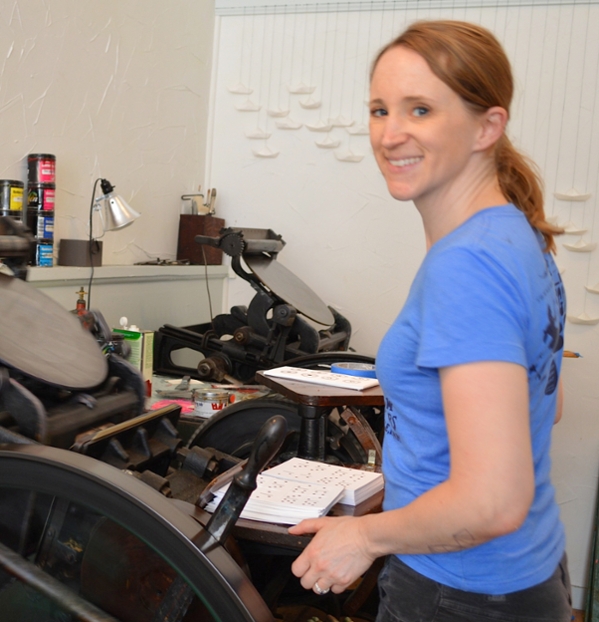
Amy Thompson is a printmaker and graphic designer living and working in Reno, Nevada. She graduated from Willamette University with a double major in Studio Art and Biology in 1999, and earned her MFA in Visual Art from Washington University in Saint Louis in 2007. Amy uses printmaking and letterpress printing, installation, and book arts to create work that dances between art and design, between two and three dimensions. Influenced by the exactitude and precision of mathematical and scientific systems, her work is experimental and playful as she investigates the interplay between the spontaneous and the deliberate. She is currently the Manager of the Black Rock Press at the University of Nevada, Reno where she teaches courses in book arts, letterpress printing, and graphic arts.
-
Willamette University at Zena provides a laboratory for all the liberal arts, as a class of art students recently learned.
When Willamette purchased land last year at Willamette at Zena to create a research station, the benefits for the university's hard science programs were immediately obvious - sustainable agriculture, forestry and ecology were among the programs clamoring to work amid the property's forests, prairies and wetlands.
But from the beginning, Willamette faculty and administrators envisioned Zena as a learning laboratory for all the academic disciplines.
As a group of art students recently discovered, the possibilities extend far beyond environmental studies.
Landscape as Inspiration
When art Associate Professor Heidi Preuss Grew first looked out at the rural landscape and a 1905 farmhouse on the property, she saw a site teeming with artistic inspiration.
So she centered an assignment for her "Writing for Artists" class on the forest, specifically in the farmhouse, which will eventually be used as a meeting space.
"The property lends itself to the creative process," she says. "I imagine in the future we could have service learning projects where we clear plant debris from the fields, and then draw the fields. In the long term, I hope to see the arts have a niche here."
Practical Lessons for Artists
Grew's class teaches students the practical analytical and writing skills they would need to succeed as a working artist - like knowing how to successfully compose a grant, a project proposal or an artist statement.
She asked her students to consider the farmhouse as an art exhibition space, then write proposals for projects they would like to install in the home.
The students, all senior studio art majors, were not required to create the works they proposed because the class focused more on the writing process. However, after students pitched their plans to the forest's managers, four took their projects to the next level and installed their work.
"Strong writing skills are so important for an artist," says Lacy Gillham '10, who transformed the vibrant blue walls of one bedroom into a mural loosely based on the designs found on Wedgewood plates.
"Even if you're not going to work in art, this class will help you. You're writing cover letters, learning to be precise and to-the-point, convincing someone to pick your proposal. It's really applicable to the job world."
Disciplines Converge at Zena
In another bedroom, Claire Lindsay-McGinn '10 painted ghost-like outlines of a dresser, bed, desk and mirror on the walls - items she imagined previous inhabitants might have used.
"A lot of my friends are environmental science majors, and it's nice to know that we're working in the same space at Zena," she says. "I like the interdisciplinary nature of this place."
"Our original vision in acquiring Zena was to provide an enhanced academic environment that incorporates all the liberal arts," says environmental science Professor Karen Arabas, one of the managers of the research station. "Professor Grew's successful class project is an example of our how faculty and students have embraced this core concept."
12-21-2009 -
Marie Watt ’90, one of the country’s foremost contemporary Native American artists, engages others in the creation of her work.
“Please touch it — this art is meant to be touched.”
It’s not a phrase you typically hear in a museum, but Marie Watt ’90 encourages the visitors to her exhibition at Willamette University’s Hallie Ford Museum of Art to do more than just look.
She wants them to feel the roughness of the wool in “Dwelling,” a stack of donated blankets that each tell a story about their former owners; and to relax on felted wool pedestals while listening to Native American storytellers inside “Engine,” a recreation of a cave complete with stalactites and stalagmites.
The idea of people interacting with her art applies to much more than the finished product. Watt believes art should be a social, participatory endeavor — which means her hands are not the only ones to shape her pieces.
“For some of my work, I’ve hosted sewing circles that were open to friends and the community,” she says. “When people’s hands and eyes were diverted as they sewed, there was no pressure to talk, but I found that they often would share stories with each other.
“Collaboration has always been part of my artistic process, whether it’s through gathering stories to incorporate into my work or listening to people share their stories in the sewing circles.”
In this respect, Watt reflects her alma mater’s motto: “Not unto ourselves alone are we born.”
Finding Art at Willamette
Watt is one of the country’s foremost contemporary Native American artists — her mother is Seneca, one of the six tribes of the Iroquois nation, and her father is Scottish and German. Watt’s work has been featured in countless solo and group exhibitions nationwide, including one at the Smithsonian’s National Museum of the American Indian.
But until she came to Willamette in the late 1980s, art wasn’t even on her radar as a potential career. She first chose a major in speech communication (today’s rhetoric and media studies major), but discovered a second passion when she took an art class from Professor James Thompson.
“Liberal arts colleges allow you to select courses from many different disciplines,” she says. “I finally got to take an art class, and it opened up something inside of me that I’m continuing to explore today.”
Watt went on to earn an associate of fine arts degree in museum studies from the Institute of American Indian Arts and a master of fine arts degree in painting and printmaking from Yale. Talking with other students at Yale made her realize the value of attending Willamette rather than a technical art school.
“Artists must learn practical skills, but you also need ideas that compel you — the things you can make art about. The liberal arts education I got at Willamette gave me other experiences that I draw from today as an artist.”
Watt primarily creates sculptures, prints and mixed media installations. Blankets, like those in “Dwelling,” frequently show up in her pieces. She sees blankets as heirloom objects that can act as conduits for storytelling — as well as a reflection of her Native heritage, where blankets are given to honor significant moments in life.
Giving Back
Willamette has changed a great deal since Watt attended several decades ago. She appreciates new programs that have developed, including the Hallie Ford Museum and the Native American Advisory Council — which forges relationships with local Native communities while also providing support for Native students on campus.
These additions made her even more excited about collaborating when she visited recently to celebrate the opening of her exhibition at the museum.
She hosted several sewing circles to help her create a new tapestry piece, including one for undergraduate art and theatre students who also got to hear firsthand how Watt built a career as an artist.
“Marie knows how to help barriers fall so others can connect and interact,” says Heidi Preuss Grew, associate professor of art. “While working with our students of all disciplines, she deftly illuminated the many ways a life can inform art, using traditional means like printmaking and bronze casting to innovative integration of unassuming materials such as blankets and corn husks.”
In her own way, Watt helped write new stories for the next generation of artists — much the same way Willamette did for her.
“Marie Watt: Lodge,” a mid-career retrospective of Watt’s work, is on display through April 1 at Willamette’s Hallie Ford Museum of Art.
03-19-2012- Willamette’s Art Department
- Hallie Ford Museum of Art
- Marie Watt’s website
- College of Arts & Sciences Admission
-
What can you do with an art degree? Jason Kenitzer ’00 translated his Willamette education into a job creating graphics for Oakley.
What can you do with an art degree? Jason Kenitzer ’00 pondered this question at Willamette, and after he graduated, he discovered a perfect career that combined his artistic talents with his interest in surfing and snowboarding: graphic design for sports companies.
Today Kenitzer is a senior graphic designer for Oakley, creating artwork and graphics for the company’s apparel and eyewear lines. He also works with the CEO and creative director to produce “stories” that guide the design theme of each season’s athletic apparel.
“Some of our stories have looked at pivotal art movements, some have focused on important military history and one story focused on the idea behind revolution,” he says. “The amount of research that goes into creating and developing new stories is extensive. The research I did for my classes at Willamette helped me to understand the discipline it takes to dig into an idea.”
Kenitzer is more comfortable in jeans than a suit and tie, so he feels lucky to have found a career at a company where he can use his creativity in a casual environment. He wakes up at 5 a.m. at his home in southern California to go surfing or work on his paintings before heading into the office, a “design bunker” that includes a professional motocross track and a mountain bike pump track. Sometimes he travels to Oakley stores as far away as New York to paint his graphics directly onto the walls of retail spaces.
Kenitzer has been an artist, surfer and snowboarder since he was young, and a job during his senior year at Willamette started him on his current path. He was hired as a salesperson at Exit Real World, a skateboarding and snowboarding equipment store in Salem, and then worked his way up into marketing and graphic design. After graduation, he did freelance work for several snowboard companies until a friend at Oakley helped him get his foot in the door at that company.
Painting, Kenitzer’s first artistic passion, remains an important part of his life. He currently is working on pieces for two exhibitions that will open next year, one in Portland and one in Honolulu. The diversity of classes he took at Willamette are also helping as he plans his shows.
“The one in Hawaii is based on the science of surf, whether it’s the hydrodynamics of surfboards, the physics of waves or the impact we’re having on the oceans. My Portland show is more of a social commentary on the state of the world as a network where everything is interconnected. One of the really cool things about Willamette was that I took classes in so many disciplines outside of my major. The classes made me well-balanced, and I continue to draw on those experiences today.
“In my job at Oakley, I use the skills I gained at Willamette to design and create art at a completely different level while thinking critically about the stories our team develops, how they apply to modern times and how they apply to apparel. My liberal arts education has really benefited me on my career path.”
10-12-2009