Events & Streaming
In partnership with Willamette University, the Salem Society of the Archaeological Institute of America (chartered on December 29, 1995) hosts six to eight annual guest lectures by archaeologists and specialists from around the world on the Willamette campus. Some lectures present completed work, some ongoing projects, and others offer new perspectives on previously excavated material.
The talks provide a forum for faculty, students, staff, and members of the wider Salem community interested in archaeology to learn of cutting-edge research and engage with scholars and each other. Our lectures are usually attended by 70-80 people from all walks of life.
Streaming events will be posted soon. Please check back.
Events Archive
-
Events
Fall 2022 – Spring 2023
Streaming
Fall 2022
In the Shadows of Volcanoes, CASA/AIA fall lecture series with Nicolas A. Famoso
Presentation on October 20, 2022, by Nicholas A. Famoso, PhD, Paleontology Program Manager and Museum Curator, National Park Service, John Day Fossil Beds National Monument. “In the Shadow of Volcanoes,” a presentation on volcano ecology of groups of mammals around both modern and fossil volcanic events.
Spring 2023
In the Buff: Nude Female Figurines in Iron Age Greece
4th Annual E. John and Cleo A. Rumpakis Lecture on Thursday, March 2, 2023 by Megan Daniels
Assistant Professor of Ancient Greek Material Culture in the Department of Classical, Near Eastern, and Religious Studies at the University of British Columbia in Vancouver, BC, Canada. -
Fall 2021 – Spring 2022
Streaming
Spring 2022
Thursday, April 21, 2022
The Center for Ancient Studies and Archaeology and the Archaeological Institute of Archaeology
presented the Annual Rumpakis Lecture “IceAge Seafarers? Geoarchaeology and the Search for the Aegean Palaeolithic” with Justin A. Holcomb, PhD, Postdoctoral at the Kansas Geological Survey at the University of Kansas.Fall 2021
Thursday, November 11, 2021
The Center for Ancient Studies and Archaeology and the Archaeological Institute of America lecture “From the Mound to the Mantelpiece: Movement of Early Bronze Age Pots from The Dead Sea Plain, Jordan” with Associate Professor Morag Kersel, Department of Anthropology, DePaul University.
Thursday, October 21, 2021
The Center for Ancient Studies and Archaeology and the Archaeological Institute of America lecture with Professor Marcus Milwright, Department of Art History and Visual Studies, University of Victoria. "The Shock of the New? Writing and the Propagation of Religious Ideology in early Islam”
Thursday, October 7, 2021
The Classical Association of the Pacific Northwest and the Center for Ancient Studies and Archaeology co-sponsored “Women, Weapons, and Warfare. Weapons and Burial Goods from Old Kingdom Egypt to Early Bronze Age Anatolia” presented by Dr. Stephanie Selover, Assistant Professor, University of Washington.
-
Fall 2020 – Spring 2021
Streaming
2020-2021
Fall 2020: Salem’s Jason Lee Mission House Site Archaeology Project with Kimberli Fitzgerald, Historic Preservation Program Manager/City Archaeologist and Kirsten Straus, Planner 1
Thursday, November 12, 2020Spring 2021:
Thursday, February 4, 2021
The King Site in Western Nebraska and Maize Horticulture Beyond the 100th Meridian with Professor Douglas Bamforth, University of Colorado BoulderTuesday, April 6, 2021
Finding the Gardens of the Roman Empire with Professor Kathyrn L. Gleason, Cornell UniversityIf you would like to be added to our AIASalemNews email list to receive invitations to upcoming lectures, please contact Reyna Meyers.
-
Fall 2019 – Spring 2020
-
Fall 2018 - Spring 2019
-
Fall 2017 - Spring 2018
-
Fall 2016 - Spring 2017
-
Fall 2015 – Spring 2016
September 3, 2015
7:30 PM The Present Acropolis: Classical Antiquity in Modern-Day Athens, Paulus Lecture Hall, Willamette University College of LawEleana Yalouri, Department of Social Anthropology, Panteion University, Athens
September 17, 2015
7:30 PM The Monumental Contexts of the Periclean Acropolis, Willamette College of Law, Paulus Lecture Hall, Room 201Dr. Robin Rhodes, Department of Art, Art History, and Design, University of Notre Dame
September 29, 2015
7:00 PM Film Screening: The Rape of Europa, Hallie Ford Museum of Art, Roger Hull Lecture HallColor, 117 minutes
As a prelude to Robert Edsel’s lecture on Oct. 15, the Emmy award winning PBS documentary, The Rape of Europa, will be shown on Tuesday, Sept. 29 and Tuesday, Oct.13 at 7:00 p.m. in the Roger Hull Lecture Hall at the Hallie Ford Museum of Art. The film tells the epic story of the theft, destruction and survival of Europe’s art treasures during the Third Reich and World War II. Actress Joan Allen narrates this breathtaking chronicle about the battle over the very survival of Western civilization.
October 1, 2015
7:30 p.m. A History of the Parthenon Marbles: An Earth Science Perspective, Willamette College of Law, Paulus Lecture Hall, Room 201Dr. Scott Pike, Associate Professor of Environmental Science, Geology, and Archaeology, Environmental and Earth Sciences Department, Willamette University
October 13, 2015
7:00 p.m. Film Screening: The Rape of Europa, Hallie Ford Museum of Art, Roger Hull Lecture HallColor, 117 minutes
As a prelude to Robert Edsel’s lecture on Oct. 15, the Emmy award winning PBS documentary, The Rape of Europa, will be shown on Tuesday, Sept. 29 and Tuesday, Oct.13 at 7:00 p.m. in the Roger Hull Lecture Hall at the Hallie Ford Museum of Art. The film tells the epic story of the theft, destruction and survival of Europe’s art treasures during the Third Reich and World War II. Actress Joan Allen narrates this breathtaking chronicle about the battle over the very survival of Western civilization.October 15, 2015
7:30 p.m. Saving Italy: The Race to Rescue a Nations's Treasures from the Nazis, The Historic Elsinore Theatre, 170 High Street SE, Salem, ORMr. Robert Edsel, director of the Monuments Men Foundation for the Preservation of Art in Dallas, Texas, and a New York Times bestselling author and producer
October 22, 2015
7:30 p.m. Marbles and Monuments in an Age of Terrorism, Paulus Lecture Hall, Willamette University College of LawProf. James A.R. Nafziger, College of Law, Willamette University
Prof. Robert K. Paterson, Peter A. Allard School of Law, University of British ColumbiaNovember 5, 2015
7:30 p.m. ISIS and the Threat to Our Cultural Heritage: What Can the World Do?, Hudson Concert Hall, Mary Stuart Rogers Music Center, Willamette UniversityDr. James Cuno '73, President and CEO of the J. Paul Getty Trust
November 12, 2015
7:30 p.m. Drawing the Parthenon Sculpture, Roger Hull Lecture Hall, Hallie Ford Museum of Art, Willamette UniversityDr. Katherine A. Schwab, Fairfield University
January 28, 2016
7:30 p.m. Jomon Food Diversity, Climate Change and Long-Term Sustainability: Lessons from Prehistoric Japan (Henry Luce Foundation Lecture), Paulus Lecture Hall, Willamette University College of LawDr. Junko Habu, UC Berkeley
Archaeologists have long been interested in the study of the mechanisms of long-term social change. Factors that involve specialization and centralization, such as domestication of plants, technological developments and social competitions, have been proposed as prime movers for the “development” of human societies. Contrary to these interpretations, this presentation proposes a hypothesis that diversity and decentralization may be critical for maintaining long-term sustainability of human societies in the order of hundreds to tens of thousands of years. Using a case study from the Early and Middle Jomon periods (ca. 6000-4400 cal. BP) of prehistoric Japan, this presentation emphasizes the importance of framing recent and current global environmental problems in the context of the greater human experiences.
This event is sponsored by the Center for Ancient Studies and Archaeology (CASA), the Center for Asian Studies (CAS), and the Henry Luce Foundation (Sustainability and the Pacific Rim Grant)February 4, 2016
7:30 p.m. To Be Diné in the American West: The Archaeology of Nineteenth Century Navajo Cultural Persistence, Paulus Lecture Hall, Willamette University College of LawDr. Kerry F. Thompson, Department of Anthropology, Northern Arizona University
As a symbolic representation of the Diné universe, the hogan represents a life lived in pursuit of beauty and balance and is a material representation of Diné philosophy and worldview. Using Diné philosophy as an interpretive tool, this project investigates the archaeological evidence for cultural persistence among late-nineteenth and early-twentieth century Diné hogan households. Analysis of a sample of hogan sites recorded as evidence for the Navajo Land Claim case indicate that hogan architecture persisted in form and function in the face of intensive American contact, intrusive colonial policies, and profound changes in other areas of Diné social and cultural life. The dialectic between colonial policy and traditional Dine culture did not alter the core of Diné identity as it is represented in Diné architecture, persistent settlement patterns, and decision making about movement on the landscape.
Co-sponsored by Native American Programs at Willamette University.February 18, 2016
7:30 p.m. Adventure and Discovery aboard a Pre-Columbian Balsa Raft (AIA Stone Lecture), Paulus Lecture Hall, Willamette University College of LawJohn Haslett, Author & Explorer
In September 1526, off the coast of what is now modern-day Ecuador, two vessels met on the Pacific Ocean. One was Spanish and most likely a caravel. The other was a balsa raft, carrying “sails and rope as fine as anything in Castile.” The mariners aboard this unusual vessel are today classified as the Manteño-Huancavilca. At their height they numbered roughly sixty thousand, had at least five major chiefdoms on the coast, and had an economy based on sea transportation. In the time before the Spaniards, Manteño balsa rafts carried Inka dignitaries and regular freight alike.
The vessel the Spanish caravel encountered in 1526 was a balsa raft that came from the chiefdom of Salango, and in 1995, the author and his colleagues went to this tiny fishing village, which still has a thriving maritime culture, to begin building their first balsa raft.
Over the next five years, the author and his team sailed balsa rafts for 125 days and lived aboard those vessels for an additional 90 days in various ports and anchorages. Their voyages were punctuated by “madness, mutiny, mud, terror, desperation, failure, disease, death, the surreal, and the sublime.” In that time, and in the years afterward, they have emerged with a unique view of the Manteño raft, its abilities, its limitations, and its impact on pre-Columbian trade in northwestern South America.
Join writer John Haslett for a fascinating look at life aboard a raft at sea. The author will share stories, video, and still images from his voyages, and then summarize the sightings of sailing rafts throughout history, the important features of each of those vessels, and the questions that still remain concerning construction and navigation of pre-Columbian watercraft.March 10, 2016
7:30 p.m. Timely Remedies: The Ancient Medicine of Ötzi the Iceman, Paulus Lecture Hall, Willamette University College of LawDr. Patrick Hunt, Stanford University
The almost perfectly preserved remains of “Ötzi the Iceman”, a 5,300-year-old Copper Age / Neolithic man whose body was discovered in 1991 in the Ötztal Alps at 10,500 ft. between Italy and Austria, may give us a glimpse into medicine practiced by prehistoric peoples. We know that “Ötzi” carried a medical kit with him – his own portable pharmacy with over ten different plant products that could heal and cure. Discoveries about ancient medical techniques may be possible studying Ötzi’s singular case.
Amazing forensic science has recovered much detail about Ötzi’s life. This lecture explores the medical evidence, including material technology he carried, with vital medical and bioarchaeological data. This is research conducted under the auspices of National Geographic and the Institute for EthnoMedicine where Hunt is also a Research Associate in Archeoethnobotany. Hunt has filmed several documentaries (2008, 2010) for National Geographic on Ötzi and is currently involved in a third production (2015).
Short bibliography and/or website on lecture topic:
“PBS NOVA Iceman Murder Mystery”
March 18-19, 2016
2:30–3:30 p.m. Classical Association of the Pacific Northwest (CAPN) , Evergreen State College (March 21-25 Spring Break)April 5, 2016
7:30 p.m. War, Love, and Victory: From Ishtar to Aphrodite to Venus, Paulus Lecture Hall, Willamette University College of LawStephanie Budin (University of Oregon)
Co-sponsored by the Hallie Ford Museum of Art and the Department of Art History at Willamette University.April 23, 2016
2:30–3:30 p.m. The 11th Annual Northwest Undergraduate Conference on the Ancient World, Willamette University, Ford Hall*Watch the Willamette University Classics Department website for additional details
-
FALL 2014 – SPRING 2015
October 9, 2014
7:30 P.M. Fur-Lined Fantasies: Amazon and Herakles Costumes in Greek Vase Painting, Willamette University, College of Law, Paulus Lecture Hall (Room 201)Dr. Daniella Widdows
Director of Global Education and Study Abroad
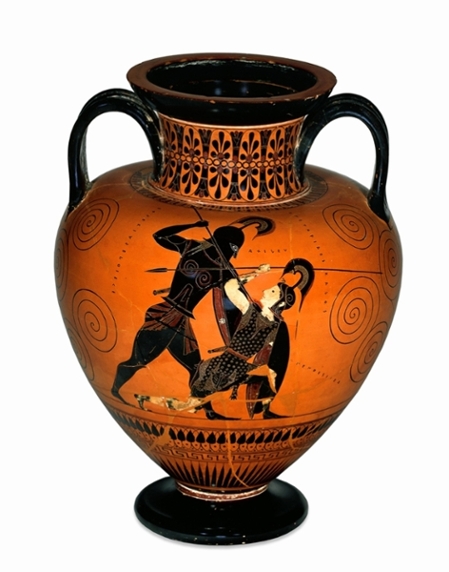
Hampden-Sydney College, VirginiaMany figures on ancient Greek vases are depicted wearing the skins of animals. For the most part, these wearers come from the mythological realm and include satyrs, maenads, and the hero Herakles. It is very unusual for these skins to retain the head of the animal, and the appearance of the skin head, in addition to providing compositional diversity and extra detail, helps to signify the status of the wearer, frequently in terms of gender and relative power. Indeed the particular placement of the skin head highlights the interplay of power and gender within the scene. One particular placement of a skin's head (over the wearer's groin), is more marked than the other two positions in which skin heads appear (over the wearer's own head, or draped over the wearer's arm or back). After outlining the norms of skin head placement and meaning, Dr. Widdows will focus upon the groin placement, suggesting that its rarity and marked nature is due to the animal heads' resemblance to masks, gorgoneions, or frontally-faced figures.
October 23, 2014
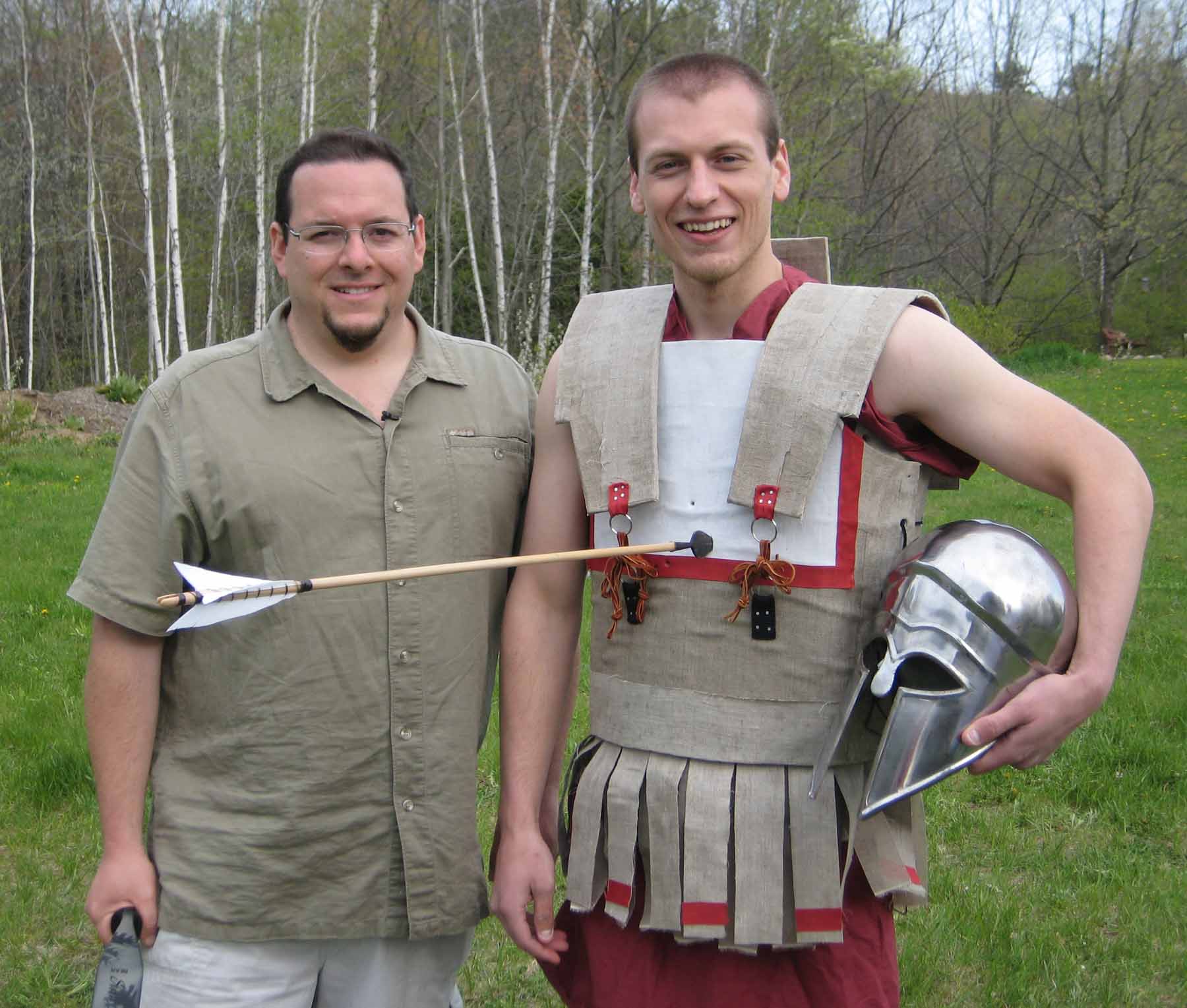
7:30 P.M. Reconstructing and Testing Ancient Linen Body Armor: The Linothorax Project (AIA Joukowsky Lecture), College of Law, Paulus Lecture Hall, Room 201Dr. Gregory S. Aldrete
Frankenthal Professor of History & Humanistic Studies
University of Wisconsin - Green BayFor nearly 1000 years, one of the common forms of protection used by ancient Mediterranean warriors, including the armies of the Greeks and Alexander the Great, was the linothorax, a type of body armor apparently made out of linen. Due to the perishable nature of its components, however, no examples have survived. Today it is poorly understood and is known only through fragmentary descriptions in literature and images on pottery and in sculpture. Employing materials and techniques that would have been available to the ancient Greeks, the members of the UWGB Linothorax Project have investigated this mysterious armor by reconstructing and wearing full-scale examples, as well as subjecting test samples to attack with ancient weapons, in order to determine their characteristics and protective qualities. This presentation will not only describe the project's findings, but will also display a reconstructed linothorax and test samples for the audience's examination.
Project website on lecture topic (for the lay reader).
November 13, 2014
7:30 P.M. The Role of Inter-regional Trade in the Uruk Expansion: Putting the Pieces Together, College of Law, Paulus Lecture Hall, Room 201Dr. Leah Minc
Associate Professor of Anthropology
Oregon State UniversityDuring the mid-4th millennium BCE, the material culture of Mesopotamia spread rapidly from the southern heartland into the surrounding uplands. Distinctive ceramic vessel forms (droop spouts, nose lug jars, and jars with incised cross-hatch bands), as will as administrative technology (seals, tokens, numerical tablets), and architectural patterns began to appear in settlements throughout SW Iran, NE Syria, and southern Turkey, suggesting a major and sustained presence of people from S. Mesopotamia. Since the path-breaking work of Guillermo Algaze, this "Uruk Expansion" has been largely understood as an attempt by cities of the alluvial plain to gain control of upland raw materials and resources, first, by the colonization of the near-by Susiana Plain of Iran, and secondly, by the establishment of trading enclaves along key river valleys leading to the interior. Yet little is securely known of the types of goods traded, nor of the specific routes of communication throughout the Uruk world. This lecture presents the results of chemical analyses of ceramic pastes using Instrumental Neutron Activation Analysis (INAA) with the goal of monitoring potential ceramic trade between the Mesopotamian heartland and outlying Uruk settlements. In a major international, collaborative research effort, we have now completed trace-element analyses of nearly 1900 Uruk-era vessels from key sites stretching across Mesopotamia, N. Iraq, Syria, and Iran. These analyzes provide physical evidence allowing researchers to monitor whether ceramic vessels and containers were moving between the lowlands of Mesopotamia and the surrounding highlands, and to reexamine the significance of the shared ceramic styles marking the "Uruk Expansion".
February 19, 2015
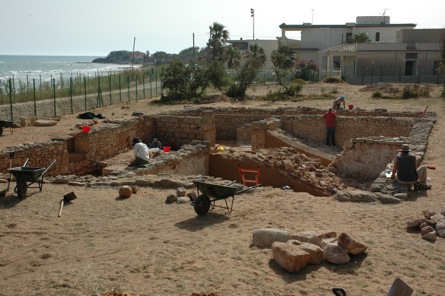
7:30 P.M. Dining with the Dead: New Discoveries in early Byzantine Sicily, Mark O. Hatfield Library, Hatfield RoomDr. R. J. A. Wilson
Director, Centre for the Study of Ancient Sicily
Professor Emeritus of the Archaeology of the Roman Empire
The University of British Columbia (Canada)This talk will describe the results of the University of British Columbia's archaeological excavations in Sicily between 2008 and 2010. The site was at Punta Secca (RG), known to millions of Italians as the home of TV cop, Salvo Montalbano; it lies right on the south coast of Sicily, is a late Roman and Early Byzantine village. It was partly excavated in the 1960s and 1970s by Paola Pelagatti, Honorary Fellow of the BSR, and identified by her as the Kaukana of the ancient sources, where Belisarius set sail for the conquest of Africa in 533 AD. The aim of the new excavation was to focus on one building, a house, and examine in detail its building phases, its function, and the commercial contacts that its inhabitants enjoyed with other parts of Sicily - and indeed the wider Mediterranean world. While substantial progress was made on all these questions, the biggest surprise was the discovery of a tomb placed in what was probably the yard of the house in the second quarter of the seventh century AD, and of evidence for associated feasting in honor of the deceased. Who was inside the tomb, and why did that person deserve this level of respect? What evidence was there for feasts, and what did they eat? Was it pagan or a Christian burial? And what was the tomb doing here, in a domestic setting, rather than in the village cemetery, or indeed, if the deceased was Christian, in or near the settlement's church? These and other intriguing questions will be addressed in the lecture, and the discovery set in the context of what else is known about such practices in late Roman and early Byzantine funerary culture.
March 5, 2015
10:30 a.m. Ancient Greek Gynecology for Beginners: Wine, Women, and Wandering Wombs (8th Annual Lane C. McGaughy CASA Lecture) , College of Law, Paulus Lecture Hall, Room 201Dr. Helen King
Professor of Classical Studies and Chair
The Open University, London (United Kingdom)
How did ancient medicine answer the fundamental questions about the sexed body: how far are women different from men, and how should medicine take this into account? In this lecture Professor King will introduce the strange world of ancient women's medicine and the remedies for women's diseases, including scent therapy. She will demonstrate why diagnoses and remedies which no longer make sense to us - such as the 'wandering womb' and the beetle pessary - made perfect sense to the ancient Greeks, and investigate how men and women interacted in accounting for disease and in proposing cures.
Co-sponsored by Willamette University's Women and Gender Studies Program.
April 9, 2015
7:30 P.M. How Chocolate Came to Be, College of Law, Paulus Lecture Hall, Room 201Dr. Kathryn E. Sampeck
Assistant Professor of Anthropology
Illinois State University
These days, chocolate is a fairly unremarkable part of our daily lives. We have many ideas that we associate with it--what color it is, how it should taste, what kinds of foods it should be part of. All of these qualities seem natural, unremarkable. Little would you suspect that chocolate has a colonial past that involved some of the greatest horrors of colonialism in Spanish America, all because of very different ideas and uses in the past. The fascinating journey from these early colonial encounters with chocolate to the more modern experience of it had much to do with who produced chocolate, where, and when and for whom--in other words, labor relations in Latin America, local politics, and Atlantic World trade. It is a story of struggles against abuse and marginalization, covert and overt resistance, victories both small and large despite changes in the political economy designed to thwart those very efforts. The social history of chocolate is truly bittersweet.
To tell this less delectable side of the story of chocolate, Dr. Sampeck will follow two lines of evidence: various kinds of documents including accounts, descriptions, and so on, and information from archaeology--the kinds of places laborers lived, where, what sorts of things they used in their daily life, which gives us a window into the conditions of their lives, while the implements for preparing and serving chocolate and where and how they are a part of material culture show how consumers made chocolate a part of their lives. The two lines of evidence often complement each other, but in some cases not.
By comparing the archaeology and ethnohistory of producers and consumers, we see that every time we use the word chocolate, we invoke its Mesoamerican past; when we taste the bitter and the sweet, we taste the political and economic choices of the colonial past. It is no accident that we think of chocolate as sinful, as healthy, as dark, as rich. These are all experiences that were shaped by and had profound effects on the daily lives of both chocolate consumers and the people who lived and worked in the birthplace of chocolate.
Co-sponsored by Willamette University's Latin American Studies Program and the Department of Anthropology.
April 24, 2015
7:30 P.M. Plato and Aristotle on Body and Soul, Eaton Hall, room 209Dr. Stasinos V. Stavrianeas
Lecturer in Philosophy
University of Patras (Greece)
Aristotle’s account of the relation between body and soul as a unity between matter and form, is often described as a via media between Platonic dualism and pre-Socratic versions of materialism. In certain respects this picture distorts the contrast between the two conceptions. First, Plato, especially in later dialogues, suggests that the soul shares a number of features with material bodies. What is distinctive of the Platonic conception of the soul is not its immateriality, but rather its being a self-moving entity responsible for initiating bodily movement. Second, Aristotle can be read as holding a moderate dualist position: the soul is an immaterial substance, dependent on the body but not constituted by it. If so then the contrast between the Platonic and the Aristotelian conceptions of the soul as related to the body turns not on the immateriality of the former, but rather on the way it is supposed to control and get affected by bodily movement in general. I explore how Plato’s effort to explain this interaction leads to a conception of the soul that involves material characteristics, and, secondly, how Aristotle’s effort to disentangle the soul from any material characteristics can be made sensible within his physics. I also review the Platonic and the Aristotelian hierarchical taxonomy of living beings (their views on scala naturae), illustrating their divergent motivations in explaining how the soul relates to the body.
Co-sponsored by Willamette University's Department of Philosophy.
April 25, 2015
7:30 PM The 10th Annual Northwest Undergraduate Conference on the Ancient World, Ford Hall (Kremer Board Room)This one-day undergraduate conference features 14 talented undergraduates from all over the Pacific Northwest presenting their work, for example a B.A. thesis or outstanding seminar paper, in a 20-minute talk to an audience of undergraduates and their faculty mentors.
For more information, see the conference website.
-
FALL 2013 – SPRING 2014
September 6, 2013
5 p.m. Breath of Heaven, Breath of Earth: Ancient Near Eastern Art from American Collections, Willamette University College of Law, Paulus Lecture HallDr. Trudy Kawami
Director of Research
Arthur M. Sackler FoundationDr. Kawami is the co-curator with the Hallie Ford Museum of Art's Maribeth Collins Director, John Olbrantz, of Breath of Heaven, Breath of Earth: Ancient Near Eastern Art from American Collections. Dr. Kawami will present an illustrated lecture on the divine, human, and animal realms in the art and architecture of the ancient Near East.
Sponsored by Hallie Ford Museum of Art
September 12, 2013
7:30 p.m. Return to Babylon: Travelers, Archaeologists, and Monuments in Mesopotamia, Mary Stuart Rogers Performing Arts Center, Hudson Concert HallDr. Brian Fagan
Professor Emeritus
Department of Anthropology
University of California, Santa BarbaraDr. Fagan, one of the foremost archaeologists in the United States and the author of over 60 books on the history and theory of archaeology, will present an illustrated lecture on the heroic era of Mesopotamian archaeology (when every excavator had to carry a gun), and the American discovery of the ancient Near East in the 19th and 20th centuries.
Sponsored by Hallie Ford Museum of Art
September 26, 2013
7:30 p.m. Gifts for the Gods: Sumerian Art from the Temple, Willamette University College of Law, Paulus Lecture HallDr. Jean Evans
Research Associate
Oriental Institute
University of ChicagoDr. Evans, author of The Lives of Sumerian Sculpture: An Archaeology of the Early Dynastic Temple, will present an illustrated lecture on Sumerian Mythology and religious beliefs as reflected in the votive sculptures, plaques, and other items found in Sumerian temples.
Sponsored by Hallie Ford Museum of Art
October 1, 2013
7:30 p.m. Death on the Nile, Hallie Ford Museum of Art, Roger Hull Lecture HallFilm Screening
A wealthy British heiress is stalked by a former friend, whose boyfriend she had stolen before making him her new husband. Hercule Poirot, on vacation in Egypt, investigates. (color, 98 minutes)
October 10, 2013
7:30 p.m. King of the Four Quarters of the World: The Art and Architecture of Assyrian Kingship, Willamette University College of Law, Paulus Lecture HallDr. Marian Feldman
Associate Professor of Art History and Near Eastern Studies
Johns Hopkins University
Dr. Feldman, author of Diplomacy by Design: Luxury Arts and an "International Style" in the Ancient Near East, 1400-1200 BCE, will present an illustrated lecture on the Assyrian concept of kingship as reflected in the complex visual narratives carved on palace walls.Sponsored by Hallie Ford Museum of Art
October 12, 2013
October 13, 2013Noon - 4 p.m. Family Activity Day, Hallie Ford Museum of Art, Maribeth Collins LobbyJoin education curator Elizabeth Garrison, Salem artists Sonia Allen and Helen Nute Wiens, and CASA coordinator April Miller as they guide parents and children through a variety of art-making and archaeological activities related to the exhibition. Children will learn about cylinder seals, repousse and chasing, and a number of different archaeological practices and techniques.
Co-sponsored by Hallie Ford Museum of Art, the Center for Ancient Studies and Archaeology, the Marion Cultural Development Corporation and the Archaeological Institute of America.
10 a.m. - 2 p.m. National Archaeology Day Celebration, Fort Hoskins Historical Park, 3815 Hoskins Road, Philomath, ORExtend your archaeological discoveries by participating in National Archaeology Day! Every October the Archaeological Institute of America and archaeological organizations across the United States, Canada and abroad present archaeological programs and activities for people of all ages and interests. Interactive, hands-on National Archaeology Day programs provide the chance to indulge your inner Indiana Jones!
Join us in excavating a Civil War era fort, learning about archaeological field and lab methods, touring the historic Franz-Dunn house and the original commander's house, and witnessing a civil war reenactment! Then enjoy a free BBQ lunch!
Bus transportation with limited seating will be available from both, Willamette University in Salem and Oregon State University in Corvallis. Reserve your seats NOW by through the CASA National Archaeology Day reservation portal.
Driving directions from Corvallis
Co-sponsored by the Center for Ancient Studies and Archaeology and the Salem Society of the Archaeological Institute of America.
October 15, 2013
7:30 p.m. Murder in Mesopotamia, Hallie Ford Museum of Art, Roger Hull Lecture HallFilm ScreeningWhile Hercule Poirot is on holiday in Iraq, the wife of the head scientist at an archaeological dig confides to him that she is the target of threatening letters (color, 100 minutes).
October 24, 2013
7:30 p.m. Syria and the Levant: Life in the Lands of the Hebrew Bible, Willamette University College of Law, Paulus Lecture HallDr. Ronald Wallenfels
Adjunct Associate Professor of Hebrew and Judaic Studies
New York UniversityDr. Ronald Wallenfels, a consultant in the Department of Ancient Near Eastern Art at the Metropolitan Museum of Art in New York, will present an illustrated lecture on daily life in the ancient Syria and the Levant from the fourth to the first millennium BCE.
Sponsored by Hallie Ford Museum of Art
October 29, 2013
7:30 p.m. Appointment with Death, Hallie Ford Museum of Art, Roger Hull Lecture HallFilm Screening
While accompanying her husband on an archaeological dig in Syria in 1937, overbearing, abusive Lady Boynton is found stabbed to death. Hercule Poirot investigates (color, 80 minutes).
November 7, 2013
7:30 p.m. Lions, Bulls, Snakes, and Scorpions: Animals in Ancient Iranian Art and Thought, Willamette University College of Law, Paulus Lecture HallDr. Holly Pittman
Professor of Art History
University of PennsylvaniaDr. Holly Pittman, curator in the Ancient Near Eastern section at the University of Pennsylvania Museum of Archaeology and Anthropology, and co-curator of the 1998 exhibition Treasures from the Royal Tombs of Ur, will present an illustrated lecture on animals in ancient Iranian art, culture, and thought.
Sponsored by Hallie Ford Museum of Art
November 12, 2013
7:30 p.m. Murder on the Orient Express, Hallie Ford Museum of Art, Roger Hull Lecture HallFilm Screening
Hercule Poirot investigates the murder of a shady American businessman stabbed in his compartment on the famous Orient Express en route from Istanbul to Paris (color, 89 minutes).
January 16, 2014
7:30 p.m. Kinet Hoyuk (Turkey) and the Archaeology of Eastern Mediterranean Seaports (Martha Sharp Joukowsky Lecture), Willamette University College of Law, Paulus Lecture HallDr. Marie-Henriette Gates
Professor of Archaeology
Bilkent UniversityThe twenty-year project (1992-2011) at Kinet Hoyuk , an ancient seaport near Iskenderun/Turkey, offers a long perspective on maritime life in the northeasternmost corner of the Mediterranean. Kinet can be identified with classical Issos, overlooking the plain where Alexander the Great defeated the Persians in 333 BCE; and earlier, with a Hittite harbor named Izziya (ca. 1500-1200 BCE). The site's archaeological span is much longer, however, excavations show that from prehistoric times to the Crusades, Kinet flourished within an economic network extending at least as far as Cyprus, and occasionally throughout the eastern Mediterranean.
The Kinet excavations also concluded that archaeological expectations for land-based settlements differ from maritime sites in fundamental ways. The norms for ancient Near Eastern sites would predict that Kinet's remote location and small size entailed a modest, self-contained existence. This port instead enjoyed enduring prosperity based on well-connected enterprise. My lecture will present an overview of the project's findings, and propose parameters for the archaeology of seaports, using Kinet Hoyuk as guide.
Here's a short bibliography/website on lecture topic (for lay reader).
Co-sponsored by the Salem Society of the Archaeological Institute of America and the Willamette University Center for Ancient Studies and Archaeology
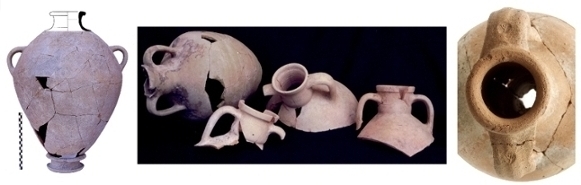
January 30, 2014
7:30 p.m. Student Research Presentations, Willamette University College of Law, Paulus Lecture HallDylan Angell, Jessica "Jo" Heupel, Maureen Ricks
Students of Archaeology
Willamette UniversityGround Penetrating Radar Survey of Fort Yamhill
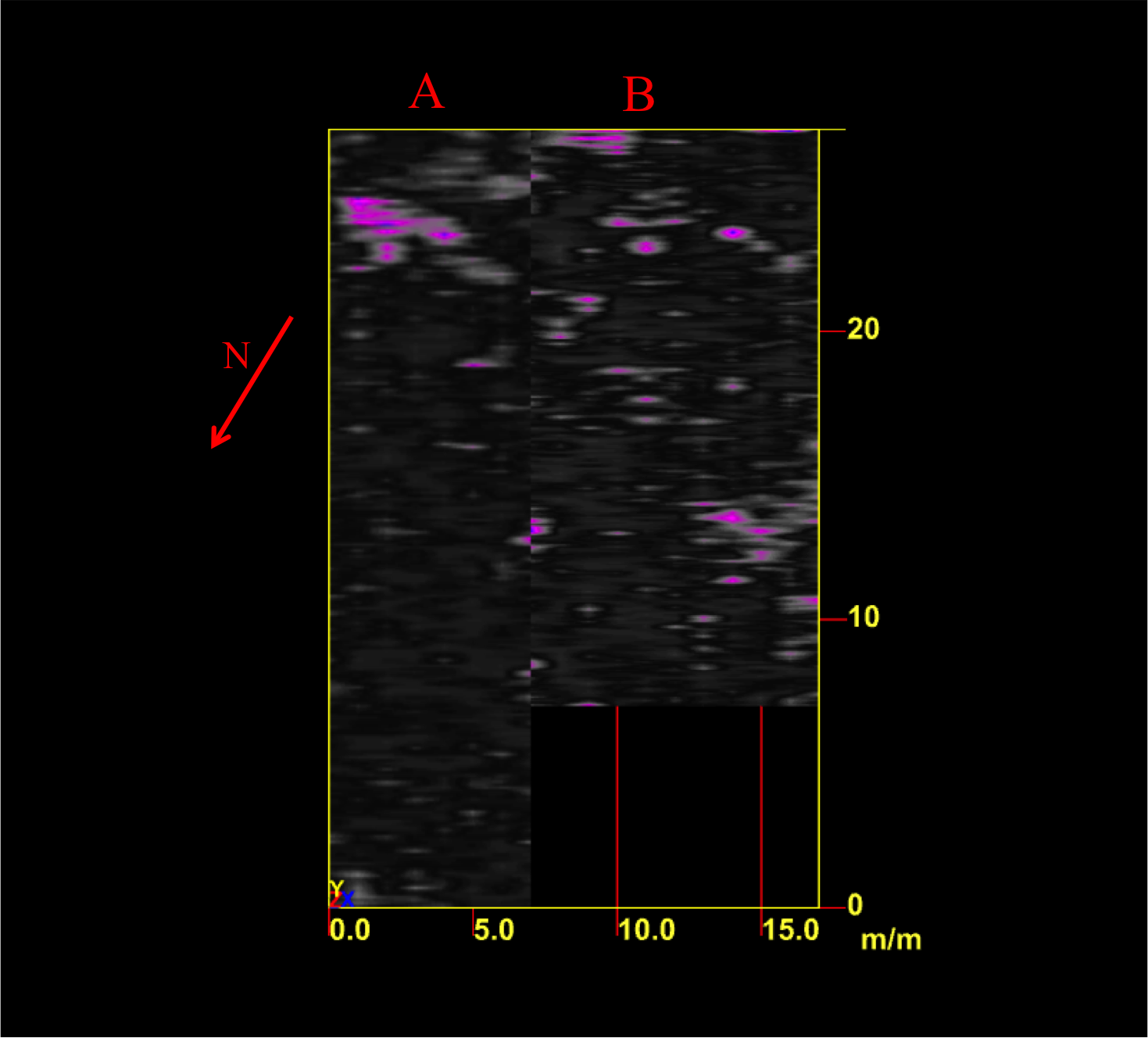
During the months of July and August 2013, Dylan Angell conducted ground penetrating radar surveys at the Fort Yamhill archaeological site northeast of Grand Ronde, Oregon. The survey was conducted in two stages, the first (Grid I) focusing on the area recognized to be the officers’ houses and the second (Grid II) on the field behind the bake house in the area thought to contain the fort’s privies. Primary goals were to locate candidates for the foundations of Officer House 2 and the privies in an effort to inform future excavations of the site. Anomalies were detected in both survey regions providing potential candidates for features of interest, though not of the originally intended targets. Grid I revealed anomalies strongly resembling the foundations of Officer House 3 but failed to provide any candidates for Officer House 2, which was later uncovered within the area of the scan during field excavations. Two distinct anomalies were present in Grid II. The first is likely the foundations of the fort’s laundress’ quarters and the second may be a shallow pit excavated during the time of occupation. The location of the fort privies was not discovered and is now believed to be outside of the scanned area, given the relation between these structures and the laundress’ quarters on period maps.
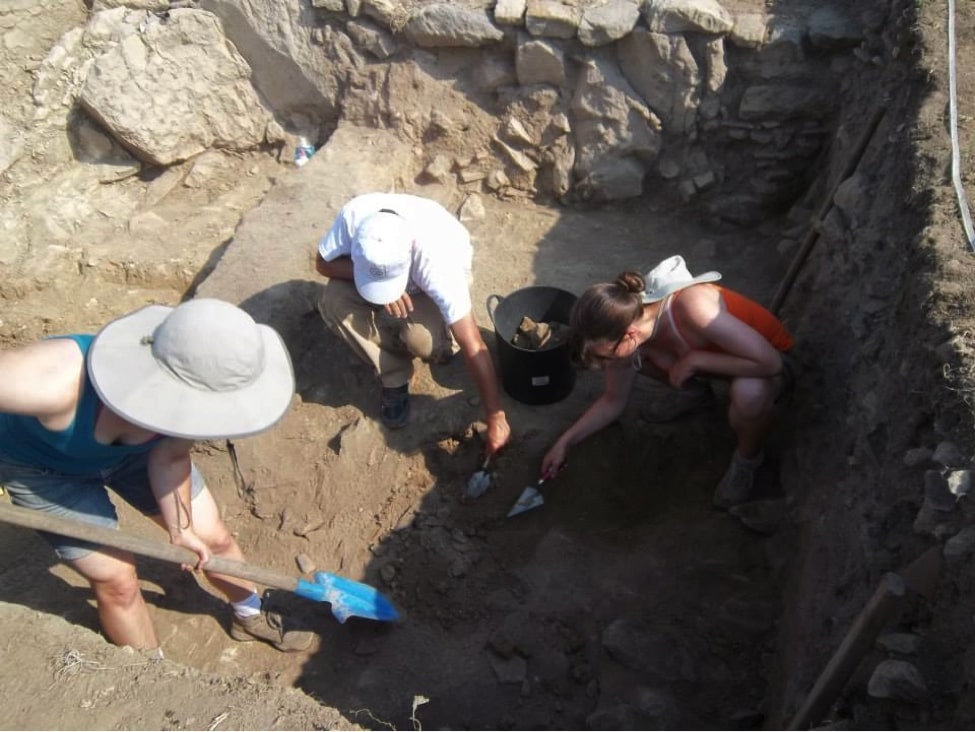 Studying Abroad: Archaeological Experience at Field Schools in Scotland and Bulgaria
Jo Heupel will be discussing her experiences at two field schools she attended. These field schools are a great way for students to gain experience learning the fundamentals of field archaeology. The Ness of Brodgar in Orkney, Scotland, was the site of a major Neolithic sanctuary. The Bulgarian site, Heraclea Sintica, was a major Roman city founded in the Hellenistic era and inhabited through the 5th century CE. Both of these sites offer great opportunities to experience two different locations and time periods through archaeology.
Material Analysis of the Wilson-Durbin Collection
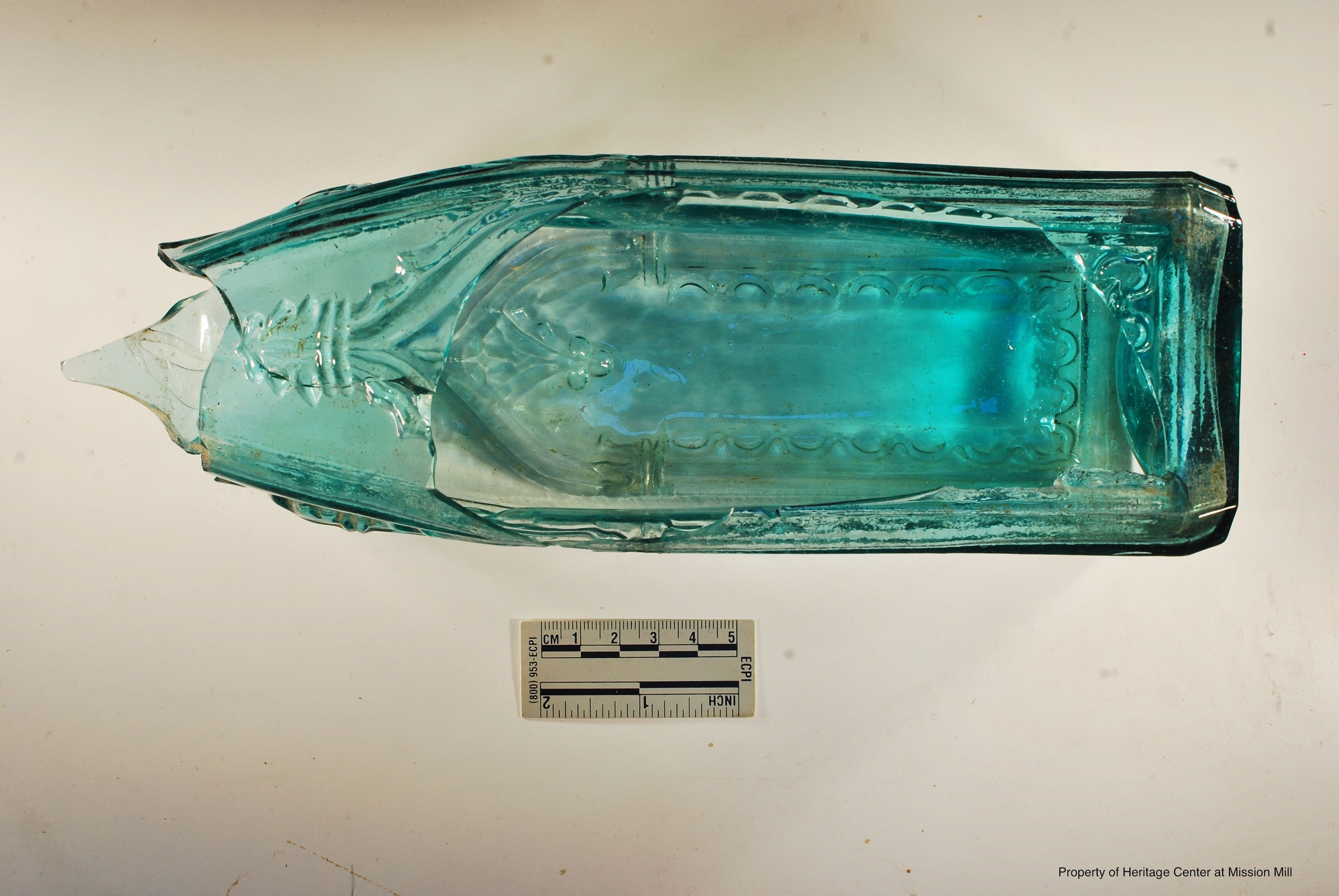
Maureen Ricks is presenting her senior thesis research on the Wilson-Durbin Collection. The collection was excavated from the Wilson-Durbin house, a historical Salem house built in 1861 by Joseph Gardner Wilson. The house was sold to the Durbins and passed down through the family for the next fifty years. The artifacts now belong to the Willamette Heritage Center at the Mission Mill Museum. Her research shows what the "junk" from behind their house reveals about the Wilson and Durbin families and life in Salem in these times.
February 13, 2014
7:30 p.m. Archaeology and Science at the Paisley Caves, Willamette University College of Law, Paulus Lecture HallDr. Dennis Jenkins
Director, Northern Great Basin Prehistory ProjectSenior Research AssociateMuseum of Natural and Cultural History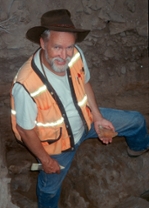
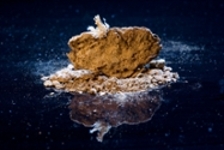
University of OregonLuther Cressman's 1938-1940 excavations at the Paisley Caves in south central Oregon discovered exciting evidence suggesting that people may have lived there as early as the Late Pleistocene, some 12,000 to 15,000 years ago. However, it was not until recent developments in and results of archaeological and paleogenetic investigations at the Paisley Caves, bringing the audience the most up-to-date information about the evidence for the association of humans and Pleistocene animals in Oregon's high desert country more than 14,000 years ago. Dating of camel and horse bones, artifacts, twigs, and dried human feces containing Native American DNA between 12,900 and 14,500 years ago indicates that people lived in the caves and may have hunted camels, horses, and other animals at the end of the Pleistocene. This colorful slide show takes the audience through the scientific processes employed in proving the case for pre-Clovis human occupations at the world famous Paisley Caves.
 Co-sponsored by the Salem Society of the Archaeological Institute of America and Willamette University's Center for Ancient Studies and Archaeology.This event is made possible in part by a Society Outreach Grant from the Archaeological Institute of America.
February 27, 2014
7:30 p.m. The Rise and Fall of the Bible: Evangelical Capitalism, the Digital Revolution, and the Twilight of the Good Book, Hudson Hall, Mary Stuart Rogers Music CenterDr. Timothy Beal
The Florence Harkness Professor of Religion
Case Western Reserve UniversityJourney back to early Christianity to explore how a bunch of handwritten scrolls became the Bible, and forward to see how the multibillion-dollar Bible business is selling down its sacred capital. Today, in the twilight of print book culture and the dawn of the digital era, the Bible is undergoing another revolution -- one that will be as big as Gutenberg. It's the “end of ‘the Word’ as we know it.” Instead of attempting to protect and preserve our iconic "Good Book," Beal sees this crisis as an opportunity to rediscover “the Bible after the Bible,” not as a rock but a river, and not as a book of answers but a library of questions.Lane C. McGaughy Lectureship in Ancient Studies
March 11, 2014
7:30 p.m. Sacred Spaces and Human Sacrifice: The Nasca Lines in their Cultural and Religious Context, Willamette University College of Law, Paulus Lecture HallDr. Christina ConleeProfessor of Anthropology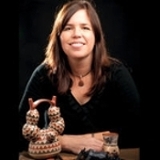
Texas State UniversityDr. Christina Conlee will present a lecture on the Nasca Lines of southern Peru, which have long been an enigma for archaeologists and lay people alike. Many theories have been proposed about what they were used for and why they were constructed. In the last 20 years archaeologists have learned much more about the ancient Nasca people and we are now able to understand the lines as an important part of their religion. These were sacred places where ceremonies were performed and offerings were made to ensure fertility and the continuation of society.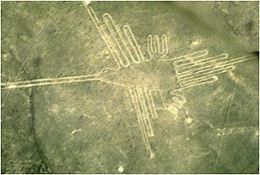
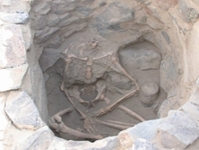
Co-sponsored by the Salem Society of the Archaeological Institute of America, Willamette University's Center for Ancient Studies and Archaeology, and the Latin American Studies Program
April 9, 2014
7:30 p.m. Genetics and African Prehistory: Possibilities and Challenges, Willamette University College of Law, Paulus Lecture HallDr. Scott MacEachern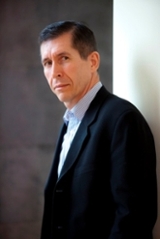 Professor of AnthropologyBowdoin College
Less archaeology has been done in Africa than on any other continent, and the prehistory of much of this vast continent remains more or less unknown. Historical genetics provides us with a new and extremely powerful way of looking at population movements and contacts in the past, and the comparison of archaeological and genetic data offers the prospects of immense improvement in our understanding of African prehistory. At the same time, there are dangers involved in such interdisciplinary undertakings: archaeological and genetic data offer insights into different aspects of human history, and each approach has its own strengths and weaknesses. In particular, genetics can reinforce assumptions that African populations are ‘people without history’, remnants of humanity’s past. This lecture will offer a discussion of these issues, with examples drawn from the Lake Chad Basin and other parts of the continent.
Co-sponsored by the Salem Society of the Archaeological Institute of America and Willamette University's Center for Ancient Studies and Archaeology
April 19, 2014
tbd 9th Annual Northwest Undergraduate Conference on the Ancient World, Ford Hall, Kramer Board Room (Rm 102)ABSTRACT deadline has been EXTENDED to Friday, April 4, 2014. Please deliver abstracts to the conference organizer Prof. Mary R. Bachvarova at mbachvar@willamette.edu. Conference acceptances will be emailed within a few days after the deadline.
The Classical Studies Program at Willamette University in Salem, Oregon, is hosting a one-day undergraduate conference. We envision this conference as an opportunity for talented undergraduates to present their work, for example a BA thesis or outstanding seminar paper, in a 20-minute talk to an audience of undergraduates and their faculty mentors. Papers are welcome in any area of ancient studies, including language and literature, religion, history, philosophy, and material culture.
A catered buffet breakfast and lunch will be provided to al participants, and audio-visual facilities will be available. Interested students should submit an abstract electronically by April 4, 2014 to mbachvar@willamette.edu, that provides the following information: name, email address, name and email of the supporting faculty member, any audio-visual needs (PowerPoint, video, slide projector), title of the talk, and 300-word description of the talk.
Further information will be posted on the website of the Willamette University Classical Studies Program or you may contact the conference organizer, Prof. Mary R. Bachvarova.
-
FALL 2012 – SPRING 2013
September 20, 2012
7:30 P.M. The Kelp Highway Hypothesis: Maritime Adaptations, Coastal Migrations, and the Peopling of the Americas, Willamette University, College of Law, Paulus Lecture Hall (Room 201)
Dr. Jon Erlandson
University of Oregon
Director, Museum of Natural and Cultural History
Anthropology Department
jerland@uoregon.edu
In this illustrated lecture, UO Professor Jon Erlandson will explore the role of maritime adaptations and coastal migrations in human evolution and the spread of anatomically modern humans around the world. He will discuss the Kelp Highway Hypothesis, which proposes that North Pacific kelp forests facilitated a coastal migration of Upper Paleolithic peoples from Northeast Asia to the Americas roughly 15,000 years ago. Included in his presentation will be the latest findings from his research on California's Channel Islands.
Jon M. Erlandson is an archaeologist, professor of anthropology, Knight Professor of Arts and Sciences, and executive director of the Museum of Natural and Cultural History at the University of Oregon. With over 30 years of experience working along the Pacific Coast of North America, Erlandson has written or edited 17 books and published over 200 articles in scientific journals. His research interests revolve around the deep history of maritime peoples and technologies, human evolution, the peopling of the Americas, and human impacts on ancient fisheries and marine ecosystems.
Sponsored by Willamette University’s Center for Ancient Studies and Archaeology (CASA).
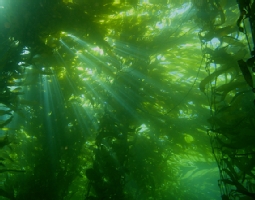
South Pacific Kelp Forest
September 26, 2012
7:30 P.M. The Armenians of Istanbul: Church, Society, and Culture, Willamette University, College of Law, Paulus Lecture Hall (Room 201)
HFMA
EventDr. Ron T. Marchese
University of Minnesota - Duluth
Professor of Ancient History and ArchaeologyDr. Ronald T. Marchese has conducted archaeological, historical, and ethnographic investigations in a number of locations in Greece and the Middle East over the past thirty years. He has received over seventy-five national and university grants, including two Fulbright-Hays Senior Research awards, in order to conduct research in the eastern Mediterranean. He is the author and editor of numerous books and articles in various disciplines. Over the course of the past twelve years, Marchese has been involved in the study of Armenian material culture, especially Armenian religious material culture at the Armenian Patriarchate of Istanbul and All Turkey.
In this lecture, Marchese will consider how the history of a people can be documented by the physical objects they produce and use in daily life and ritual. Things are important, if not essential, items of human material culture. As such, they embody social values, define moral and ethical principles as well as illustrate artistic achievement. An examination of the artisanship employed in the manufacture of things is also important in understanding the material culture of a people. The collection of objects in the Armenian Orthodox churches of Istanbul supports both views - the interconnection between material culture and artisanship on the one hand, and communal belief on the other. Featuring high levels of artistic and technical sophistication, objects of faith were commissioned by church members as personal and communal expressions glorifying God.
The objects studied by Marchese - those that make up a corpus of perviously unstudied and unknown artifacts - are a physical reminder and tribute to a people who tenaciously maintained a national identity through the objects they produced, donated, and used in the celebration of their faith. They defined a unique style of religious art, the "Constantinople Style", that reflected the opulence and grandeur of a city many Armenians came to love as their own. Through their labor, the city and the Church prospered and, in time, the community became one of the most important ethnic groups in Istanbul.
Co-sponsored by the Hallie Ford Museum of Art, the Hogue-Sponenburgh Lecture Fund of the Department of Art History, the Center for Ancient Studies and Archaeology at Willamette University and the Salem Society of the Archaeological Institute of America.
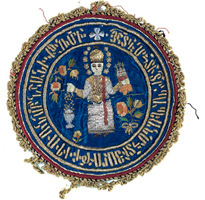
Around 304 CE, the Kingdom of Armenia became the first country to adopt Christianity.
As a result, Armenian Orthodox religious art goes back to late-antique models.
October 4, 2012
7:30 P.M. The Deep Prehistory of Indian Gaming: The Perspective from Mesoamerica, Willamette University, College of Law, Paulus Lecture Hall (Room 201)
Dr. Barbara Voorhies
Research Professor and Professor Emerita
University of California at Santa Barbara
Although it was not until the early 1980s that high stakes Indian Gaming was permitted in the United States, at the time of the arrival of Europeans in North America high stakes gambling was widespread among indigenous peoples. This is particularly well documented in Mesoamerica where 16th century historians describe a variety of games of chance (e.g., dice games) and games of skill (e.g., rubber ball game, bowling, checkers). At least some of these games involved heavy gambling on the part of both players and onlookers. Archaeologists have been able to trace the origins of some of these games back into deep prehistory. In this presentation Dr. Voorhies will present an overview of Mesoamerican games and her recent discovery of a probable scoreboard for a dice game dating back to approximately 2400 B.C.
Doris Z. Stone New World Archaeology Lecture: Co-Sponsored by the Archaeological Institute of America (AIA), the Salem Society of the Archaeological Institute of America (AIA), and Willamette University's Center for Ancient Studies and Archaeology (CASA).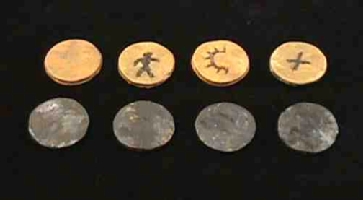
16th Century Mesoamerican Dice Game
October 16, 2012
7:30 P.M. The 11th Century Decline of the Byzantine Empire Seen Through Contemporary Eyes, Willamette University, Hatfield Library, Hatfield RoomOnassis Scholar
Dr. Dimitris Tsougarakis
Ionian University - Greece
Professor of Byzantine History
Department of HistoryA number of modern scholars maintain that the decline of the 11th century was not brought about by practices adopted by emperors who came to the throne after the death of Basil II, but was the result of a process that had started much earlier, and at any rate it was something that Byzantium could not avoid. In this lecture Dr. Tsougarakis will examine the testimony of almost all of the contemporary historians who narrate the historical events frequently as eyewitnesses; he will consider the validity of their testimony and take a critical view of their opinions; and he will come to the conclusion that the older view, the one which considered that the 11th century decline was caused by the neglect and hostile attitude towards the army by the central government in Constantinople, is the most convincing as the main - but not the sole - cause. Some comparisons with modern situations will not be avoided.
Sponsored by the Onassis Foundation, co-sponsored by Willamette University's Center for Ancient Studies and Archaeology.
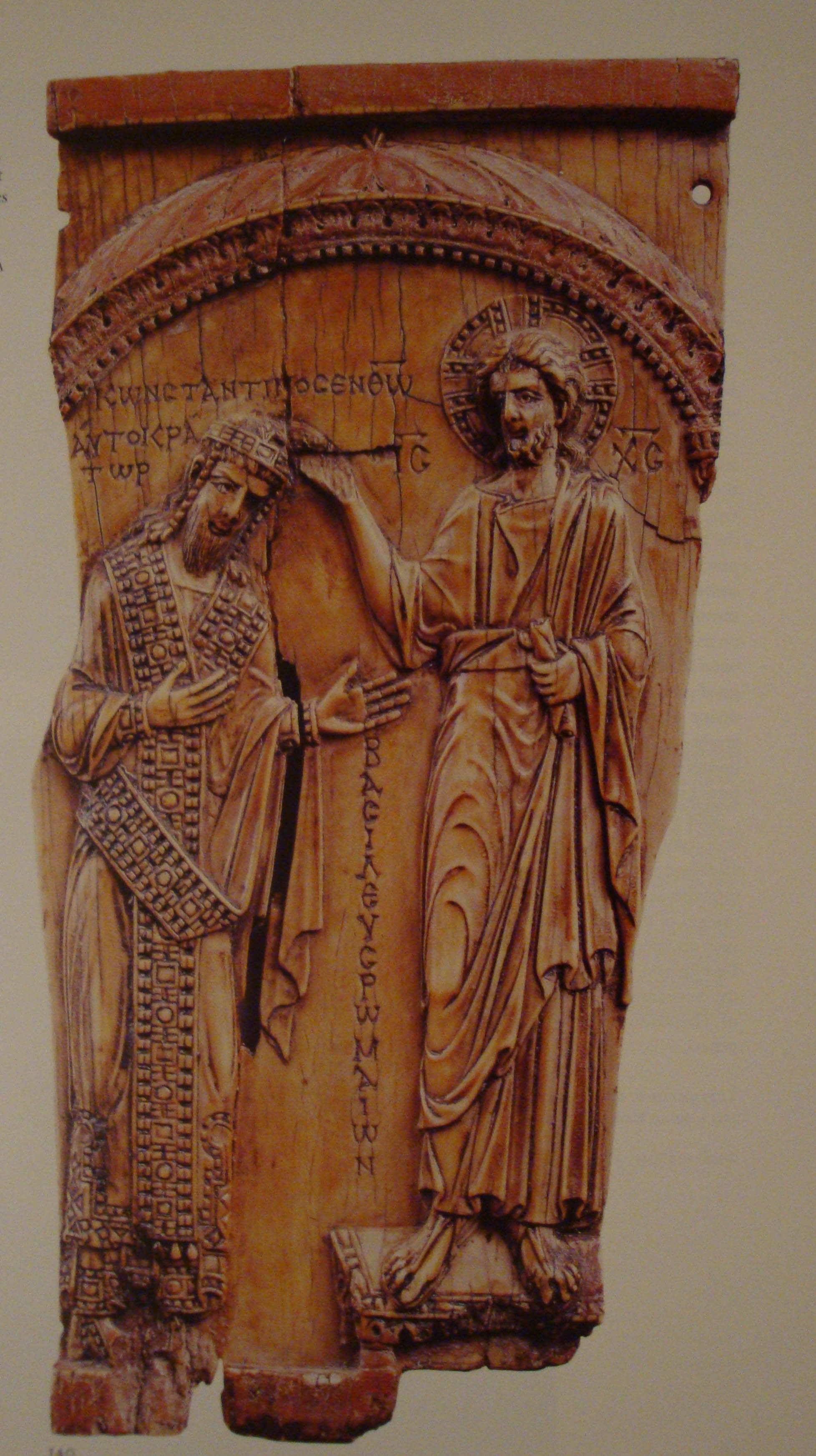
Constantine
October 20, 2012
10:30 a.m. National Archaeology Day Celebration, Willamette University, College of Law, Paulus Lecture Hall (Room 201)
National Archaeology Day is a celebration of archaeology and the thrill of discovery. Every October the Archaeological Institute of America and archaeological organizations across the United States, Canada, and abroad present archaeological programs and activities for people of all ages and interests. Whether it is a family-friendly archaeology fair, a guided tour of a local archaeological site, a simulated dig, a lecture or a classroom visit from an archaeologist, the interactive, hands-on National Archaeology Day programs provide the chance to indulge your inner Indiana Jones.
Come help us celebrate National Archaeology Day! This will be a day of fun and education for all!
This event is FREE and open to the public!
10:30 a.m. Screening of Indiana Jones: Raiders of the Lost Ark
*Raffle to take place after movie.
1:00 p.m. Skype conversation with French archaeologist Dr. Jean-Olivier Gransard-Desmond (President of the archaeological outreach organization, ArkéoTopia) about archaeology in daily life in France and the United States.
*Raffle
2:00 p.m. More informal discussion on a variety of topics regarding archaeology; dispelling myths, laws in the United States, educational and public involvement opportunities, etc.
3:00 p.m. Raffle and continuation of informal discussion.
Free snacks and beverages! Children's activities!
Co-sponsored by the Salem Society of the Archaeological Institute of America and Willamette University's Center for Ancient Studies and Archaeology.
October 25, 2012
7:30 P.M. The Body Beautiful in Ancient Greece: Greek and Roman Artworks Travel to Oregon!, Willamette University, College of Law, Paulus Lecture Hall (Room 201)
Dr. Ann M. Nicgorski
Willamette University
Chair & Professor of Art History and Archaeology
Faculty Curator, Hallie Ford Museum of Art
anicgors@willamette.eduThis fall, the Portland Art Museum is hosting a blockbuster exhibition of Greek and Roman art entitled The Body Beautiful in Ancient Greece (October 6, 2012 to January 6, 2013). There are over 100 exquisite objects in this exhibit, which are all on loan from the renowned British Museum in London. This lecture provides an overview of the exhibition with a focus on its key themes and selected, noteworthy objects, such as the iconic Discobolus, or discus-thrower, from the 5th century BCE, which will be making its first trip to the United States. In addition to several other large-scale works of stone sculpture, the exhibit also features smaller figurines in a variety of media, as well as numerous vases with figural decoration. Key themes include the human body and face; character, portrait and realism; gods and goddesses in human form; athletes and Herakles-superman; birth, marriage, sex, and death; and composite human-animal creatures of mythological legend, such as the famous Theban sphinx.
Sponsored by Willamette University’s Center for Ancient Studies and Archaeology (CASA).
Marble Statue of a Discus Thrower (diskobolos)Roman period, 2nd century AD after a lost Greek original of about 450–440 BC, from the villa of the emperor Hadrian at Tivoli, ItalyLondon, British Museum GR 1805,0703.43 (Sculpture 250)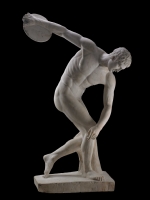
November 8, 2012
7:30 P.M. Archaeology and the Death and Burial of Jesus, Willamette University, Rogers Music Center, Hudson Concert Hall (RMC 145)
Dr. Jodi Magness
Kenan Distinguished Professor for Teaching Excellence in Early Judaism
The University of North Carolina at Chapel HillIn this slide-illustrated lecture, we survey Jewish tombs and burial customs in Jerusalem in the time of Jesus, and consider the archaeological and literary evidence for the burials of Jesus and his brother James. The lecture includes a discussion of the claims surrounding the so-called "James ossuary" and the "Talpiyot tomb" (recently said to be the tomb of Jesus and his family).
The Lane C. McGaughy Lecture in Ancient Studies
Sponsored by Willamette University’s Center for Ancient Studies and Archaeology (CASA).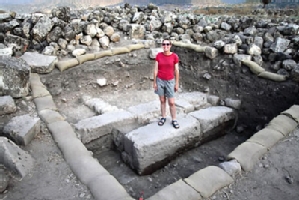
Dr. Magness at a 2011 dig in Galilee
February 7, 2013
7:30 P.M. Living Low on the High Seas of the Late Bronze Age Eastern Mediterranean, Willamette University, College of Law, Paulus Lecture Hall (Room 201)
Dr. Nicolle Elise Hirschfeld
Associate Professor
Department of Classical Studies
Trinity University
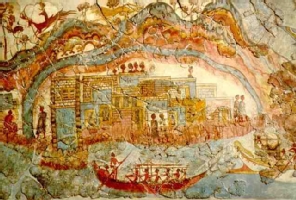
In the summer of 2010, fifty years after the excavation that pioneered underwater archaeology as a scientific discipline, the lecturer co-directed, with George Bass and a Turkish colleague, Harun Özdaş, a return to Gelidonya. The starting point for this lecture is a report on that season and what more we have learned about the shipwreck since the publication of the original excavation. The ship that sank at Gelidonya belonged to a tinker plying his trade, probably on a local circuit. Less than a day’s sail north, another shipwreck illustrates the opposite end of the spectrum of Bronze Age overseas ventures. The ship that sank at Uluburun, a century before Gelidonya and in the heyday of the Late Bronze Age, carried treasures and wealth also documented in the archives of the kings of Ugarit and of the pharaoh Akhenaton at Amarna. The second part of this lecture, however, focuses on one of the humbler cargoes laden on board, the mass-produced Cypriot ceramic vessels.
Kershaw Lecture in Near East Archaeology: Co-Sponsored by the Archaeological Institute of America (AIA), the Salem Society of the Archaeological Institute of America (AIA), and Willamette University's Center for Ancient Studies and Archaeology (CASA).
March 7, 2013
7:30 P.M. Human Paleoecology and a Late Bronze Age Workshop of Aromata, Willamette University, College of Law, Paulus Lecture Hall (Room 201)
Dr. Andrew J. Koh
Assistant Professor
Department of Classical Studies
Brandeis University
CMRAE Faculty, Massachusetts Institute of Technology
Research over the past ten years has brought to the light what is arguably the most definitive evidence for a “perfumed oil workshop” in the Aegean Bronze Age. Through the seamless process of incorporating a comprehensive program for organic residue analysis with more traditional methods of archaeological research, the ARCHEM project has identified key ingredients used to manufacture aromata during the Late Minoan I period at a harbor town in East Crete. Among these ingredients is evidence for linden flowers. As a temperate tree, linden holds the key to understanding how at least one workshop exploited its rural landscape to supply itself with raw materials. Though one must go to central Greece to find linden in its natural environment today, pollen cores in Crete testify to the tree’s existence on the island as late as LM I, at which point evidence for linden gradually disappears suggesting an increasingly drier climate. Even in wetter periods, linden would have needed a particularly inviting ecosystem to thrive in the East Cretan landscape. Near the workshop, only one small area fits this description – well-watered Mouliana. Having pinpointed the likely source and final destination of a Minoan commodity, we now have a unique window through which to reconstruct the interactions between a Minoan town and its ecological landscape.
Frederick R. and Margaret B. Matson Lecture in Near Eastern Archaeology and World Archaeological Technology: Co-Sponsored by the Salem Society of the Archaeological Institute of America (AIA) and Willamette University's Center for Ancient Studies and Archaeology (CASA).
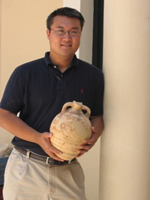
Professor Koh with a Bronze Age vessel at Mochlos, Crete
April 4, 2013
7:30 P.M. The Rebuilt Citadel of Midas at Gordion, Willamette University, College of Law, Paulus Lecture Hall (Room 201)
Dr. Brendan Burke
University of Victoria
Associate Professor
Department of Greek and Roman Studies
bburke@uvic.ca
The Phrygian capital of Gordion in central Turkey and the quasi-historical ruler of the Phrygians, King Midas, have fascinated people since the time of Herodotus. People are often surprised to learn that there was a true historical ruler named Midas, whose reign dates to around 700 BC. Midas was preserved and transformed in later legend, primarily through Greek sources - and figured prominently in literature and art. Although the Kingdom of Midas was on the periphery of the Greek world, Midas became a stand-in for something classical Greeks seem to have both feared and been fascinated by: the wealthy eastern king, and so they created famous legends about King Midas. Archaeology helps to separate the myth of Midas from the history. In this talk fieldwork on the citadel from 2000 to 2006 is presented, which helps clarify our understanding of Midas' great capital.
Sponsored by the Salem Society of the Archaeological Institute of America (AIA) and Willamette University's Center for Ancient Studies and Archaeology (CASA).
April 20, 2013
tbd 8th Annual Oregon Undergraduate Conference in Classics, Willamette University, Ford HallThe Classical Studies Program at Willamette University in Salem, Oregon, is hosting a one-day undergraduate conference. We envision this conference as an opportunity for talented undergraduates to present their work, for example a BA thesis or outstanding seminar paper, in a 20-minute talk to an audience of undergraduates and their faculty mentors. Papers are welcome in any area of classical studies, including language and literature, history, philosophy, and material culture.
A catered buffet breakfast and lunch will be provided to all participants, and audio-visual facilities will be available.
Interested students should submit an abstract electronically to mbachvar@willamette.edu by March 21, 2013, that provides the following information: name, email address, name and email of the supporting faculty member, any audio-visual needs (PowerPoint, video, slide projector), title of the talk, and 300-word description of the talk.
Further information will be posted on the website of the Willamette University Classical Studies Program, or you may contact the conference organizer, Prof. Mary R. Bachvarova (mbachvar@willamette.edu). -
FALL 2011 – SPRING 2012
September 22, 2011
King - Spirituality Spirituality in the Midst of Violence: The Heritage from Christian Heretics and Martyrs (Lane C. McGaughy Lecture in Ancient Studies) , Hudson Hall, Mary Stuart Rogers Music CenterDr. Karen King
Hollis Professor of Divinity
Harvard Divinity SchoolEarly Christianity was forged in a violent world. Not only Jesus’ violent death, but also those of his followers were formative events in Christian identity. From the prison diary of a mother sentenced to die in the arena, a bishop pleading to be allowed to suffer for his God, or theologians refusing to believe that God desires these brutal deaths, we can see Christians trying to meet these challenges ethically, spiritually, and communally. Dr. King's lecture will discuss their stories and reflect on the controversial legacy they left in theological imagination and practice.
Sponsored by the Center for Ancient Studies and Archaeology
October 13, 2011
tbd Entangled in the Fur Trade: The Archaeology of Contact on the Lower Columbia River, Paulus Lecture Hall, College of LawDr. Kenneth Ames
The Fur Trade Era on the Lower Columbia River has often been presented by scholars through the lens of Euro-American documentary sources. Archaeological research on the lower river since 1987 provides significant lines of evidence of local and regional Native responses to and participation in the fur trade. The term “entanglement” is used by anthropologists to describe how contact was not a one-way street. In this case, for example, the fur traders entered an ancient, well-established system of trade, exchange and values. The word also encompasses the multiple ways in which Native peoples engaged in the fur trade at multiple scales (individual, household, community, region).
Professor and Chair of the Anthropology Department
Portland State UniversityCo-sponsored by the Salem Society of the Archaeological Institute of America and the Willamette University Center for Ancient Studies and Archaeology
November 10, 2011
tbd Remembering Boudica: Monuments of a Barbarian Queen (Father Edward A. Bader Lecture), Paulus Lecture Hall, College of LawDr. Alison Futrell
Associate Professor of Roman History
University of ArizonaEmpire! Taxes! Violation! Massacre! In the early years of his reign, the Emperor Nero briefly considered withdrawing the legions from the new province of Britannia. Before he could do so, the stability of empire was shaken by revolt, as Boudica, a tribal queen pushed beyond her limits by the excesses of the Roman colonizers, exacted a horrifying retribution, with deaths in the tens of thousands. The revolt of A.D. 60 is presented by Romans as an example of power gone wrong during the hated Nero's anti-empire; the center of power is under the sway of the emperor's atrocious whims, the ruling elite in thrall to the emperor's desiring, irrational body. Meanwhile, on the fringes of empire, Roman military might is disrupted by Boudica, a barbarian who nevertheless lays claim to nobility and ancient traditions, a woman whose leadership transcends the physical limitations imposed by gender, a queen who champions the liberty Romans found antithetical to the very concept of monarchy. In the post-Roman period, Boudica, or Boadicea, becomes a key element in constructing British national identity; the meaning of Boadicea’s body, her sexuality, and her “barbarism” shift with different interpretations of gendered power and of the role played by Rome in Britain’s origins. This talk explores a number of representations of Boudica, from Roman to modern times.
Co-sponsored by the Archaeological Institute of America and the Willamette University Center for Ancient Studies and Archaeology
February 8, 2012
tbd Stonehenge: New Discoveries (Kress Lecture), Paulus Lecture Hall, College of LawDr. Mike Parker Pearson
Professor of Archaeology
University of Sheffield in EnglandStonehenge has long captivated the world with the mystery of its origins and use, and after seven years of new excavations there is now a completely new understanding as to the date and purpose of this enigmatic structure. One of the key breakthroughs has been to understand how Stonehenge formed part of a wider complex of monuments and landscape features on Salisbury Plain. The Riverside Stonehenge Project and the Feeding Stonehenge Project have been key in these new discoveries, and we now know much more about the people who built Stonehenge – where they came from, how they lived, and how they were organized. Not only has the recent work discovered a large settlement of many houses—thought to be for Stonehenge’s builders—at the nearby henge enclosure of Durrington Walls, but it has also helped to re-date Stonehenge and investigate its surrounding monuments and sites, many of which were hitherto undated and unknown.
Principal Investigator for the Riverside Stonehenge Project and the Feeding Stonehenge Project, Professor Mike Parker Pearson, will be speaking on the current theories about Stonehenge – as an astronomical observatory, a centre of healing or a place of the ancestors – and the identity of its Neolithic builders. Parker Pearson will also touch on the discovery of a new monument called Bluestonehenge, located about one mile from Stonehenge, and what its discovery signifies. Potentially the most captivating question of all is how and why stones from 180 miles away were used to create Stonehenge, and while this is currently being investigated, Parker Pearson will give his professional opinion along with brand new results from the field.
Parker Pearson is with the Department of Archaeology, University of Sheffield, and has also been Vice-President of the Prehistoric Society and the UK Archaeologist of the Year 2010. He attended undergraduate studies for European Archaeology at the University of Southampton and received his Ph.D. from Kings College, University of Cambridge. His research interests include Neolithic and Bronze Age Britain and Europe, funerary archaeology, society and change in Madagascar and the Indian Ocean, the ‘Barbarian’ Europe of the first millennia, and public archaeology and heritage. His work was featured on the National Geographic channel in the documentary “Stonehenge Decoded” (2008).
Co-sponsored by the Willamette University Center for Ancient Studies and Archaeology and the Archaeological Institute of America’s National Lecture Program. Funding for this lecture has been provided by the Samuel H. Kress Foundation in New York, which strives to support the work of scholars in the fields of ancient art.
March 9, 2011
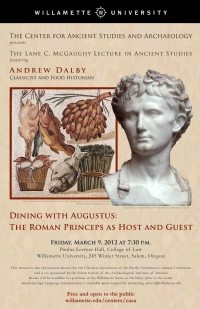
tbd Dining with Augustus: The Roman Princeps as Host and Guest (Lane C. McGaughy Lecture in Ancient Studies) , Paulus Lecture Hall, College of LawDr. Andrew Dalby
Classicist and food historian
FranceIn the lifetime of Augustus the Roman Republic became an Empire, and in hindsight we are right to call him its first emperor. How did he do it? Building on varied historical and literary sources the lecture will focus on the Roman arts of entertainment as they were practised in his time, and will show how creatively Augustus himself played the roles of host and patron. His triumphant career demonstrates that these skills were (as they still are) an essential ingredient of political success.
Co-sponsored by the Willamette University Center for Ancient Studies and Archaeology, the Classical Association of the Pacific Northwest, and the Salem Society of the Archaeological Institute of America.
March 9-10, 2012
tbd 41st Annual Meeting of the Classical Association of the Pacific Northwest, College of LawApril 5, 2012
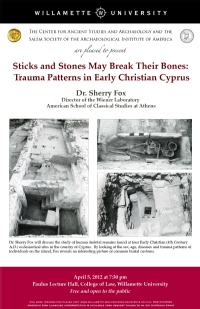
tbd Sticks and Stones May Break Their Bones: Trauma Patterns in Early Christian Cyprus, Paulus Lecture Hall, College of LawDr. Sherry Fox
Director of the Wiener Laboratory
American School of Classical Studies at AthensHuman skeletal remains from four Early Christian ecclesiastical sites in Cyprus have been analyzed in an effort to discern the common burial customs, the demographic profiles (sex and age) of individuals from the site, along with pathological data such as the common diseases, and in particular, evidence for trauma from individuals dating to this time period on the island. There are few skeletal studies on Cypriot material from the Early Christian period.
The largest site under study, the Hill of Agios Georgios (St. George’s Hill), is an inland site, located on a rise adjacent to the Pedeios River outside the Venetian walled city of the capital, Nicosia. Four churches/basilicas and their associated cemeteries dating from around the 4th century A.D. to the post-medieval period have been excavated at the Hill of Agios Georgios where today a chapel dedicated to St. George the Healer is situated. To date, approximately 28 of the total 216 individuals from the site are recovered from Early Christian contexts. The other, smaller church/basilica sites of Kalavasos-Kopetra (n=21), Alassa-Ayia Mavri (n=26), and Maroni-Petrera (n=6), are located near the south coast.Different patterns have emerged between the smaller, coastal sites when compared to the larger, inland site of the Hill of Agios Georgios. The pattern is particularly evident when examining evidence for trauma such as fracture types and locations. There are more fractures, greater variability among fractures, and fractures among more males, including cranial fractures and hand trauma, and in a later period, even parry fractures that characterize individuals at the urban and inland site of the Hill of Agios Georgios when compared with individuals from the South Coast who are characterized by more severe trauma from falls that include multiple fractures. Reasons for the different patterns in this preliminary study will be discussed.
Co-sponsored by the Salem Society of the Archaeological Institute of America and the Willamette University Center for Ancient Studies and Archaeology
April 19, 2012
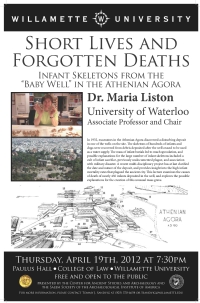
tbd Short Lives and Forgotten Deaths: Infant Skeletons from the “Baby Well” in the Athenian Agora, Paulus Lecture Hall, College of LawDr. Maria Liston
In 1932, excavators in the Athenian Agora discovered a disturbing deposit in one of the wells on the site. The skeletons of hundreds of infants and dogs were recovered from debris deposited after the well ceased to be used as a water supply. The mass of infant burials led to much speculation, and possible explanations for the large number of infant skeletons included a cult of infant sacrifice, previously undocumented plague, and association with military disaster. A recent multi-disciplinary project has at last clarified the date and nature of the deposit, and provides insight into the high infant mortality rates that plagued the ancient city. This lecture examines the causes of death of nearly 450 infants deposited in the well and explores the possible explanations for the creation of this unusual mass grave.
Associate Professor and Chair
Anthropology Department
University of WaterlooWith the assistance of the Government of Canada / avec l'appui du gouvernement du Canada. Co-sponsored by the Archaeological Institute of America and the Willamette University Center for Ancient Studies and Archaeology.

April 21, 2011
tbd The Sixth Annual Oregon Undergraduate Classics Conference, Ford Hall, Room 102For more information, please visit:
www.willamette.edu/cla/classics/conference/index -
FALL 2010 – SPRING 2011
February 28, 2011
TBD Docent Training at the Hallie Ford Museum with Prof. Knorr, Hallie Ford Museum of ArtFor more information please contact Prof. Knorr at 503-370-6029.
March 9, 2011
10:00 a.m. Middle School Guided Tour of the Ancient Collections at the Hallie Ford Museum of Art, Hallie Ford Museum of ArtMarch 10, 2011
6:00 p.m. No-Host Dinner:, Jason Lee Room, Goudy Commons7:30 p.m. Korphos-Kalamianos: Investigations at a Recently Discovered Mycenaean Harbor Town in the Corinthia, Greece, 2007–2010, College of Law, Paulus Lecture Hall, Room 201March 31st, 2011
7:30 p.m. Ethiopian Art Lecture Lalibala: from Dynastic Center to Pilgrimage Site , Hallie Ford Museum of ArtApril 7, 2011
7:30 p.m. Uncorking the Past: The Quest for Wine, Beer and Extreme Fermented Beverages, Rodger's Music Center, Hudson HallThursday, April 14, 2011
6:00 p.m. No-Host Dinner:, Jason Lee Room, Goudy Commons7:30 p.m. The Mysteries of Mine Howe, Orkney: 29 Steps Into the Celtic Otherworld..., Paulus Lecture Hall, College of LawApril 16, 2011
9:30 am – 5:00 pm The Sixth Oregon Undergraduate Conference in Classics at Willamette University, Willamette University, Ford Hall Room 102 and 122 -
FALL 2009 – SPRING 2010
Thursday, April 14, 2011
7:30 p.m. The Mysteries of Mine Howe, Orkney: 29 Steps Into the Celtic Otherworld..., College of Law, Paulus Lecture Hall, Room 201Thursday, April 7, 2011
7:30 p.m. Uncorking the Past: The Quest for Wine, Beer and Extreme Fermented Beverages, Rodger's Music Center, Hudson HallThursday, March 31, 2011
7:30 p.m. Lalibala: from Dynastic Center to Pilgrimage Site (Ethiopian Art Lecture), Hallie Ford Museum of ArtThursday, March 10, 2011
7:30 p.m. Korphos-Kalamianos: Investigations at a Recently Discovered Mycenaean Harbor Town in the Corinthia, Greece, 2007–2010, College of Law, Paulus Lecture Hall, Room 201Wednesday, March 9, 2011
10:00 a.m. Middle School Guided Tour of the Ancient Collections at the Hallie Ford Museum of Art, Hallie Ford Museum of ArtMonday, February 28, 2011
2:30–3:30 p.m. Docent Training at the Hallie Ford Museum with Prof. Knorr, Hallie Ford Museum of ArtFor more information please contact Prof. Knorr at 503-370-6029.
Tuesday, December 7, 2010
tbd A New Look at the Letters of Paul, Hatfiled Library, Hatfield RoomThursday, December 2, 2010
6:00 p.m. No-Host Dinner:, Jason Lee Room, Goudy Commons7:30 p.m. Geoarchaeology and Climate Change in Southern Egypt, College of Law, Paulus Lecture Hall, Room 201Thursday, November 18, 2010
7:30 p.m. Technological Innovation in Imperial Rome: What Can Ancient Concrete Tell Us About Roman Society?, College of Law, Paulus Lecture Hall, Room 201Thursday, November 11, 2010
7:30 p.m. Picture This! Words as Art in the Ancient Greek World, Rogers Music Center, Hudson HallThursday, October 14, 2010
7:30 p.m. Summer Archaeology Experiences of Willamette University Senior Archaeology Students, College of Law, Paulus Lecture Hall, Room 201Tuesday, October 12, 2010
7:30 p.m. Is Art Worth a Life? Hitler, War, and the Monuments Men, Rodger's Music Center, Hudson HallThursday, April 22, 2010
tbd Legacies of Stone: African Stone SculpturesSaturday, April 17, 2010
tbd Fifth Annual Oregon Undergraduate Conference in ClassicsThursday, April 15, 2010
tbd The Reunion of Body and Soul: Sacred Sexuality and Resurrection in the NetherworldTuesday, March 9, 2010
tbd Nostalgia and Pride The Collection of Alessandro Maggiori: European Drawings from Renaissance to NeoclassicismThursday, March 4, 2010
tbd The Roman Mosaics of TunisiaThursday, February 25, 2010
tbd Changing Perceptions: Recent Recent and Excavation in the 'Heart of Neolithic Orkney' World Heritage Site -
FALL 2008 – SPRING 2009
Thursday, November 12, 2009
tbd Actors in the Audience: Non-dramatic Performances in the Roman TheaterThursday, October 29, 2009
tbd Is the New Testament Confused? Reflections on the Discrepancies of the Christian Scriptures The Lane C. McGaughy Lectureship in Ancient StudiesThursday, October 15, 2009
tbd Goddesses, Aristocrats and Politics of Sex in Early Etruscan ItalyThursday, October 1, 2009
tbd An Introduction to the Mosaic of the Greek East and Their CultureWednesday, April 29 and Thursday, April 30, 2009
tbd Symposium on Epic, Biography, and the GospelsThursday, April 9, 2009
tbd Four Thousand Years of Andean GoldWednesday, March 18, 2009
tbd Illuminating Art: The Study of Ancient LampsThursday, March 12, 2009
tbd Eastern Approaches to Ancient Greek MusicWednesday, March 4, 2009
tbd The Social Archaeology of Bronze Age China -
FALL 2007 – SPRING 2008
October 30, 2008
tba End of an Empire: Archaeology and the Collapse of Urartu Norton LectureOctober 23, 2008
tbd Cyrene: a World Heritage site in the 21st CenturyOctober 16, 2008
tbd Art of Ceremony: Regalia of Native OregonSeptember 18, 2008
tbd Beer Brewing Techniques in the Ancient Near EastThursday, April 17, 2008
tbd Grand Opening of the Centers for Academic ExcellenceThursday, April 10, 2008
tbd Early Human Populations in the New World: A Biased Perspective (Joukowsky Lecture)Thursday, April 3, 2008
tbd Piranesi's Views of RomeThursday, March 6, 2008
tbd Vikings and Death: Concepts of the Afterlife and Burial Monuments in Late Iron Age ScandinaviaThursday, February 28, 2008
tbd Icons in Antiquity: The Symphony of the Gods (The Lane C. McGaughy Lectureship in Ancient Studies)Thursday, February 7, 2008
tbd The Creation of Imperial Communities in the Ancient World: The Neo-Assyrian Empire in the First Millennium B.C. (The Renner Lecture)Thursday, January 24, 2008
tbd The Trireme: Ancient and Modern -
FALL 2006 – SPRING 2007
Thursday, November 8, 2007
tbd Building for Eternity: Investigating the Secrets of Roman Hydraulic ConcreteThursday, October 25, 2007
tbd El Niño, Upwelling, Anchovies, and the Foundation of Andean Civilization