Careers in Classical Studies
A classical education opens the path to fame and riches for you.
You think we are joking?
Have a look at the "classical careers" of these more or less famous people who were all trained in Greek and Latin.
Willamette University's own Classics graduates may not be rich and famous yet (after all, our Classics program was only re-started in 1998), but they are all doing quite well.
-
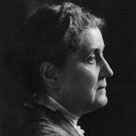
Social activist; Born: September 6, 1860 in Cedarville, IL; Died: May 31, 1935 in Chicago, IL
Education
- B.A., Rockford Female Seminary, 1881
The daughter of an Illinois legislator and friend of Abraham Lincoln, Jane Addams was the president of her class at the Rockford Female Seminary (now Rockford College in Rockford, IL). At college, she took several years of Greek and Latin. In addition, she studied French, German, ancient and modern history, civil government, American literature, Shakespeare, and mathematics (M.L. McCree Bryan et al., edd. The Selected Papers of Jane Addams, vol. 1, University of Illinois Press, 2002, p. 231). She also edited the college paper. In 1881, she graduated as the valedictorian of her class (when Rockford became a baccalaureate institution in 1882, she was awarded the B.A.).
After graduation, Jane Addams took two trips to Europe. In 1888, she and her college friend and first love, Ellen Starr Gates, visited Toynbee Hall in London's East End, a so-called "settlement house" that provided London's poor with basic human services. Eventually, both were inspired to found a similar institution in Chicago. Hull House opened in 1889 and provided medical care, child care, free food, and legal aid. Night classes gave immigrants the chance to learn English, vocational skills, music, art, and drama. Interestingly enough, though, Hull House also offered courses in ancient Greek, elementary Latin, Caesar, and Vergil as well as lectures on ancient Greece and Rome (J.B. Elshtain, Jane Addams and the Dream of American Democracy: A Life, Basic Books 2002, p. 286).
Later, Addams became active in the Women's Peace Party and the International Congress of Women and unsuccessfully tried to prevent the United States from entering the first World War. From 1919 to her death, she served as the president of the Women's International League for Peace and Freedom, the successor organization to the Women's Peace Party. In 1931, she was awarded the Nobel Peace Prize.
Links
A site on Hull House from the University of Illinois in Chicago
-
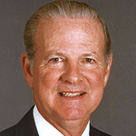
Politician; Born: April 28, 1930 in Houston, TX
Education
- B.A. Classics, Princeton University, 1952
- J.D. with honors, University of Texas at Austin School of Law, 1957
Jim Baker served as Pres. Ronald Reagan's White House Chief of Staff and Secretary of the Treasury (1985-1988). Under Pres. George H. Bush, he was Secretary of State (1989-1992). Most recently, Baker co-chaired the Iraq Study Group, the bipartisan blue-ribbon commission charged in 2006 with making recommendations to President George W. Bush and Congress for a new direction in the Iraq War.
Currently, Jim Baker is a senior partner in the law firm of Baker & Botts and serves on the boards of Rice University, the Woodrow Wilson International Center for Scholars, and a number of other non-profit organizations. The James A. Baker III Institute for Public Policy at Rice University in Houston, Texas, is named after him.
Links
Article in Current Biography 2007
-
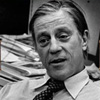
Journalist; Born: August 26, 1921 in Boston, MA
Education
- B.A. Classical Greek, Harvard College, 1942
Ben Bradlee, like many other Classicists at the time, did intelligence work doing World War II. After graduation in 1942, he joined the Office of Naval Intelligence and served as a communications officer on battleships in the Pacific Ocean, handling classified and coded cables.
After the war, Bradlee became a reporter, first with a start-up he helped launch himself, the New Hampshire Sunday News, from 1948 with the Washington Post.
As executive editor of the Post from 1965 to 1991, Bradlee joined the New York Times in the 1971 attempt to publish the Pentagon papers which detailed the history of the U.S. involvement in the Vietnam War and had been leaked to the press. Both papers successfully challenged the Nixon government's attempts to prevent publication before the Supreme Court. No less famously, Bradlee oversaw the publication of Bob Woodward and Carl Bernstein's stories documenting the Watergate scandal that resulted in Pres. Nixon's resignation.
-
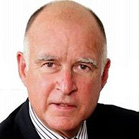
Politician; Born: April 7, 1938 in San Francisco, CA
Education
- B.A. Classics, University of California, Berkeley, 1961
- J.D., Yale University School of Law, 1964
Jerry Brown, the only son of former San Francisco lawyer, district attorney and later Democratic governor Edmund G. "Pat" Brown Sr., attended first St. Clara University and then joined a Jesuit seminary, intending to become a Catholic priest. He soon abandoned this goal, however, in favor of a Classics degree from UC Berkeley.
After graduating from Yale Law School and passing the California bar exam, Brown practiced as a lawyer in Los Angeles and became involved in politics, organizing migrant workers and anti-Vietnam protests. Elected California Secretary of State in 1970, Brown sued several major corporations for violating campaign-finance laws. From 1974-1982, Jerry Brown served as governor of California. In 1994, he created his own radio program, "We the people", which he hosted until 1998. After two terms as governor of Oakland, CA (1999-2007), Brown served as California's Attorney General from 2006-2010, when he was re-elected governor of California for an unprecedented third term.
-
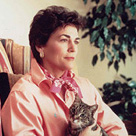
Novelist, poet, screenwriter, and activist; Born: November 28, 1944, in Hanover, Pennsylvania
Education
- B.A. in English and Classics, New York University, 1968
- Certificate in Cinematography, New York School of Visual Arts, 1968
- Ph.D., Political Science, Institute for Policy Studies in Washington DC, 1976
Rita Mae Brown has published two poetry collections, eleven novels, and numerous television scripts. Two of her scripts, Love Liberty and The Long Hot Summer, have been nominated for Emmy Awards. The work that made her famous, Rubyfruit Jungle (1973), a lesbian coming-of-age novel, has become a modern classic that is read and discussed in college courses. But Brown is also well-known for her series of Mrs. Murphy mystery novels which she co-authored with her cat, Sneaky Pie.
Links
-
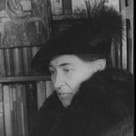
Author; Born: December 7, 1873 near Winchester, VA; Died: April 24, 1947 in New York, NY
Education
B.A. in English, University of Nebraska, Lincoln, 1894
Willa Cather studied Latin and Greek both in high school in Red Cloud and later at the University of Nebraska. With the help of an older friend, William Ducker, an educated Englishman who worked as a clerk in a Red Cloud store, she read Vergil, Ovid, the Iliad, and the Odes of Anacreon before even entering college.
Before graduation, she already began working as a theater critic and columnist for the Nebraska State Journal and the Lincoln Courier. Later, she was the managing editor for McClure's Magazine out of New York. For a brief time, she also taught Latin, algebra, and composition at a high school.
Cather's best known works are her novels, O Pioneers! (1913), My Ántonia (1918), A Lost Lady (1923) and Death Comes for the Archbishop (1927). In 1923, she won the Pulitzer Prize for a novel set in World War I, One of Us (1922).
Willa Cather and the Classics
"Cather's thorough grounding in Latin [...] gives depth to [the] narrative of [My Ántonia]. As Jim studies the classics under Gaston Cleric, he develops a passion for Virgil, whose Georgics he is studying one night in his room. His book is open to the passage: "Optima dies . . . prima fugit " ("the best days are the first to flee"). Jim reflects on the dying Virgil at Brindisi, who must have remembered his youth in his native Mantua. Jim too has left his native Black Hawk, Ántonia, and his grandparents. His destiny will take him East and turn him into a corporation lawyer. The theme from Virgil supplies a leitmotif for this elegiac narrative. Cather also quotes another line from Virgil: "Primus ego in patriam mecum . . . deducam Musas " ["I shall be the first to bring the Muse into my country"], which has a parallel contemporary meaning. Cleric has explained to his class that Virgil meant by patria the region along the Mincio River where he had been born, not all of Italy. The reader realizes that what Virgil did for his native place, Cather also was doing for Nebraska—putting it on the literary map."
(excerpted from James Woodress, Willa Cather: A Literary Life, Lincoln and London: U of Nebraska P, 1987)
Links
The Willa Cather Archive at the University of Nebraska, Lincoln
-
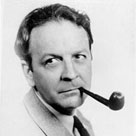
Author & screenwriter; Born: August 28, 1888 in Chicago, IL; Died: March 26, 1959 in La Jolla, CA
Education
- Dulwich College, a Public School (i.e., private prep-school) in London, 1900-1905
Best known for his Philip Marlowe mystery novels, Chandler worked as a British civil servant, a teacher, a journalist, an accountant for a dairy in Pasadena, and an executive for an oil company south of Los Angeles.
Born to Irish-immigrant parents in Chicago, Chandler spent much of his childhood in England. Supported by an uncle, Chandler was able to attend prestigious Dulwich College in London, where he played rugby, studied Classical and modern languages, and won school prizes. Chandler read Caesar, Livy, Ovid, and Vergil in Latin, and Thucydides, Plato, Aristotle and St. Mark in Greek.
After graduation from high school, the seventeen-year-old Chandler, by then a naturalized British citizen, went to France and Germany to improve his modern languages in preparation for a Civil Service career. In 1907, he took the six-day civil service exam, placing first in classics and third overall. This gained him a clerkship in the British Admiralty. After just six months, however, he quit this position in order to pursue a literary career.In 1912, Chandler realized that he could not make a living as a writer and emigrated to the United States. There he worked in a variety of jobs. During the First World War, he also fought with the Canadian Expeditory Force in France and became the only man from his company to survive a heavy bombardment.
In 1932, at age 44, he lost his last non-literary job because of his alcoholism. He started reading mystery novels in the Black Mask magazine and decided that writing this kind of stories might be a way to earn money.
To teach himself how to write mysteries, Chandler adapted the techniques of Latin prose composition. At Dulwich, he had had to translate texts from Latin to English and then after a while back into Latin. He approached the stories in the Black Mask in a similar way, reducing them to their bare bones and then retelling them in his own words. After five months, he was able to sell a first story of his own, "Blackmailers Don't Shoot" (1932), to the magazine for a penny a word (classiccrimefiction.com).
Two of his Black Mask stories became finally the basis for the first of several Philip Marlowe novels, The Big Sleep (1939). The book features a private detective, Philip Marlowe (whose name may have been inspired by Dulwich's Marlowe House, cf. R.W.B. Lewis) who descends into the underworld of Los Angeles like Vergil's Aeneas or the Greek mythological hero Orpheus (see Doty abstract below).Raymond Chandler and the Classics
"A Classical education helps you from being fooled by pretentiousness, which is what most current fiction is too full of. In this country [America] the mystery writer is looked down on as sub-literary merely because he is a mystery writer, rather than for instance a writer of social significance twaddle. To a classicist -- even a very rusty one -- such an attitude is merely a parvenu insecurity" (quoted after Tom Hiney, see link below).
Links
Tom Hiney, "From Chicago to Bloomsbury", an excerpt from Tom Hiney's biography of Raymond Chandler covering his childhood and his experience at Dulwich College.
Ralph E. Doty (U of Oklahoma), "The Underworld Journey in Raymond Chandler's The Big Sleep" (abstract of a paper presented at CAMWS 2004 meeting).
William Marling (Case Western Reserve U), Raymond Chandler biography on detnovel.com.
-
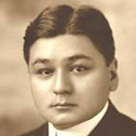
Native American educator and activist; Born: December 28, 1884 on the Winnebago Reservation in Northeast Nebraska; Died: February 9, 1950 in Siletz, Oregon
Education
- B.A. in Psychology & Philosophy, Yale University, 1910
- M.A. in Anthropology, Yale University, 1912
- B.Div. Auburn Theological Seminary, New York 1913
- D.Div., Emporia College, Kansas, 1932
Henry Roe Cloud was born a member of the Bird Clan on the Winnebago Reservation in Northeast Nebraska. His original name was Wo-Na-Xi-Lay-Hunka (Wonah'ilayhunka) or "War Chief". At age seven, he was sent to the government-run Genoa Indian School, a hundred miles from the reservation, where he learned English but was not allowed to speak his native Sioux. At the school, he converted to Christianity and was baptized Henry Clarence Cloud.
After the death of his parents, he attended a vocational school for Native Americans, Santee Mission School close to the South Dakota border, where he trained to be a printer and blacksmith. There he decided to pursue an advanced education. In 1902, Cloud enrolled at Mount Herman Preparatory School for Boys in Northfield, Massachusetts, signing up for the Classical Course that would qualify him for college. Mt. Hermon, founded in 1881, explicitly aimed to provide an excellent education for less privileged students, and it allowed Cloud to pay his way as a work study student. Cloud worked on a farm and sold Native American crafts on the side. He studied Greek grammar by attaching his grammar notes to his plow as he followed the mule team. In this way, he not only became fluent in Greek and Latin, but also graduated as his class' salutatorian in 1906.
Right away, Henry Cloud was accepted at Yale, where he became an instant celebrity. Cloud also met a couple of missionaries, the Roes, who became his friends, mentors, and later adoptive parents; as a result, he changed his middle name to Roe. Four years later, he graduated from Yale as the first Native American ever.
While still a student, Cloud already lectured about the deficiencies of the government's Indian Schools and fought against the belief that Native Americas were only suited to vocational training, not to advanced studies in science and the humanities. In 1915, he founded the Roe Indian Institute Wichita, Kansas (in 1920 renamed the American Indian Institute), then the only Native American-run college preparatory school in the country.
Cloud became a well-known Native American activist. From 1926-1930, he was associated with a team at the Brookings Institute that studied Native American issues. In 1928, he co-authored the Merriam Report on "The Problem of Indian Administration" that led to reforms in the way Native American reservations were run. While superintendent of the Haskell Institute in Lawrence, Kansas, the largest school for Native Americans in the country, Cloud was a driving force behind the Wheeler-Howard Act, also known as the Indian Reorganization Act of 1934, which granted certain rights of home rule to Native American tribes. In 1936, Cloud assumed responsibility for Native American education at the Bureau of Indian Affairs. In 1947, he moved to Oregon, where he served first as superintendent of the Umatilla Indian Agency near Pendleton, then, a year later, became regional representative for the Grande Ronde and Siletz Indian Agencies in Oregon. He died of a heart attack in Siletz on February 9, 1950 and is buried in Beaverton near Portland, Oregon.
-
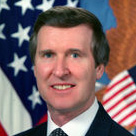
Politician; Born: August 28, 1940 in Bangor, ME
Education
- B.A. in Latin cum laude, Bowdoin College, 1962
- LL.B. cum laude, Boston University School of Law, 1965
After graduation from law school, Bill Cohen, the son of an immigrant baker, joined a Bangor law firm, then worked as Assistant County Attorney for Penobscot County (1968-1970). After two years as a member of the Bangor City Council, he was elected mayor of Bangor in 1971.
From 1972-1979, Cohen served three terms in the House of Representatives (R-Maine). Investigating the Watergate scandal as a member of the House Judiciary Committee during his first term, Cohen became the first Republican to vote for Pres. Nixon's impeachment. Later he was elected to the Senate in which he served for a total of 18 years (1979-1997). Despite his Republican party affiliation, he was appointed Secretary of Defence by Democratic Pres. Bill Clinton and held that office from 1997-2001. Currently, Cohen heads an international business consulting firm located in Washington D.C. called the Cohen Group.
Cohen has published two books of poetry, three mystery novels, and five other books, including an analysis of the Iran-Contra affair (Men of Zeal, with George Mitchell, 1988) and the recent novel Dragon Fire (2006).
William Cohen about the value of Classics
"As far as my passion for writing, I have had the benefit of a Classics education, what was called a liberal arts education, which allowed me to have a sense of history and to study the classics, so that I might gain as much wisdom from studying the past that I might be a better person to deal with the future. That is what I have tried to do. To use words to help persuade one in an argument or on an issue is not inconsistent with being Secretary of Defense. It is a great asset to have."
(From a press conference in Marrakech (Morocco), February 11, 2000) -
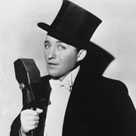
Harry "Bing" Crosby; Popular singer & actor; Born: May 3, 1903 in Tacoma, WA; Died: October 14, 1977 near Madrid, Spain
Education
- Gonzaga High School, 1920
- Pre-law student at Gonzaga University, 1920-1922
Harry L. "Bing" Crosby grew up in Spokane, WA. At the Jesuit-run Gonzaga High School there, he pursued the Classical Course, which means he studied Latin and Greek for several years. He may be the only major popular singer in the United States with a classical education.
After high school, he attended Gonzaga University, intending to become a lawyer. As a student he bought a drum set by mail order and became such an accomplished drummer that he was invited to join a local band, the "Musicaladers". Soon he felt he could make more money as a musician than as a lawyer, and so he decided to drop out of college in his senior year. This turned out to be prescient: His net worth later was estimated at ranging between 80 and 100 million dollars.
From 1926 to his death, Bing Crosby recorded more than 1,700 songs and played in numerous popular movies. His best-known recording is the Irving Berlin song "White Christmas", from the 1942 movie "Holiday Inn", which, according to Guinness World Records, remains the best-selling single of all time, selling more than 100 million copies worldwide, including 50 million singles.
-
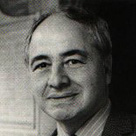
Author; Born: September 29, 1930 in Stamford, Lincolnshire, UK
Education
- B.A. Classics, Christ's College, Cambridge, 1953
- M.A. (honorary), Christ's College, Cambridge, 1958
The author of the hugely popular Inspector Morse mysteries, Norman Colin Dexter graduated from Cambridge University with a BA and MA in Classics. He taught Greek and Latin in various schools before being employed by the Oxford University Examination Board.
A Veteran of the Royal Corps of Signals, Dexter is also a former champion of the Ximenes and Azed cryptic crossword puzzle championships.
After having read two mediocre crime novels in 1972, he decided he could do better. This translated into his first book, Last Bus to Woodstock in 1975, introducing Inspector Morse and his assistant Sergeant Lewis. Dexter has written thirteen Morse novels and a collection of short stories, winning the Silver Dagger in 1979 for Service of all the Dead and in 1981 with The Dead of Jericho as well as a Gold Dagger in 1989 with The Wench is Dead and in 1992 for The Way through the Woods. In 1997 he was awarded the Cartier Diamond Dagger. Unfortunately for many fans, in The Remorseful Day, the creator decided to kill his main character. The Morse series has also been adapted for television with a huge success. (adapted from http://www.bastulli.com/Dexter/Dexter.htm) -
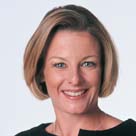
Radio talk show host; Born: 1966
Education
- B.A. Classics, Pomona College, 1987
Lian Dolan is the youngest of the "Satellite Sisters", five now grown-up sisters who decided to create a weekly radio show as a way to reconnect and to talk about issues that they feel are important to women. Their program, first aired in April 2000, is the fasted-growing new program on NPR and can be heard all around the nation (in Salem at 91.5 FM, Saturdays at 11am).
After receiving her Classics degree, Lian Dolan worked as writer/producer for various sporting goods manufacturers. The head writer for the "Satellite Sisters" program, Dolan is also a freelance writer whose material has appeared in national magazines like O, The Oprah Magazine and Good Housekeeping. She is married, has two young boys, and now lives in Pasadena, CA.
-
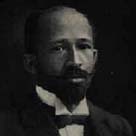
Sociologist and social activist; Born: February 23, 1868 in Great Barrington, MA; Died: August 27, 1963 in Accra, Ghana
Education
- B.A., Fisk University, 1888
- B.A. cum laude, Harvard College, 1890
- M.A. in History, Harvard University, 1891
- Graduate studies in History & Economics at the University of Berlin, Germany, 1892-94
- Ph.D. in History, Harvard University, 1895
W.E.B. DuBois was the first African American to earn a Ph.D. from Harvard and later became an influential sociologist and political activist, co-founding the National Association for the Advancement of Colored People (NAACP) in 1908.DuBois took four years of Latin and three of Greek in high school. At Fisk, he read Homer's Iliad and Odyssey, Demosthenes' speech On the Crown, Sophocles' Antigone, and the New Testament in Ancient Greek. In Latin, he studied Livy and Tacitus (cf. Broderick article below).
After returning from graduate studies at the University of Berlin (now Humboldt University) in Germany, where he studied history and economics, DuBois joined the faculty of Wilberforce University in Ohio as a professor of Greek and Latin (1894-1896).
DuBois' true academic interests, however, lay in history and sociology. After publishing his dissertation, The Suppression of the African Slave Trade to the United States of America, 1638-1870, in a new monograph series, the Harvard Historical Papers (1896), he became an assistant professor of sociology at the University of Pennsylvania (1896-1897). During his tenure there, he pursued the research for his next important book, The Philadelphia Negro: A Social Study (1899), a pioneering sociological study of an urban community. Later he served as professor of economics and history at Atlanta University (1897-1910) and finally as chair of the same university's department of sociology (1934-1944).
W.E.B. DuBois on the Classics
In contrast to Booker T. Washington, who advocated manual training, W.E.B. DuBois believed that African Americans could only obtain social and economic equality in American society if they developed a class of college-educated leaders trained in the humanities, including Latin and Greek, see his 1903 essay "The Talented Tenth".
Links
- Francis L. Broderick, "The Academic Training of W. E. B. DuBois," The Journal of Negro Education 27.1 (Winter, 1958), pp. 10-16 (available through JSTOR).
- W.E.B. DuBois Institute for African and African American Research at Harvard University
- Michelle Valerie Ronnick, "Twelve Black Classicists" (brief biographies of African American Classicists)
-
Artist; Born: 1969 in Lexington, KY

Education
- B.A. Classics, Reed College, 1989
An up-and-coming artist with a B.A. in Classics from Reed College (Portland, OR), Angie Reed Garner has been painting full-time since 1995. Her art has been exhibited in shows all over the United States and in Berlin, Germany. She writes, "The study of ancient Greek history and culture has been a way for me to gain perspective on contemporary situations, so there are references to Greek myth and literature in much of my work."
-
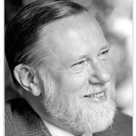
Computer entrepreneur; Born: September 11, 1939 in Cleveland, Ohio.
Education
- A.B. Classics, Xavier University, 1962
- M.S. in Mathematics, Xavier University, 1963
- Ph.D. in Computer Science, Carnegie-Mellon University, 1972
From 1963-68, Dr. Geschke taught Mathematics at John Carroll University.
In the 1970s, Geschke worked as a research scientist at Xerox's Palo Alto Research Center (PARC). In 1978, he and a colleague, John Warnock, invented a Page Description Language (PDL)—a means of describing complex forms like typefaces electronically—called Interpress. When Xerox decided not to commercialize this invention, Geschke and Warnock left PARC and co-founded Adobe Systems (adapted from link below).Geschke retired as Adobe's President in 2000, but still serves as Chairman of the Board.
Links
Short bio at the Computer History Museum.
-
Author
Education
- B.A. in Latin, Vassar College
- M.F.A. in Fiction, The New School University
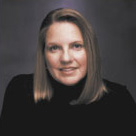
Carol Goodman is the author of several beautifully written and well received novels, The Lake of Dead Languages, The Seduction of Water, The Drowning Tree, and The Ghost Orchid. Her self-described "literary thrillers" are often set in an academic milieu in the Northeastern USA and are true page-turners.
Carol Goodman graduated with a B.A. in Latin from Vassar College. She taught Latin for several years in Austin, Texas, before she returned to school to earn an M.F.A. in fiction from the New School University. Goodman currently teaches writing and works as a writer-in-residence for Teachers & Writers. She lives on Long Island. -
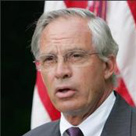
Politician and former director of the CIA; Born: December 10, 1938 in Waterbury, CT
Education
- B.A. in Ancient Greek, Yale University, 1960.
As a Junior at Yale with a knack for languages (besides Greek and Latin he also knew Spanish and French), Goss was recruited to the CIA by his ROTC commander. After graduation, he trained as a military intelligence officer. In 1962, he was deployed to Miami in time for the Cuban missile crisis. Later, he served in Haiti, Santo Domingo, and Mexico, recruiting and running foreign agents. In 1971, he was struck by a sudden illness, a massive staph infection of his heart and other vital organs that forced him into a wheelchair for a while and ended his career as a CIA operative.
In 1972, Goss retired to an island of the coast of Florida, Sanibel Island. He founded a weekly newspaper, The Island Reporter, and began to get involved in politics. In 1974, he was elected mayor. In 1988, he successfully ran for Congress. He was a member of the U.S. House of Representatives from 1989-2004. From 2004-2006, he headed the CIA.
Links
Porter J. Goss entry in the Biographical Dictionary of the U.S. Congress.
"A Cloak but No Dagger," 2002 article by Richard Leiby in the Washington Post.
-
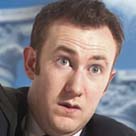
British stand-up comedian; Born: September 10, 1978, from Sussex, UK.
Education
- B.A. in Classics, Cambridge University
After starring in two highly successful comedy shows at the Edinburg Festival, Making Fish Laugh and Every Body Talks, Alex Horne, a Classics graduate hailed by The Independent as "a quick witted and genial comedian," toured the UK in 2005 with his show, When in Rome, to rave reviews.
Nominated as 'Perrier Award' Newcomer in 2003 and honored with the 'Chortle Comedy Award' for Breakthrough Act in 2004, Horne studied Classics at Cambridge University. Asked about the When in Rome show, he commented, "I'm on a mission to keep Latin alive and get some use from a degree which everyone told me would be useless."
-
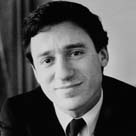
Former CEO of Lotus Development Corp.; Born: 1952
Education
- B.A. in Classics, Colgate University, 1973
- M.A. in International Economics, Tufts University
CJim Manzi (1952- ), former CEO of Lotus Development Corp. Jim Manzi received a B.A. in Classics from Colgate University (1973). After graduating from the Fletcher School of Law and Diplomacy at Tufts University with a masters in International Economics, he became a management consultant at McKinsey & Company.
In 1983, Manzi joined Lotus to lead the start-up company's marketing efforts. In 1984, he became its President, another year later its Chairman and CEO. He led the company during the development of Lotus Notes, a revolutionary software program that enabled the then-new concept of "workgroup" computing. In 1995, Lotus was sold to IBM for $3.5 billion.
Since then, Manzi has been involved in the creation and development of numerous technology start-up ventures with his investment company, Stonegate Capital. In 2003, when Manzi was inducted into the CRN Industry Hall of Fame, he served as chairman of Interwise, a Cambridge, Mass.-based Web conferencing and e-learning company, and Fresh Direct, a New York-area online grocery service. Most recently (Jan. 2006), he invested in and joined the board of directors of Gather.com, a Web site that serves as a gateway to user-generated content.
-
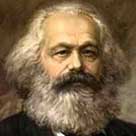
Journalist, political economist, philosopher; Born: May 5, 1818 in Trier, Germany; Died: March 14, 1883 in London
Education
- Abitur, Gymnasium Trier, 1835
- Ph.D., University of Jena, 1841
Karl Marx (1818-1883), philosopher, political thinker, journalist, and author of the Manifesto of the Communist Party (1848) and The Capital (1867-83) Marx took several years of Greek and Latin in high school. Photocopies of essays he wrote in these languages for his exit exams [Abitur] in 1835 are available in the Museum Karl-Marx-Haus in Trier (Germany), where he was born.
Marx studied law, history, and philosophy in Bonn and Berlin. Warned that the Berlin faculty was biased against him because of his reputation as a radical Young Hegelian, Marx submitted his Ph.D. thesis, a dissertation on ancient Greek philosophy entitled The Difference between the Democritean and Epicurean Philosophy of Nature, to the University of Jena and he received his Ph.D. "in absentia" in 1841.
As political editor of the liberal Rheinische Zeitung in Cologne, Marx fled to Paris when this paper was banned in 1843. Later, he had to move on to Belgium. In Brussels, he and his friend, Friedrich Engels, wrote the Communist Manifesto (February 1848), just before a democratic revolution broke out in Germany.
In 1849, Marx returned to Cologne for a couple of months and founded another newspaper, the Neue Rheinische Zeitung. But when the German democratic movement failed, he had to emigrate permanently. He spent the rest of his life in London, where he wrote his main work, The Capital (1867-1883).
Links
Marx entry in the Stanford Encyclopedia of Philosophy.
-
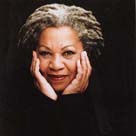
Author and winner of the Nobel Prize for Literature (1993); Born: 1931
Education
- B.A. in English, minor in Classics, Howard University, 1953
- M.F.A. in English, Cornell University, 1955
Toni Morrison has published six novels (among them Beloved, for which she won the 1988 Pulitzer Prize in Fiction), a play, and a critical study on the role of race in the reader/writer relationship. She has taught at several colleges and universities and worked for 15 years as senior editor at Random House in New York City.
-
Philosopher; Born: October 15, 1844 in Röcken, Prussian Province of Saxony, Germany; Died: August 25, 1900 in Weimar, Germany
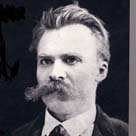
Education
- Abitur, Schulpforta, 1864
- Ph.D. in Classics, University of Leipzig, 1869
From 1858-1864, Nietzsche studied Greek and Latin at a famous college prep-school, now called Landesschule Pforta, near Naumburg in the Prussian Province of Saxony (now the German state Saxony-Anhalt).
After graduation, he entered the university of Bonn to study theology, but soon became enthralled by Classical Philology, attending lectures by Otto Jahn (1813-1869) and Friedrich Wilhelm Ritschl (1806-1876), both famous classicists. When Ritschl moved to the University of Leipzig in 1865, Nietzsche followed him there. Still a student, he was able to publish essays on Aristotle, Theognis and Simonides. At the recommendation of Ritschl, the twenty-four-year-old Nietzsche was offered a professorship in Classical Philology at the University of Basel in Switzerland and received his Ph.D. without having to complete a Ph.D. thesis.Nietzsche taught Classics at the University of Basel from until 1869-1879 when he had to resign from his post for health reasons. His inaugural lecture was called "Homer and Classical Philology." In 1872, he published his first book, The Birth of Tragedy Out of the Spirit of Music. This book, influenced by the philosophy of Schopenhauer, speculates about the origins and the nature of ancient Greek tragedy as a combination of the "Dionysian" and "Apollonian" in the Greek soul.
The Birth of Tragedy finished Nietzsche as a classicist. A fellow graduate of Schulpforta, Ulrich von Wilamowitz-Moellendorf (1848-1931), later one of the most influential classicists of all time, famously ridiculed Nietzsche's utter disregard of the philological evidence for his thesis in a scathing review, entitled "Zukunftsphilologie!" ("Philology of the Future!"). When the book was reissued in 1886, Nietzsche himself added a prologue, entitled "An Attempt at Self-Criticism," and referred to his work as "an impossible book . . . badly written, ponderous, embarrassing, image-mad and image-confused, sentimental, saccharine to the point of effeminacy, uneven in tempo, [and] without the will to logical cleanliness."Others were impressed with the book. Nietzsche's then-friend, the composer Richard Wagner, remarked to his wife, Cosima, "That is the book I have always wished for myself!" His friend Erwin Rhode, another Classics professor, recognized the philosophical merits of Nietzsche's argument and praised the book. And in fact, The Birth of Tragedy represents Nietzsche's start to a new career as an original philosopher whose ideas had an impact on entire disciplines like psychology and anthropology and inspired artists and writers like Rainer Maria Rilke, Robert Musil, Gottfried Benn, Thomas Mann, and Ernst Jünger.
Links
Nietzsche entry in Stanford Encyclopedia of Philosophy.
Nietzsche page at the University of Toronto.
-
British author, translator, and Christian humanist.; British author, translator, and Christian humanist.; Born: June 13, 1893 in Oxford, UK; Died: August 28, 1957 in Witham, Essex, UK
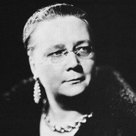
Education
- B.A. with first-class honours in Modern Languages and Medieval Literature, Somerville College, Oxford, 1916.
- M.A., Somerville College, Oxford, 1920.
Sayers studied Latin from age six (Greek somewhat later) and maintained a life-long love especially for medieval Latin. Her criticism of the old-fashioned grammar translation method, as well as her suggestions on how to reform the teaching of Latin, should be compulsory reading for lovers of Wheelock's Latin Grammar and similar books.
Dorothy Sayers about the value of Classics
"The best grounding for education is the Latin grammar. I say this, not because Latin is traditional and mediaeval, but simply because even a rudimentary knowledge of Latin cuts down the labor and pains of learning almost any other subject by at least fifty percent. It is the key to the vocabulary and structure of all the Teutonic languages, as well as to the technical vocabulary of all the sciences and to the literature of the entire Mediterranean civilization, together with all its historical documents."
(From : Dorothy Sayers, The Lost Tools of Learning, lecture given at Oxford University in 1947) -
German-American revolutionary, journalist, and politician; Born: March 2, 1829 in Liblar near Cologne, Germany; Died: May 14, 1906 in New York, NY
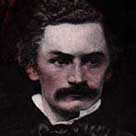
Education
- Abitur, Cologne 1847
- History student at the University of Bonn 1847-1848
Carl Schurz studied Latin and Greek in high school in Germany. During his university entrance exams in 1847, he impressed his examiners because he knew the entire sixth book of Homer's Iliad by heart.
Carl Schurz joined the University of Bonn to study history and philosophy. He also became a member of the Burschenschaft Franconia, a fraternity that brought him into contact with democratically-minded students that advocated political and university reform.
When the democratic revolution broke out in 1848, Carl Schurz joined the republican army in Baden. After the defeat of the uprising, he was imprisoned in Fort Rastatt and escaped execution with a daring flight through the sewers. Although he made it to safety in Switzerland, Schurz then returned to Prussia and helped his mentor and former rhetoric professor at the University of Bonn, Gottfried Kinkel, escape from the Spandau prison in Berlin.
In 1852, Schurz emigrated to the United States where he became a lawyer, newspaper editor, and influential supporter of Abraham Lincoln. During the Civil War, he served as a general on the Union side. Later, Schurz became the first German-American U.S. Senator (R, Missouri, 1869-1875) and served as Secretary of the Interior under Rutherford B. Hayes (1877-1881).
As interior secretary, Schurz implemented legislation to protect forests, reformed the civil service, and promoted better treatment for African Americans and Native Americans. The small reservation town of Schurz, Nevada, is named for Carl Schurz.
Carl Schurz on the Value of Greek and Latin
"I did indeed – and unfortunately – forget a lot of the Latin and Greek that I learned as a student at high school. But I never lost the esthetic and moral impulses which these studies gave me, the idealistic values, which they helped me form, the intellectual horizons which they opened up. ... If I could choose again between classical studies and the so-called "useful" disciplines, I would, without a doubt, choose for myself more or less the same kind of curriculum that I went through."
(Carl Schurz, Lebenserinnerungen (Memoirs), vol. I, Berlin 1906, p. 91, translated from the original German)
Links
Carl Schurz entry in the Biographical Dictionary of the U.S. Congress.
-
Journalist; ABC news correspondent; Born: March 4, 1942 in Philadelphia, PA
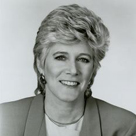
Education
- B.A. in Ancient Greek, Wellesley College, 1963.
At Wellesley, Sherr studied Greek with two well-known Classicists, Barbara McCarthy and Mary Lefkowitz. She performed in Greek plays and studied some Modern Greek on top of her Ancient Greek.
Sherr's career in journalism started with a job for the Conde Nast group. Later, she changed to the Associated Press. In 1972 she become a channel 2 news anchor in New York City. She joined ABC as a correspondent with 20/20 in 1986.
Lynn Sherr on Ancient Greek
"Why in Heaven's Name are You Majoring in Greek?"[... T]hat's a sentence that's been in my brain for nearly 40 years, because that's what everyone always asked me then, and still does. [... I]n fact, I am doing something with my Greek -; I am living it every day and using it in everything I write and read and say.
The short answer to the question is simple: Why did I major in Greek? Because I liked it. Loved it. And yes, I think it's made me a better person. Really."
(From: Lynn Sherr's CAAS talk in 2000)Links
"Why in Heaven's Name Are You Majoring in Classics?" Lynn Sherr talk at the 2000 meeting of the Classical Association of the Atlantic States.
Lynn Sherr bio on ABC News website.
-
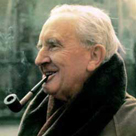
Author of the Lord of the Rings trilogy; Born: January 3, 1892 in Bloemfontein, South Africa; Died: September 2, 1973 in Bournemouth, Dorset, England
Education
- King Edward's School in Birmingham, 1911
- B.A. in English Language and Literature with first-class honours, Exeter College, Oxford, 1915
J. R. R. Tolkien studied Latin and Greek in two Birmingham schools. Later, he attended Exeter College on a Classical Scholarship (1911-15). In college, Tolkien also studied a variety of other languages besides Greek and Latin, such as Old English, Gothic and other Germanic languages, Finnish, and Welsh.
While Tolkien was writing his Lord of the Rings trilogy, he worked for a time as an Assistant Lexikographer with the Oxford English Dictionary project, contributing, e.g., the articles "walrus" and "wasp".
In 1920, he started a career as an English professor. In 1959, he retired as the Merton Professor of English Language and Literature at Oxford University.Links
Tolkien entry in the NNDB.
-
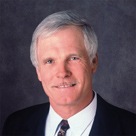
Billionaire philanthropist, cattle breeder, owner of a restaurant chain, and ex-media mogul; Born: November 19, 1938 in Cincinnati, OH
Education
- Classics, later Economics Major at Brown University (1956-1960)
One of Ted Turner's greatest heroes has always been Alexander the Great, so at Brown University, he decided to major in Classics. His choice of major made his father, who ran a billboard advertising company, "almost puke," as he wrote in a now famous letter to his son.
Ted Turner did change his major to Economics, yet not before leaking the letter to the press (reprinted in Arion 1.1 (1990) 237-39; click on "Autolycus" link below).
Expelled from college in his senior year for having a female visitor in his dorm room, he finally joined his father's billboard business and turned it into a huge media-conglomerate.
Over time, he launched CNN, the first 24-hour all-news network, founded Turner Network Television (TNT), the Cartoon Network, and Turner Classic Movies (TCM), and acquired sports franchises like the Atlanta Braves.
Currently, Mr. Turner heads the Turner Foundation, which is devoted to the protection of the environment; the United Nations Foundation, which in 1999 donated $28 million to help eradicate Polio world-wide; and, together with former Senator Sam Nunn, the Nuclear Threat Initiative (NTI), a charitable organization working to reduce the risk of use and prevent the spread of weapons of mass destruction. In addition, he breeds cattle and supplies the meat to a chain of restaurants he founded.
Ted Turner about himself and Alexander the Great
"They laughed at me when I started CNN. They laughed at me when I bought the Braves. They laughed at me when I bought M-G-M. I spent a lot of time thinking, and I did not fear, because of my classical background. When Alexander the Great took control when his dad died, he was twenty years old. He took the Macedonian Army, which was the best army in the world at the time, and conquered Greece, got the Greeks to all join with him, and then marched across the Hellespont and invaded Asia. They didn't even know where the world ended at that time. And he was dead at thirty-three, thirteen years later. He kept marching. He hardly ever stopped. And he never lost a battle."
(Source: Ken Auletta, "The Lost Tycoon," The New Yorker, April 23&30, 2001, p. 151)
-
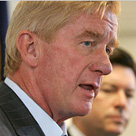
Former governor of Massachusetts (1991-1997); Born: July 31, 1945 in Smithtown, NY
Education
- B.A. in Classics, summa cum laude, Harvard University, 1966.
- Diploma in international economics with distinction, University College, Oxford, 1967.
- LL.D. cum laude, Harvard University Law School, 1970.
William Weld was a federal prosecutor in the United States Justice Department from 1981 to 1988. In 1991, he became a Republican governor of Massachusetts, a post he held until 1997.
In November 2006, he rejoined the international law firm of McDermott Will & Emery as a partner in its New York office.
William Weld has also tried his luck as a mystery writer (Mackerel by Moonlight, 1998), according to the magazine Mother Jones with limited success.
Links
William Weld entry at the Official Website of the Commonwealth of Massachusetts.