Past Faculty
-
Professor Emeritus of Religious Studies
Specialties: Near Eastern Archaeology, Paleobotany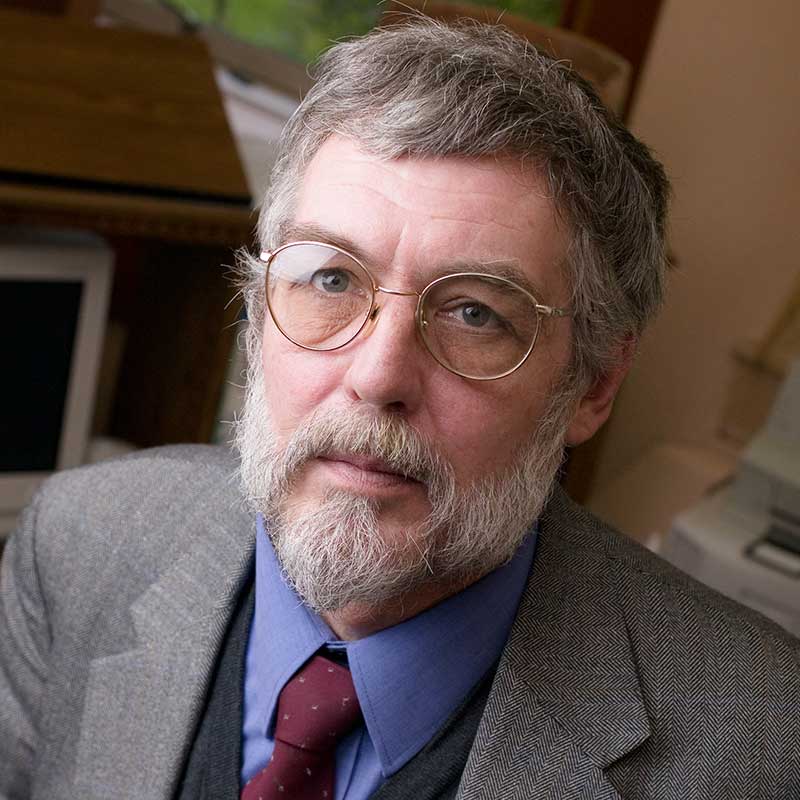
Biography
Professor McCreery is an internationally renowned Near Eastern archaeologist and paleobotanist. For the Classical Studies Program, he regularly offered courses in Syro-Palestinian archaeology, Archaeological Methodology, Old Testament history, and Hebrew. He retired after 27 years of teaching in May 2015.
A former Director of the American Center of Oriental Research (ACOR) in Amman (1981-88), Prof. McCreery participated in numerous excavations, most notably at Bâb edh-Dhrâ` and Numeira (Jordan). Most recently, he served as Co-Director of the Tell Nimrin Excavations in Jordan.At Willamette University since 1988, Prof. McCreery maintained an archaeological lab on campus where he worked with his students on recent finds. He continues to be involved with the Salem Society of the Archaeological Institute of America, whose Founding President he was.
Prof. McCreery's exemplary teaching has been recognized nationally with the coveted Award for Excellency in Undergraduate Teaching bestowed by the Archaeological Institute of America.Education
- B.A., Sterling College
- M.Div., Pittsburgh Theological Seminary
- Ph.D., University of Pittsburgh
Selected Grants and Awards
- U.S. Department of Energy Grant for Neutron Activation Analysis of paleobotanical and soil samples from Tell Nimrin. (through Oregon State University, Radiation Center), 1991, 1992, and 1993.
- Willamette University Merit Award for Outstanding Research, 1992.
- NEH Research Grant, Tell Nimrin Project, Jordan, 1993.
- Willamette University Merit Award for Outstanding Teaching and Research, 1994.
- Willamette University Professor of the Year, 2000.
- Willamette University Faculty Achievement Award for Service, 2003.
- Award for Excellency in Undergraduate Teaching of the Archaeological Institute of America, 2003.
- Named Director and Professor of Archaeology Emeritus of the American Center for Oriental Research in Amman, Jordan, 2007.
- United Methodist Award for Exemplary Teaching and Service, 2009.
Publications
Prof. McCreery has published more than 20 journal articles and excavation reports. -
Part-Time Visiting Instructor (2013-2015)
Specialty: Latin; Ancient & Medieval History
Biography
Professor Gerberding taught Latin and Ancient History courses at Willamette University between Fall 2013 and Spring 2015.
Before then, he had retired from his position as a Professor of History and Director of Classical Studies at the University of Alabama in Huntsville in 2013 after 29 years of teaching there. During this time, he was honored with the National Teaching Award of the American Philological Association (1996).
Education
- Ph.D., Oxford University (United Kingdom)
Publications
Books:
• The Rise of the Carolingians And The 'Liber Historiae Francorum', Oxford: Clarendon Press, 1987.
• Late Merovingian France: History and Hagiography 640-720 (Manchester Medieval Sources) (translated and edited with Paul Fouracre), Manchester: Manchester University Press, 1996.
• Medieval Worlds: An Introduction to European History, 300-1492 (with Jo Ann H. Moran Cruz) Boston: Houghton-Mifflin, 2003.
• How To Be Old: The Thinking Person's Guide To Retirement (a modern adaptation of Ciceros' essay On Old Age [De Senectute] with commentary), adapted by R. Gerberding, illustrated by Lance Rossi, New Orleans, LA: Quid Pro Books, 2014.
Articles:
• "Paris Bibliothèque Nationale Latin 7906: An Unnoticed Very Early Fragment of the 'Liber Historiae Francorum'," Traditio XLIII (1987), pp. 381-386.
• "716: A Crucial Year For Charles Martel," in J. Jarnut, U. Nonn, M. Richter, eds., Karl Martel und seine Zeit, Sigmaringen: Jan Thorbecke Verlag, 1994, pp. 205-16.
• "Gregory of Tours", in William W. Kibler & Grover A. Zinn., eds., Medieval France: An Encyclopedia, New York & London: Garland Press, 1995, pp. 801-2.
• "Fredegar", in William W. Kibler & Grover A. Zinn., eds., Medieval France: An Encyclopedia, New York & London: Garland Press, 1995, p. 705.
• "The Later Roman Empire," in Rosamond McKitterick and Paul Fouracre, eds., The New Cambridge Medieval History, Vol. I: AD 500-700, Cambridge: Cambridge University Press, 2005, pp. 13-34.
Reviews:
Book Reviews in Speculum, American Historical Review, and International History Review.
-
Visiting Instructor of Classics, 2010-2013
Specialty: Greek and Latin language; Greek and Roman medicine
Biography
Donann Warren offered Latin and Greek courses and classes on Roman Women and on Ancient Medicine while she taught for us. Previously, she had taught Latin and Greek at high schools and colleges for many years, including Beginning Latin at the University of California, Santa Barbara, Cicero, Vergil, Classical and Homeric Greek at Portland State University, and New Testament Greek at Marylhurst College. She also studied a medieval Greek manuscript in the Vatican Library and spent one summer on a fellowship at the American Academy in Rome, attending its Archaeology Program.Education
- B.A., cum laude, University of California, San Diego
- M.A., University of California, Santa Barbara
Courses Taught
Fall 2012:
LATIN 131-02 Elementary Latin I (TTh 9:40-11:10am)
LATIN 131-03 Elementary Latin I (TTh 2:30-4:00pm)
CLAS 247 Women in Roman Literature and Life (TTh 12:50-2:20pm)
Spring 2013:
Latin 132-02 Elementary Latin II (TTh 9:40-11:10am)
CLAS 248 Ancient Medicine TTh (12:50-2:20pm)
-
Visiting Assistant Professor of Classics, 2010-2011
Specialty: Ancient History, Ancient Greek Religion and Economy
Biography
Isabelle A. Pafford received her B.A. from Boston University, M.A. degrees in Classics as well as Museum Studies from San Francisco State University and her Ph.D. in Ancient History and Mediterranean Archaeology from the University of California at Berkeley in 2006. She has taught at San Francisco State, Berkeley, and Santa Clara University. Her research focuses on the role of money in Greek sanctuaries. Using inscriptions, she has examined how small fees paid by worshipers at some sanctuaries mirror the belief system of the worshipers.
At Willamette University, Dr. Pafford taught Beginning & Intermediate Latin. In Fall 2010, she also offered a course on Ancient Greek Economy, and in Spring 2011, she taught Greek Art & Architecture. Dr. Pafford likes to use technology in her classroom, when possible, and many of her earlier lectures on Greek and Roman History, Greek Art, and Greek Religion are available as podcasts.
Education
- B.A., Classics, Boston University
- M.A., Classics, San Francisco State University
- M.A., Museum Studies, San Francisco State University
- Ph.D., University of California, Berkeley
-
Visiting Assistant Professor of Classics, 2007-2008
Biography
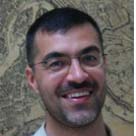
Mehran Nickbakht replaced Prof. Ortwin Knorr during his sabbatical in 2007-2008.
Dr. Nickbakht is an ancient historian with strong training in classical philology. He is especially interested in Roman history, Latin epigraphy, and Latin literature, in particular historiography, Augustan poetry, and epistolography.
He studied at the universities of Cologne and Göttingen in Germany, but also spent one year at the Katholieke Universiteit te Leuven (Belgium) and three years at the University of California, Berkeley.
While working at the University of Bern in Switzerland, Mehran Nickbakht received his Ph.D. from Heinrich-Heine-Universität, Düsseldorf (Germany) with a study on Tacitus and the SC de Cn. Pisone patre: Tacitus’ Working Methods in the Annals (in German). He has published several scholarly articles, e.g., on Vergil's Aeneid, Tacitus' Annals, Ovid's Ars Amatoria, and Augustus' adoption of Tiberius. Currently, he is working on Pliny's Epistles.
Mehran Nickbakht previously taught at the University of California, Berkeley, and at the University of Bern (Switzerland). He spent 2006-2007 doing research at the Swiss Institute in Rome. Since then, he has taught at the Universities of Gießen and Düsseldorf. Currently, he is a Lecturer in Ancient History at the University of Düsseldorf.Education
- M.A., Ancient History & Latin Philology, Georg-August-Universität Göttingen (Germany)
- Ph.D., Ancient History, Heinrich-Heine-Universität, Düsseldorf (Germany)
Publications
Aemulatio in Cold Blood. A Reading of the End of the Aeneid, Helios 37 (2010) 49-80
Fighting for Liberty, Embracing Slavery: Tacitus, Annals 1.7.1, Museum Helveticum 63 (2006) 39-43
Closure and Continuation: The Poetics of Aeneid 6.900-1, Philologus 150 (2006) 95-101
Further Evidence of the Original Outline of Ovid's Ars Amatoria (1.771-2), Mnemosyne 58 (2005) 284-286
Zur ovatio des jüngeren Drusus in den Fasti Ostienses und Fasti Amiternini, Zeitschrift für Papyrologie und Epigraphik 153 (2005) 264-266
Tiberius' Adoption durch Augustus: rei publicae causa? (Vell. Pat. 2.104.1), Göttinger Forum für Altertumswissenschaft 1 (1998) 112-116 -
Visiting Associate Professor of Classics, 2006-2007
Biography
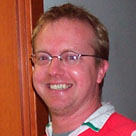
Alex Nice, an ancient historian with special expertise in Roman religion and divination, taught Ancient History and Latin at Willamette University from 2006-2007, including a very popular course on Ancient Magic and another similarly well-received course on Roman Africa.
Dr. Nice has published on Caesar, Cicero, Livy, Juvenal, Tacitus, and Cassius Dio. In 2005, Dr. Nice was awarded a National Endowment for the Humanities fellowship to attend a summer seminar in Rome and pursue a summer research project on ancient Roman religion and culture. His project, entitled "The gens Marcia and Roman Religion in the Late Republic", studied the influence that the nobility in Rome exacted on the city’s religious institutions.
A native of Great Britain, Alex Nice previously was the head of the now defunct Classics Department at the University of the Witwatersrand (Johannesburg, South Africa) and a Visiting Assistant Professor at the University of California, Los Angeles, and at Reed College. He left Willamette for a permanent teaching position at the European School in Woluwé (Belgium).Education
- B.A., M.Phil., University of Wales (UK)
- Ph.D., University of Exerter (UK)
Select Publications
"The Reputation of the mantis Aristander," Acta Classica 48 (2005) (in honorem Prof. J.E.A. Atkinson) 87-102.
"C. Trebatius Testa and the British charioteers: the relationship of Cic. Ad fam. 7.10.2 to Caes. BG 4.25 and 33," Acta Classica 46 (2003) 171-96.
"The persona of Umbricius and Divination in Juvenal, Satires Three and Six," in: Studies in Latin Literature and Roman History XI. Collection Latomus. Brussels 2003, 401-418.
"Ennius or Cicero? The disreputable diviners at Cicero, De Divinatione 1.132," Acta Classica 44 (2001) 153-66.
"Superstition and religion in Tacitus' and Dio's accounts of the Boudican revolt," Pegasus 36 (1993) 15-18. -
Visiting Assistant Professor of Classics, 2005-2006
Biography
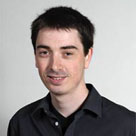
During his one year here (Fall 2005-Spring 2006), Dr. Williams breathed new life into Willamette's ancient history program. A historian of Roman Late Antiquity, he wrote his dissertation on the use of biblical imagery in the late-antique lives of the saints. While at Willamette, he reworked these ideas into a book entitled "Authorised Lives in Early Christian Biography between Eusebius and Augustine" (Cambridge University Press, 2008). In addition, Dr. Williams taught a very popular survey on Roman history, a similarly well-enrolled course on the governing of the Roman Empire (accompanied by an advanced Latin reading class on the letters of Pliny the Younger), a class on Christian hagiography (Lives of the Desert Saints), and beginning Latin languages classes.
Before coming to Willamette, Dr. Williams spent a year helping to develop teaching materials for the Cambridge Latin Course. He also taught Roman history at the University of Cambridge, at Roehampton University, and at the National University of Ireland, Maynooth. He left Willamette to fill a two-year sabbatical replacement post at his alma mater, the University of Cambridge in the UK. In 2008, Dr. Williams took up a permanent position at the National University of Ireland, Maynooth.Education
- M.A., M.Phil., Ph.D. King's College, University of Cambridge (UK)
Select Publications
Authorised Lives in Early Christian Biography between Eusebius and Augustine. Cambridge: Cambridge University Press, 2008 (ISBN 978-0-521-89490-6).
-
Visiting Assistant Professor of Classics, 2000-2001
Biography
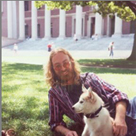
Dr. Porta, a specialist in Greek poetry and religion, ably represented the Classics at Willamette in the year after Prof. Usher's departure (2000-2001). Among other things, he taught an intermediate Latin prose class on Petronius' Satyricon and Apuleius' Metamorphoses.
Currently, he is a Lecturer at Stanford University teaching Sanscrit in the Special Languages program. He has also taught Ancient Greek for the Classics Department in the Introduction to the Humanities Program. At student request, he offers classes and tutorials in rarely taught ancient languages such as Old Irish, Mycenaean Greek, ancient Greek dialects, Old Persian, Avestan, Sogdian, Parthian, Khotanese, Tocharian, Gandhari, Pakrit, Pali, Hittite, and Luwian.
Education
- Ph.D., Harvard University
Select Publications
Greek Ritual Utterances and the Liturgical Style. Diss. Harvard, 1999.
-
Assistant Professor of Classics, 1998-2000
Biography
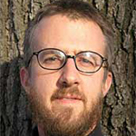
Dr. Mark Usher was the first professor of Classics hired after Willamette University founded its new, interdisciplinary Classical Studies Program in 1998. Within a few years, he managed to attract so many students to his Latin classes that two sections of Beginning Latin were needed. He also recruited a number of enthusiastic majors, some of whom even participated in the American excavations of the Agora in Athens. One of the highlights of his tenure was the 1999 performance of an opera-oratorio, Voces Vergilianae, based on Vergil's Aeneid and composed by Willamette Professor of Music John Peel, for which Dr. Usher wrote the Latin libretto.
After three years at Willamette, however, Dr. Usher accepted a tenure-track appointment at his alma mater, the University of Vermont, where he is currently a Professor of Classics. Apart from articles and books on the Homeric Centos, Euripides, Plato, and Ezra Pound, Dr. Usher has also written two illustrated children's books, Wise Guy: The Life and Philosophy of Socrates (Farrar, Straus & Giroux, 2005) and Diogenes (Farrar, Straus & Giroux, 2009).Education
- Ph.D., University of Chicago
Select Publications
"The Sixth Sibylline Oracle as a Literary Hymn," Greek, Roman, and Byzantine Studies 36.1 (1995) 25-49.
"Prolegomenon to the Homeric Centos," American Journal of Philology 118.2 (1997) 305-21.Homeric Stitchings: The Homeric Centos of the Empress Eudocia. Lanham, Md.: Rowman & Littlefield Publishers, 1998 (ISBN 9780847689996).
(ed.) Homerocentones Eudociae Augustae (Bibliotheca Scriptorum Graecorum et Romanorum Teubneriana). Stuttgart & Leipzig: B.G. Teubner, 1999 (ISBN: 3519013185).
"Στέλλεται at Bacchae 1000: The Emperor's New Clothes?" Classical Philology 95.1 (2000) 72-74.
Letters of Seneca. Selected by M.D. Usher, with notes and commentary. Focus Pub.: Newburyport, 2000."Satyr Play in Plato's Symposium," American Journal of Philology 123 (2002) 205–228.
"The Reception of Homer as Oral Poetry," Oral Tradition 18.1 (2003) 79-81.
A Student's Seneca: Ten Letters and Selections from De Providentia and De Vita Beata (University of Oklahoma Press, 2006 (ISBN: 0806137444).
"Carneades' Quip: Orality, Philosophy, Wit, and the Poetics of Impromptu Quotation," Oral Tradition 21:1 (2006) 190-209.
"Theomachy, Creation, and the Poetics of Quotation in Longinus Chapter 9," Classical Philology 102:3 (2007) 292-303.
"Diogenes' Doggerel: Chreia and Quotation in Cynic Performance," Classical Journal 104:3 (2009) 207-223.
“Teste Galba cum Sibylla: Oracles, Octavia, and the East,” Classical Philology 108.1 (2013) 21-40.
“An African Oresteia: Field Notes on Pasolini’s Appunti per un’ Orestiade Africana,” Arion, A Journal of Humanities and the Classics 22.1 (2014) 111-149.
-
Professor Emeritus of Philosophy, 1986-2008
Specialties: Symbolic Logic, Ancient Philosophy
>
Biography
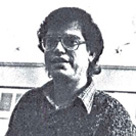
Professor Goble's interests include philosophical logic/symbolic logic, the philosophies of language, mind, and science, epistemology, and the history of philosophy.
Before coming to Willamette in 1986, he taught at the University of Wisconsin in Madison and the University of North Carolina in Chapel Hill.
The editor of The Blackwell Guide to Philosophical Logic (2001), he has also published numerous scholarly papers and a fantasy novel inspired by Estonian mythology, The Kalevide (Bantam Books, 1982).Lou Goble was awarded with a Faculty Achievement Award for Scholarship in 2003 and with the Lawrence Cress Award for Excellence in Faculty Scholarship in 2005. He retired from teaching in 2008.
Education
- B.A., Oberlin College
- M.A., Ph.D., University of Pittsburgh
Publications
edited books:- Goble, Lou and Meyer, John-Jules Ch., eds. (2006). "Deontic Logic and Artificial Normative Systems," 8th International Workshop on Deontic Logic in Computer Science, DEON 2006, Utrecht, The Netherlands, July 12-14, 2006, Proceedings. Berlin & New York: Springer (ISBN-13: 978-3540358428).
- Lou Goble, ed. (2001). The Blackwell Guide to Philosophical Logic. Oxford: Blackwell (ISBN-13: 978-0631206934).
articles and book chapters:
- Goble, Lou and Meyer, John-Jules Ch. (2008). "Editorial." Journal of Applied Logic 6(2): 133-134.
- Goble, Lou (2007). "Combinatory Logic and the Semantics of Substructural Logics." Studia Logica 85(2): 171-197.
- Goble, Lou (2005). "A logic for deontic dilemmas." Journal of Applied Logic 3(3-4): 461-483.
- Goble, Lou (2005). "Neighborhoods for Entailment." Journal of Philosophical Logic 32(5): 483-529.
- Lockhorst, Gert Jan C. and Goble, Lou (2004). "Mally's Deontic Logic." Grazer Philosophische Studien 64: 37-57.
- Goble, Lou (2004). "A Proposal for Dealing with Deontic Dilemmas." DEON 2004: 74-113.
- Goble, Lou (2004). "Combinator Logics." Studia Logica 76(1): 17-66.
- Goble, Lou (2003). "Preference Semantics for Deontic Logic Part I – Simple Models." Logique et Analyse 46: 383-418.
- Goble, Lou (2001). "The Andersonian reduction and relevant deontic logic," in: Brown, Bryson and Woods, John, eds., New Studies in Exact Philosophy: Logic, Mathematics, and Science – Proceedings of the 1999 Conference of the Society of Exact Philosophy. Paris: Hermes Science Publications, 213-246.
- Goble, Lou (2000). "Multiplex Semantics for Deontic Logic." Nordic Journal of Philosophical Logic 5(2): 113-134.
- Goble, Lou (2000). "An Incomplete Relevant Model Logic." Journal of Philosophical Logic 29(1): 103-119.
- Goble, Lou (1999). "Deontic Logic with Relevance," in: McNamara, Paul and Prakken, Henry, eds. Norms, Logics, and Information Systems: New Studies in Deontic Logic and Computer Science. Amsterdam: IOS Press, 331-345.
- Goble, Lou (1998). "Re-Evaluating Supervaluations." Protosociology 11: 66-92.
- Goble, Lou (1997). "Translucent Belief Ascriptions," in: Jutronić, Dunja, ed. The Maribor Papers in naturalized Semantics. Maribor: Pedagoška faculteta Maribor, 285-296.
- Goble, Lou (1996). "Utilitarian Deontic Logic." Philosophical Studies 82: 317-357.
- Goble, Lou (1996). "'Ought' and Extensionality." Nous 30(3): 330-355.
- Goble, Lou (1994). "Quantified Deontic Logic with Definite Descriptions." Logique et Analyse 37: 239-253.
- Goble, Lou (1993). "The Logic of Obligation, 'Better', and 'Worse'." Philosophical Studies 70: 133-163.
- Goble, Lou (1991). "Murder Most Gentle: the Paradox Deepens." Philosophical Studies 64: 217-227.
- Goble, Lou (1990). "A Logic of Good, Should, and Would. Part II." Journal of Philosophical Logic 19(3): 253-276.
- Goble, Lou (1990). "A Logic of Good, Should, and Would: Part I." Journal of Philosophical Logic 19 (2): 169-99.
- Goble, Lou (1989). "A Logic of Better." Logique et Analyse 32: 297-318.
- Goble, Lou (1974). "Corrigenda: Opacity and the Ought-to-be." Nous 8(2): 200.
- Goble, Lou (1973). "Opacity and the Ought-to-be." Nous 7(4): 407-412.
- Goble, Lou (1973). "A New Modal Model." Logique et Analyse 16: 301-309.
-
George H. Atkinson Professor Emeritus of Religious and Ethical Studies, 1981-2007; Chair, Classical Studies Program, 1998-2005; Senior Research Fellow, Center for Ancient Studies and Archaeology, 2009-present
Biography
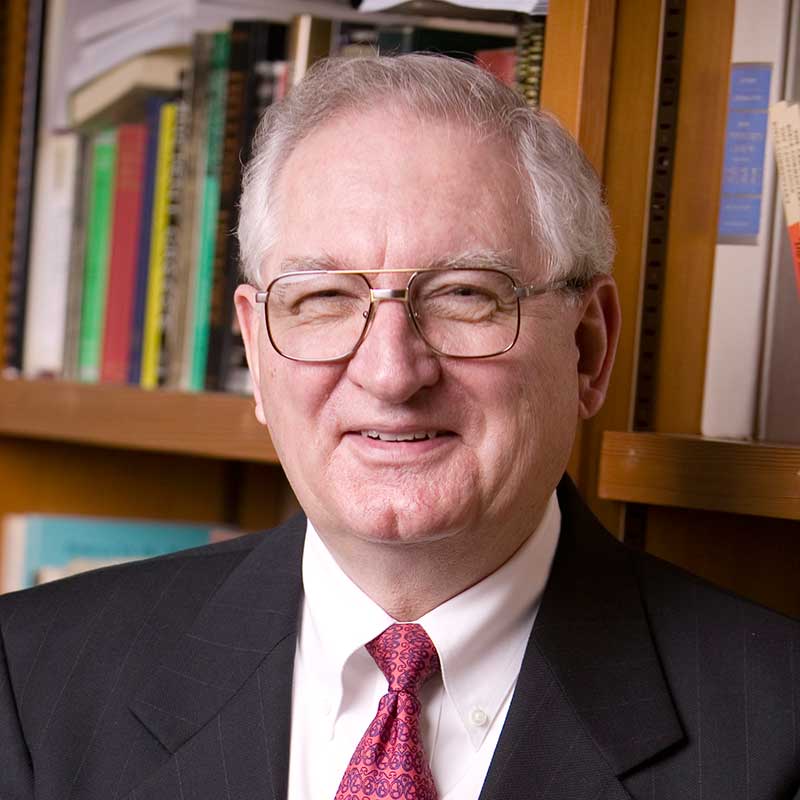
Professor McGaughy came to Salem in 1981 as the first holder of the George H. Atkinson Chair of Religious and Ethical Studies. Before, he and his late mentor, Robert Funk, had helped to establish the Religious Studies Department at the University of Montana. In addition, they founded Scholars Press, and Prof. McGaughy served as one of its first editors.
At Willamette University, Prof. McGaughy became a driving force in the establishment of the Classical Studies Program (founded in 1998) and chaired it for many years. The author of a book on Hellenistic Greek grammar and the co-author (with Bob Funk) of a New Testament Greek textbook, Prof. McGaughy taught elementary ancient Greek and classes on Herodotus, Greek biography, Hellenistic Greek literature, and Hellenistic mystery religions for the Classical Studies Program and received the United Methodist Distinguished Teaching Award.
Prof. McGaughy was also instrumental in the founding of the Willamette Journal of the Liberal Arts (1983), the Salem Chapter of the Archaeological Institute of America (chartered in 1995), and, as an ordained United Methodist minister himself, in the establishment of a non-denominational theological seminary in Salem, the Northwest House of Theological Studies (1998). In Santa Rosa, CA, he and Bob Funk started the Westar Institute and the associated Polebridge Press. Furthermore, Prof. McGaughy has served as President and Executive Secretary both of the Pacific Northwest Region of the American Academy of Religion and the Society of Biblical Literature.
Professor McGaughy retired from Willamette University after 25 years of service in May 2007. After serving as Director of the new Center of Ancient Studies and Archaeology (est. 2007) at Willamette University from 2007-2009, he is now the Center's first Senior Research Fellow. In addition, he continues to be the editor of Polebridge Press and to serve on the Board of Directors of the Westar Institute and the Northwest House of Theological Studies.Education
- A.B., Ohio Wesleyan University
- B.D., Drew Theological Seminary
- M.A., Ph.D., Vanderbilt University
Select Publications
Toward a descriptive analysis of [einai] as a linking verb in New Testament Greek. Missoula, Mont.: Society of Biblical Literature for the Linguistics Seminar, 1972 (SBL Dissertation Series, 6).
"The Fear of Yahweh and the Mission of Judaism: A Postexilic Maxim and its Early History, Christian Expansion in the Parable of the Talents. Journal of Biblical Literature 94.2 (1975) 235-45.
A Beginning-Intermediate Grammar of Hellenistic Greek: Workbook. Missoula, Mont.: Scholars Press, 1976.
"Amadeus and the Prodigal Son," Willamette Journal of the Liberal Arts 4.2 (1989) 1-11.
"Jesus' Parables and the Fiction of the Kingdom," The Fourth R 3-4 (1990) 8-11.
"A Short History of Parable Interpretation," Forum. A Journal of the Foundations and Facets of Western Culture 8.3-4 (1992) 229-45.
"The Kimball School and Methodist Theological Education in the Northwest," Willamette Journal of the Liberal Arts 7 (1992) 113-23.
"Words Before Deeds," Forum. A Journal of the Foundations and Facets of Western Culture 1.2 (1998) 387-98.
"Infancy Narratives and Hellenistic Lives," Forum. A Journal of the Foundations and Facets of Western Culture 2.1 (1999) 25-39.
"The Search for the Historical Jesus: Why Start with the Sayings?" in: Roy W. Hoover, ed. Profiles of Jesus, Santa Rosa: Polebridge Press, 2002, 117-27.
(with A. J. Dewey, R. W. Hoover, D. D. Schmidt), transl. and comm., The Authentic Letters of Paul: A New Reading of Paul's Rhetoric and Meaning. Salem, Ore.: Polebridge Press, 2010.
-
Part-time Latin Instructor at Willamette 1965-1974
Biography
Magister similis candelae est. Consumitur ut lux eius aliis viam illuminet.
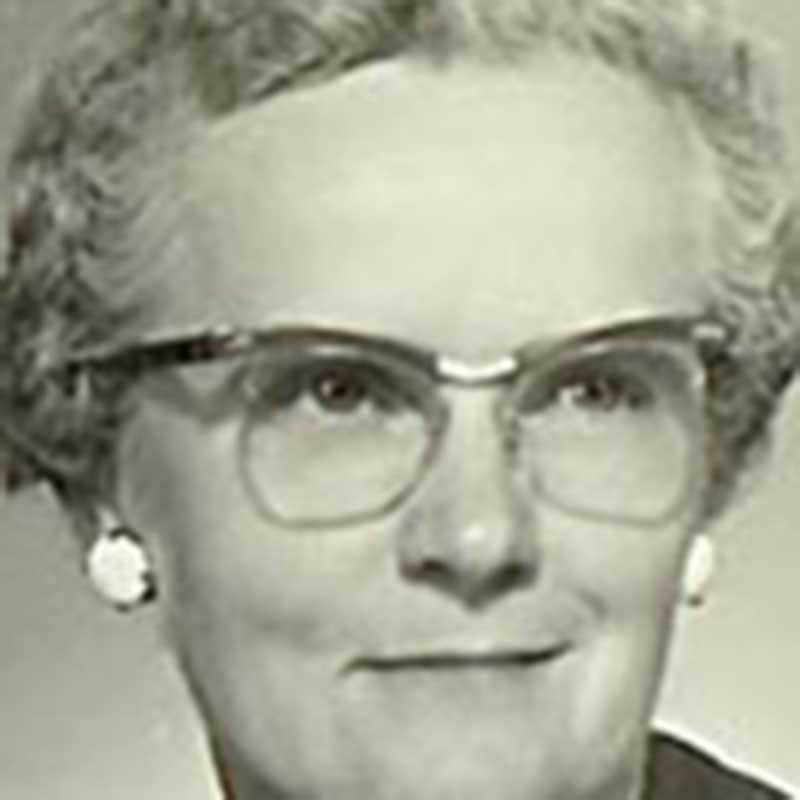
“A teacher is like a candle. It consumes itself to light the way for others” ~Author UnknownJenette Roberts (1907-2005) was born in Tacoma, Washington to Harry Edward and Nettie Clark Roberts. Jenette was the elder sister to H. Clark Roberts and Howard Roberts. Together they grew up on a farm in the Yakima Valley.
Jenette attended Whitman Grade School in Tacoma, Washington and graduated from Outlook High School in 1925. She attended Normal School in Cheney, Washington prior to her entrance to Washington State University where she graduated with a B.A. degree in 1928. Upon her graduation, Jenette was presented the Washington State History Honorary Scholastic Cup Award. She was a member of Phi Beta Kappa and also received the Sigma Alpha Epsilon, Phi Kappa Phi, and Gamma Nu honoraries. Jenette received her Master’s degree in 1939 from the University of Oregon with a thesis about one of Salem's early leading citizens, entitled "Asahel Bush, Pioneer, Editor, Politician, and Banker." She was a member of the National Society of the Daughters of the American Revolution.
Jenette began her teaching career in Latin, English, and Spanish at Auburn High School in Washington from 1929 to 1932. She taught at Parrish Junior High from 1933 to 1935, North Salem High School from 1935 to 1974, and Willamette University from 1965 to her retirement in 1974. Jenette’s quest for learning never ceased. Notes of gratitude from students followed Jenette throughout her life. (Donna Selby)Magister docendo perenne movet. Dicere non potest quantum valeat.
“A teacher affects eternity. He can never tell where his influence stops.” - Henry AdamsEducation
- B.A., Washington State University
- M.A. in History, University of Oregon
-
Professor of Classics at Willamette 1937-1942
Biography
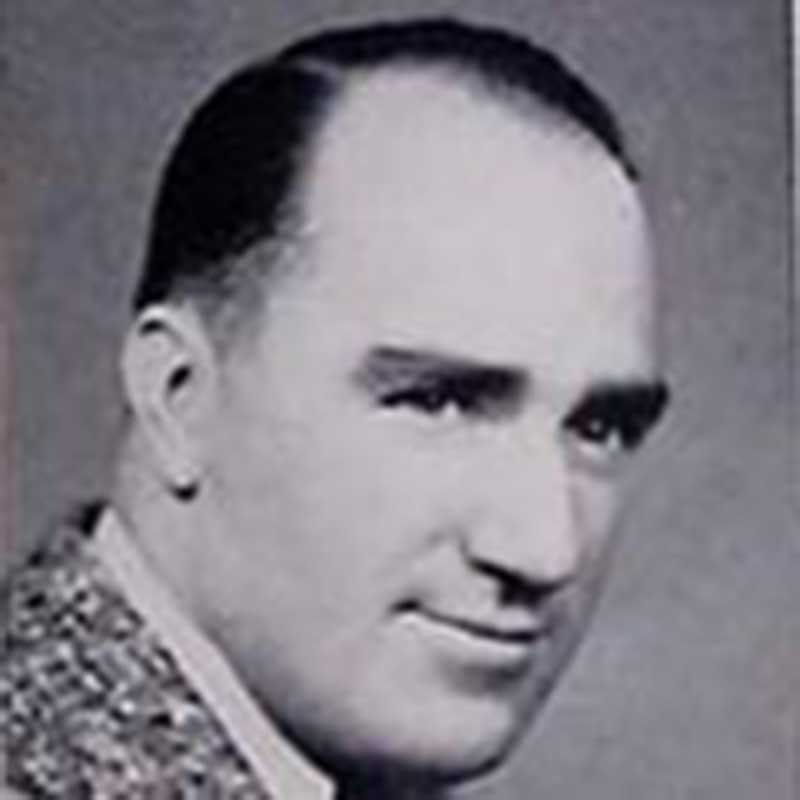
Robert Franklin Thompson was one of several instructors teaching Classics-related courses during the 1930s, but the only one who was actually hired as a Professor of Classics.
He received his A.B. from Nebraska Wesleyan University, his B.D. and M.A. from Drew University. His 1934 M.A. thesis was entitled, The Doctrine of the Incarnation. In 1940, he also completed his Ph.D., again at Drew University, this time with a 510-page volume on Peter Taylor Forsyth, a Pre-Barthian. In addition, he had studied abroad. He was a Delephlain-McDaniel Fellow of Mansfield College, Oxford University, and a graduate student at the University of Zurich and the University of Basle in Switzerland.
Upon joining the Willamette faculty, he taught a series of courses in Classical Civilization and recruited a number of Classical Civilization majors.
Promoted to Associate Professor of the Classics in 1937, he served as Professor of Classics and Dean of Freshmen from 1939-1942. His residence in Salem was at 340 E. Lincoln St.
In 1942, Professor Thompson was invited to become the President of the College of Puget Sound, now the University of Puget Sound, where he enjoyed an exceptionally long and successful tenure, until his retirement in 1973.
Education
- A.B., Nebraska Wesleyan University
- B.D., Drew University
- A.M., Drew University
- Ph.D., Drew University
-
Instructor in Latin at Willamette 1939-1942
Biography
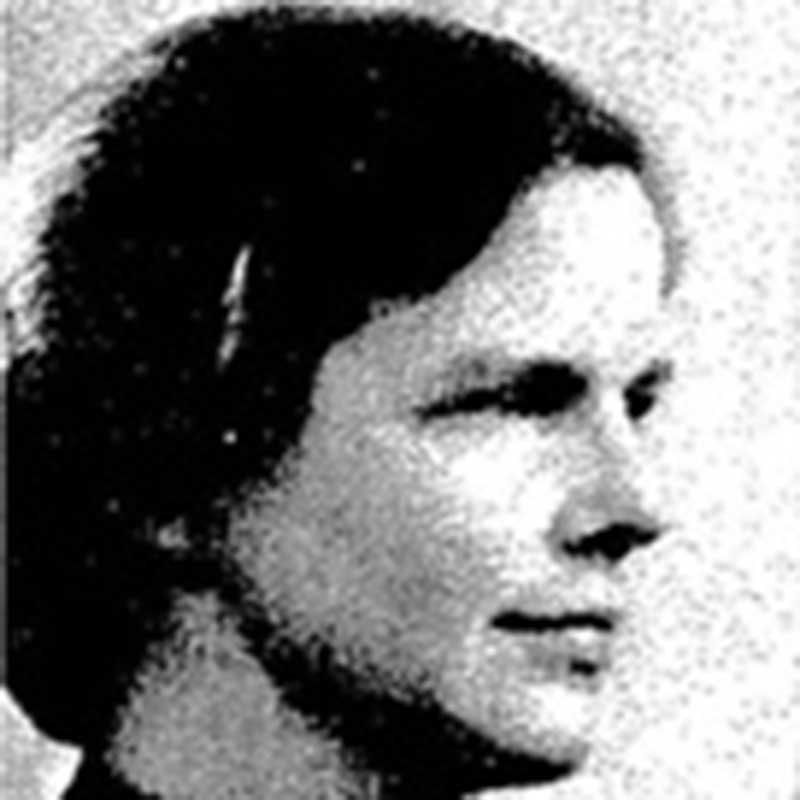
Helen Yeomans Luther was born as Helen Eva Yeomans on June 18, 1909 in Spokane, WA. She earned both her Bachelors and Masters degrees at Stanford University, where she studied Latin and Greek.
After completing her Masters, she married Dr. Chester F. Luther in September 1931. A few years later, they both moved to Salem, OR, where Chester became a math professor at Willamette University and later dean. They had three children, Robert, Norman, and Marilyn.
From 1939-42, Helen served as a Latin Instructor at Willamette. Helen initiated a Classical Club and became its advisor. The 1940 Wallulah year book shows her and her husband reclining at a Roman banquet with several Willamette students.
Helen Yeomans Luther died on June 13, 1997 in Salem, three years after her husband. Willamette University's Helen Yeomans Luther Foreign Language Scholarships are named in her honor.
Education
- A.B., Stanford University 1930
- A.M., Stanford University 1931
-
Instructor in Latin at Willamette 1929-1940
Biography
Edna Jennison Ellis received her A.B. from Willamette University in 1924. She began teaching Latin at Willamette while pursuing her M.A. at Willamette's Kimball School of Theology, which she received in 1930. She served as a Latin instructor at Willamette University for 11 years, from 1929 to 1940. Starting in 1946, she worked as an English instructor at the University of Oregon in Eugene.
In 1984, Edna Jennison Ellis received a Distinguished Alumni Citation from Willamette University.
Education
- A.B., Willamette University
- A.M., Kimball School of Theology
-
Professor of Latin and Greek 1924-1926
Biography
Dorothea Clinton Woodworth was born in Portland, Oregon, January 27, 1893. Her mother was for many years secretary to the Superintendent of Schools and then an instructor in one of the high schools of that city. As a girl, Dr. Woodworth gave promise of the successful career to come. She graduated from Portland Academy at the age of sixteen, and from Bryn Mawr four years later. After teaching at Roosevelt High School, Portland, Oregon, for nine years, she enrolled for graduate work at the University of Chicago in 1921. There she took a great deal of work with Professor C.D. Buck. In 1922 she received her M.A. and in 1924 her Ph.D. in Latin with minors in Greek and Linguistics. While at Chicago she was married to a friend of her girlhood days, Lewis A. Woodworth. She had three sons and a daughter, all of them to become people of outstanding personalities. At Chicago she gave instruction in the Extension Division and was a teaching assistant in Classics. On attaining the doctorate she served on the staff of Willamette University, Salem, Oregon. In 1926 she was called as an instructor to the Department of Classics at the Los Angeles campus of the University of California. In 1928 she became an assistant professor.
Professor Woodworth was thoroughly devoted to her undertakings. She gave herself wholeheartedly to her students. In high school she had been progressive in the sense that she “sold” her subject; she kept this up in college. Her success in handling student clubs was noteworthy. She was counselor for many years. She stimulated a love of research. Many of those who had studied with her went on to Berkeley, Yale, and Chicago. For years after graduation many of her students kept up a correspondence that she faithfully acknowledged. She taught in the Sunday school of her church.
In spite of Dr. Woodworth's heavy duties at home and at the University, she did not neglect her scholarly interests. She regularly attended the meetings of the Classical and Philological associations, often reading papers. She was on the executive committee of the latter for the years 1929-1930 and 1932-1933. She had no mean record of publication. Besides several lengthy reviews, she published six significant articles in classical periodicals: Function of the Gods in Vergil's Aeneid, Classical Journal, November, 1930; “Studies in Greek,” Classical Philology, July and October, 1932; “Lavinia: An Interpretation,” Transactions and Proceedings of the American Philological Association, 1931; “Unit of Sense,” Classical Journal, March, 1937; “Meaning and Verse Translation,” Classical Journal, January, 1938.
Professor Woodworth died on August 10, 1944.
(obituary for Prof. Woodworth written by her UCLA colleague, Prof. Arthur P. McKinlay)
Education
- B.A., Bryn Mawr 1913
- M.A., University of Chicago 1922
- Ph.D., University of Chicago 1924
Publications
• "Lavinia: An Interpretation." Transactions and Proceedings of the American Philological Association 61 (1930) 175-194.
The function of the gods in Vergil's Aeneid." Classical Journal 26.2 (1930) 112-126.
"Studies in Greek Noun-Formation: Dental Terminations VI.1."Classical Philology27.3 (1932) 255-267.
"Studies in Greek Noun-Formation: Dental Terminations VI.2." Classical Philology27.4 (1932) 343-352.
"The Unit of Sense, with Especial Reference to Translation." Classical Journal 32.6 (1937) 326-338.
• "Meaning and Verse Translation." Classical Journal 33.4 (1938) 193-210 (on Catullus 11).
-
Professor of Latin at Willamette 1909-1911
Biography
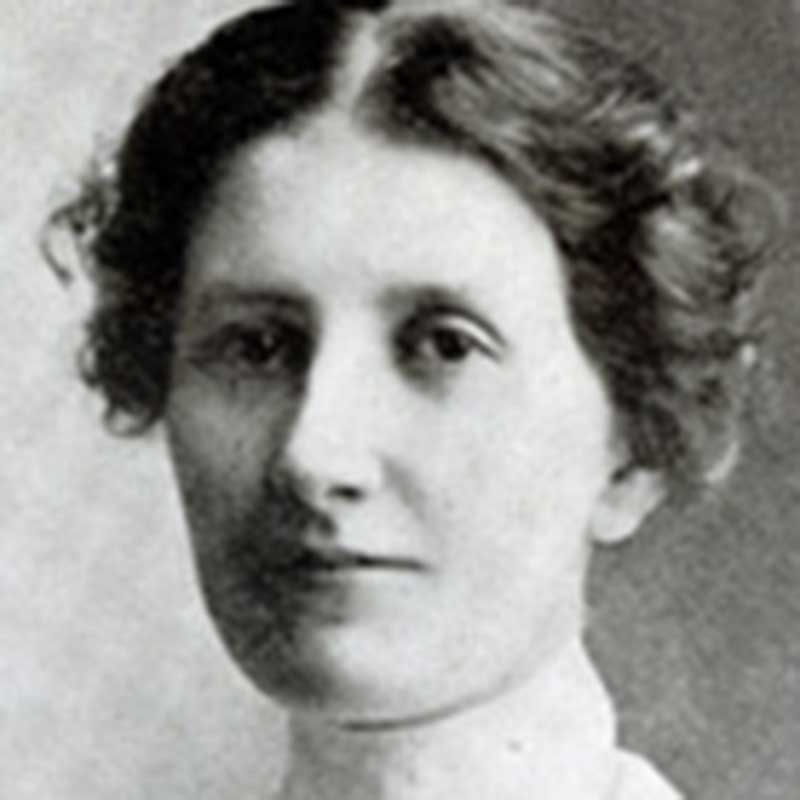
Mary Paulding Barnett studied at Kansas State Teacher College of Emporia from 1891-1894 and graduated with an A.B.
She continued with graduate work at the University of Minnesota (1904), at Stanford University (1905), at the University of California (Summer Sessions 1906, 1910), and at the University of Chicago (1907-1908, 1910), from where she received an M.A. in 1908.
She taught Latin, Greek, and later Spanish at a large number of high schools and colleges in seven U.S. states. Before coming to Willamette University, she had taught in Illinois, Kansas, Missouri (Tarkio College), Wisconsin, Montana, and California.
At Willamette University, she spent two years (1909-1911) as a Professor of Latin, before moving on to Mills College in Oakland, California, where she stayed for several years. In 1922, she was a Professor of Latin and Greek at Hedding College in Abingdon, Illinois. The college was closed down, however, in 1924. Mary Barnett moved on to Monmouth College in Monmouth, Illinois, where she was teaching Spanish at the time of her death from pneumonia on Feb. 14, 1930.
Education
- A.B., University of Kansas 1897
- A.M., University of Chicago 1908
-
Professor of Ancient Languages at Willamette 1907-1909
Biography
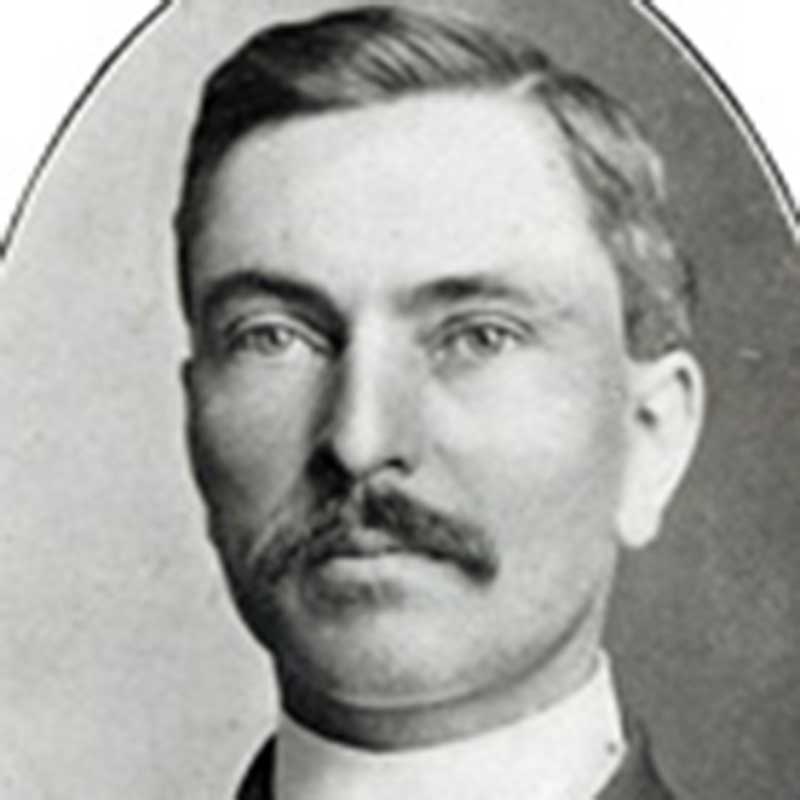
Edwin Sherwoood (Nov. 8, 1867 - Feb. 13, 1921), son of a physician in Cincinnati, Ohio, was a Methodist minister and a classmate of Willamette's President Carl G. Doney. After graduating from Drew Theological Seminary in Madison, New Jersey, he spent one year (1894-1895) on a fellowship at the University of Leipzig, Germany, doing post-graduate work. Having returned to the United States, he became a pastor in Somerset, Ohio. During this time, he delivered a series of popular lantern-slide lectures entitled "Land of the Rhine." The lantern-slides and his lecture notes were recently donated by his great-granddaughter Ellen Sedell to Willamette's University Archives.
In 1907, Sherwood accepted a position at Willamette University to teach Greek and Latin.
After two years, however, he was appointed Professor of Biblical Interpretation at Willamette's newly founded College of Theology (later re-named the Kimball School of Theology), where he became Secretary of the Faculty and Treasurer of the Kimball School. Married with two sons and two daughters, Edwin Sherwood died unexpectedly in 1922 "as the result of exhaustion from overwork," at the early age of 53.
Robert S. Eakin, one of his former students, commented, "I had ... great admiration for the learning, ability, and fairness of Prof. Sherwood, now deceased, who was at one time instructor in Greek and advanced Latin in the College of Liberal Arts. From none of my classes did I derive more pleasure or profit than from those under Prof. Sherwood."
Education
- A.B., Ohio Wesleyan University 1890
- M.A., Ohio Wesleyan University 1890
- M. Div., Drew Theological Seminary 1894
- D.D., Ohio Wesleyan University 1913
-
Professor of Ancient Languages at Willamette 1906-1937
Biography
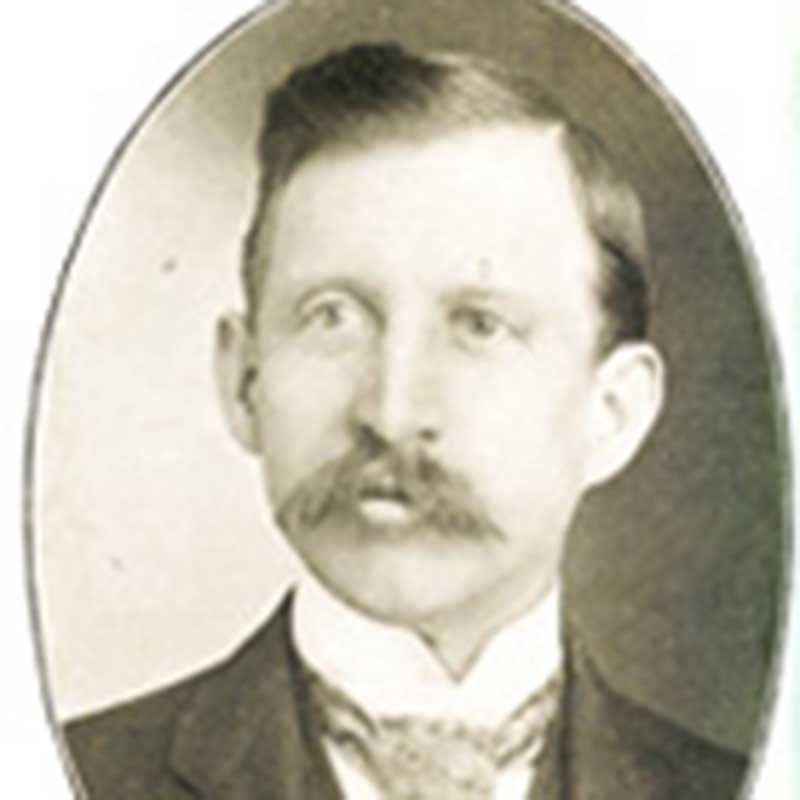
William Elwood Kirk (1868-1937) attended Nebraska Wesleyan University (today the University of Nebraska at Lincoln). In 1895, he received his A.B., in 1897, his M.A. from there; according to an old Wallulah yearbook, he also pursued graduate studies at Columbia University from 1902-1905. In 1901, he married Iva May Howard. Five years later, the couple moved to Salem, Oregon, where Kirk taught Greek and Latin at Willamette University from 1906 until his death in 1937.
Kirk served twice as president of the Classical Association of the Pacific Northwest (CAPN), in 1920 and in 1932.
The manuscript collection of the University of Oregon library contains 428 letters Kirk exchanged with his wife whenever she visited her parents in Pioneerville, Ohio, and other family mementos (#561).
Kirk lived at 1322 State St in Salem.
Education
- A.B. & A.M., Nebraska Wesleyan University
Publications
• Rhetorical Figures in the Greater Poems of Vergil, M.A. Thesis, Univ. of Nebraska at Lincoln, 1897 (562 p.).
• "Practical Idealism in Education." Oregon Teachers Monthly28 (1923), 1-5.
-
Professor of Latin and History at Willamette 1902-1903
Biography
George Alfred Warfield, born 24 Nov. 1871 in Warren County, Illinois, received his Bachelor degree from the University of Nebraska at Lincoln (1896). Two years later, he also acquired a law degree two years later and was admitted to the bar in Nebraska. He did postgraduate work at the University of Wisconsin, the University of California, and the University of Oregon in Eugene, from which he received his Masters Degree in History and Economics in 1909. In 1914, he pursued a course in social economy at Washington University at St. Louis, Missouri.
From 1902 to 1903, he taught Latin and History at Willamette University. Afterwards, he taught Economics and History at the College (now University) of Puget Sound. Later, he worked at the Wesleyan University in Mitchell, South Dakota, and the Russell Sage University, where he became professor of sociological economics and commercial science. Finally, he joined the University of Denver, serving as the head of the economics and sociology and liberal arts department, and since 1913 as the dean of its School of Commerce, Accounts and Finance. His worked there earned him a 3 page entry into volume 4 of Wilbur Fiske-Stone's History of Colorado(text).
Education
- A.B., Nebraska Wesleyan (now University of Nebraska at Lincoln) 1896
- LL. B., University of Nebraska 1898
- A.M., History & Economics, University of Oregon, 1909
-
Professor of Greek and Latin at Willamette 1895-1898
Biography
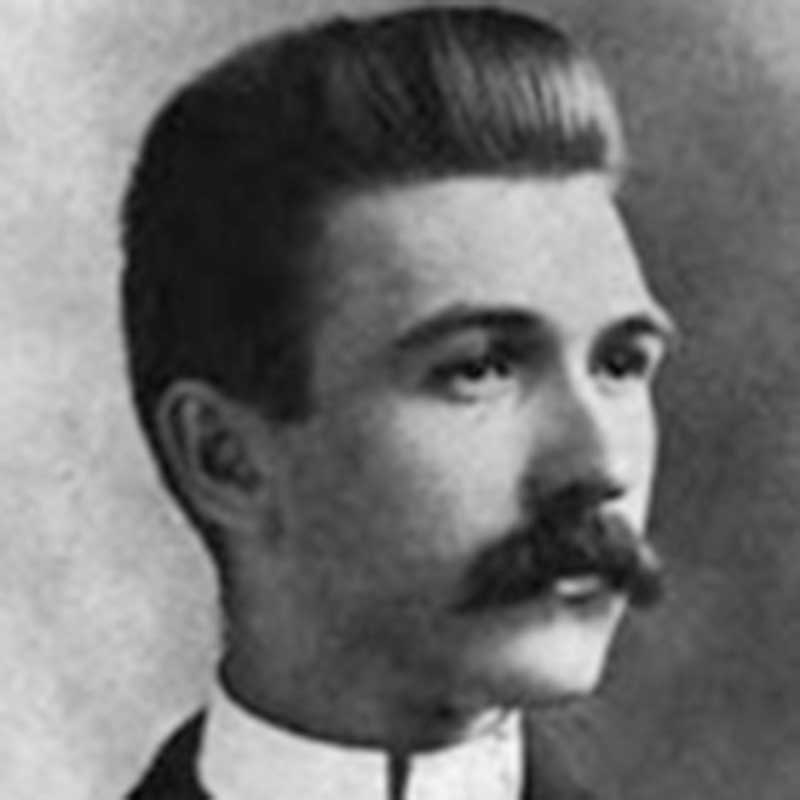
Frederic Dunn (1872 - Jan. 7, 1937) was born in Eugene, Oregon. He received his education at the University of Oregon and Harvard University.
Between 1895 and 1898, he served as Professor of Greek and Latin and Secretary of the Faculty at Willamette University. During this time, he organized a Classical Club, a Faculty Lecture Course, and was President of the local Epsworth League, the youth organization of the Methodist Episcopal Church.
In 1898, he moved to the University of Oregon, where he was professor of Latin and head of the Latin Department until his retirement in 1935. There, he also began to publish a series of articles, mostly on coins and on Julius Caesar. In 1912, Prof. Dunn was elected President of the largest regional Classics association, the Classical Association of the Midwest and South (CAMWS).
In Eugene, Prof. Dunn joined the Masons and the National Society of the Sons of the American Revolution. In 2016, the final report of a historians' commission charged by the University of Oregon president to investigate Dunn's life concluded that he also led the virulently anti-Catholic activities of Eugene's chapter of the Ku Klux Klan in the 1920s. Based on this report, the University of Oregon's Board of Trustees decided to remove Dunn's name from one of the university's residence halls.
Education
- A.B., University of Oregon 1892
- A.B., Harvard University 1894
- A.M. University of Oregon 1898
- A.M. Harvard University 1903
Publications
• "Translations of Horace, Odes 1.38." Univ. of Oregon Monthly Nov. 1904.
• "The Helvetian Quartet: Orgetorix, Nammeius, Verucloetius, Divico." Classical Weekly2 (1909) 178-81, 186-88, 194-95.
• "A Study in Roman Coins of the Empire." University of Oregon Bulletin. N.S. 7.3 (1909) (23 p.),
reprinted inRecords of the Past9.1 (1910) 31-52 and
The Numismatist29.5 (1916) 201-206; 29.6 (1916) 253-258; 29.7 (1916) 301-306.• "The First Steps in the Deification of Julius Caesar." TAPhA40 (1909) 27-28.
• "The Julian Star." Classical Weekly3 (1910) 87; repr. in Popular Astronomy18 (1910) 164-165.
• "The Historical Novel in the Classroom." Classical Journal6.7 (Apr. 1911) 296-304.
• "Benjamin Franklin Before the Revolution." Annual of the Oregon Society of the Sons of the American Revolution, Nov. 1911.
• "The Last of the Sequani: A Reconstruction." University of Oregon Bulletin. N.S. 9.4 (Dec. 1911) (14 p.)
• "The Coins of Antoninus Pius." Records of the Past10 (1911) 17-33, 77-91, 213-226.
• "Juvenal as a Humorist." Classical Weekly4.7 (1910) 50-54.
• "By-paths in Caesarian Bibliography." Classical Weekly9 (1911) 65-70.
• "A Coin of Trajan Decius." Classical Weekly5 (1912) 130-32.
• "The Betrothed Whom Caesar Rejected." Univ. of Oregon Extension Monitor1.2 (March 1913) 2-4.
• "Rome, the Unfinished and Unkempt." Classical Weekly10 (1914) 312-322.
• "Roman superbiaon the Imperial Coinage." Numismatist30 (1916) 141-45, 189-92.
• "Julius Caesar in the English Chronicles," The Classical Journal Vol. 14.5 (1919) 290-291.
• "Julius Caesar at the Winter Solstice." Social Science4 (1929) 48.
-
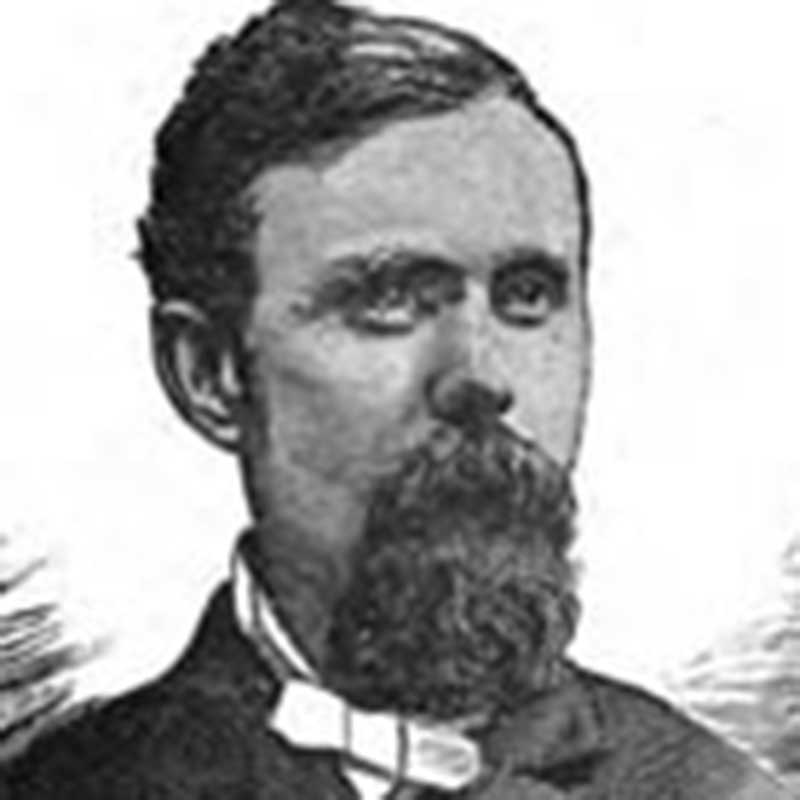
Professor of Greek at Willamette University, 1879-1880; 6th President of Willamette University, 1880-1891
Biography
Thomas Van Scoy (1848-1901) was born in Indiana. After serving in the Civil War, he entered Northwestern University in Evanston, Illinois. He left the university in his sophomore year to become principal of Brooktown Academy, the high-school from which he had graduated himself. After three years, he returned to college and graduated in 1875. Afterwards, he worked as a Methodist minister in Rennsaler, Ind. for the next three years. Concerned, however, about the health of his first wife, Jennie, he accepted a position as Professor of Greek at Willamette University in 1879 (despite the change in climate, she died three years later).
After only one year in Salem, Van Scoy was elected president of Willamette University and served in that capacity until 1891. During that time, he bought the house of Chloe Clark Wilson, the first instructor of Willamette's predecessor institution, the Oregon Institute, at his own expense and turned the house into an academic building for the new Women's College. The remodeled building was named Lausanne Hall, after the boat that carried the "Great Reinforcement". In 1883, Van Scoy established Willamette's College of Law.
In 1891, Van Scoy resigned from Willamette's presidency to become professor of ancient languages and dean of Portland University. In 1898, he was appointed President of Montana Wesleyan University, a position he held until his death at age 53.
Education
- A. B., Northwestern University, 1875
- D. D., University of the Pacific, 1884