
Community Participants:
Come see our exhibit celebrating Oregon white oak, Bush’s Pasture Park’s Oregon White Oak Legacy, July 1-August 27 2022.

Willamette University Professors Karen Arabas, Joe Bowersox & David Craig hope to salvage data from some of the hundreds of old Oregon oaks that have been damaged in the February 2021 ice storm. These trees are iconic in the Willamette Valley and contain valuable information in their tree rings about past climate and other environmental conditions.
Watch the Presentation to the Lord and Schryver Conservancy More Details
Save us a cookie: The very best sample would be a cookie from the tree, which is a 1”-3” thick round (or cross-section) of the trunk taken as close to the base as possible that includes the center and the bark. There’s no rush to help so long as you have time to save a piece of your oak or oaks as you clean up. Along with your cookie, we would appreciate the following information documented on a piece of paper in a plastic baggie thumbtacked to the cookies:
Drop off: Leave cookies any time in front of the Olin Science Building at 180 Winter Street SE and pile them along the grass of the north entry wall.
Pick up: Send an email to oregon-oaks-group@willamette.edu and we will be happy to come to collect cookies from you. You may also call our lab at 503-370-6604. Please leave us a message including the best way for us to get in touch with you.
Share the story of your oak tree. We are also interested in learning about the history of your oak tree, what it has meant to you, and how the storm damage has affected you. We’d like to gather these stories and post them along with photos of your oak trees on this web page. If you are interested in participating, please contact us at the email for phone number above.
This ‘Conserving Oregon White Oak in Urban and Suburban Landscapes’ document is a compendium of instructional materials developed in 2016-17 by Mark Griswold Wilson and Ted Labbe for a workshop series Landscaping with Oregon white oak for residents of urbanizing Willamette Valley.
| July 1, 2022 | Thanks to the hard work of over 50 Willamette students we’ve made great progress in the Oak Salvage Lab this year. We have collected over 249 samples from 92 community members, counted 17,168 tree rings and found the oldest tree in our collection lived nearby in Bush’s Pasture Park. We are currently working on measuring ring widths, creating tree ring chronologies, and updating our interactive map with information about the samples we’ve collected. Our research is part of an exhibit, celebrating Oregon white oak, Bush’s Pasture Park’s Oregon White Oak Legacy at the Salem Art Association’s Bush Barn Art Center in Salem from July 1st - August 27th. |
| April 5, 2022 | Five undergraduate Willamette students are working in the Oak Salvage Lab during the spring semester. Leila Fischer, April Holland, Grace Shiffrin, Blake Carlile, and Sarah Menke have been working on various parts of sample processing including sanding, scanning, measuring, and categorizing the hundreds of cross sections we’ve collected. If you are interested in hearing more from the students and learning about the project, please join us for our Student Scholarship Recognition Day on April 13, 2022 at 2pm. We will be holding a quick lecture in Collins Hall (Room 218) and having an open lab session where members of the public can view the samples, equipment, and ask questions in a more informal setting until 4pm. |
| October 4, 2021 | Now that the fall semester has begun, there are several classes in the Environmental Science/Biology departments that are actively supporting this project. Dendrochronology: Prof. Karen Arabas, Environmental Science Oak Salvage Oral Histories: Prof. Karen Arabas, Environmental Science Forest Management & Policy: Prof. Joe Bowersox, Environmental Science |
| September 20, 2021 | We spent the summer collecting, labeling, logging, drying, reducing, and mounting the samples (cookies) so many of you have donated to the project, and we now have 211 officially in the database. We estimate that there are still another 40-50 cookies out there that we need to pick up - thanks for your patience if you are one of the folks waiting for us! We are still accepting samples from the Willamette Valley, so if you are interested please check out the ‘Contribute to this Project’ link on our website; we would be happy to have your oak cookie as part of this project! Here are some photos of our process. drying in the lab (see photo!) we are testing several different ways to prepare them for analysis. This involves sanding and/or planning the cookie surface so that it can be photographed. 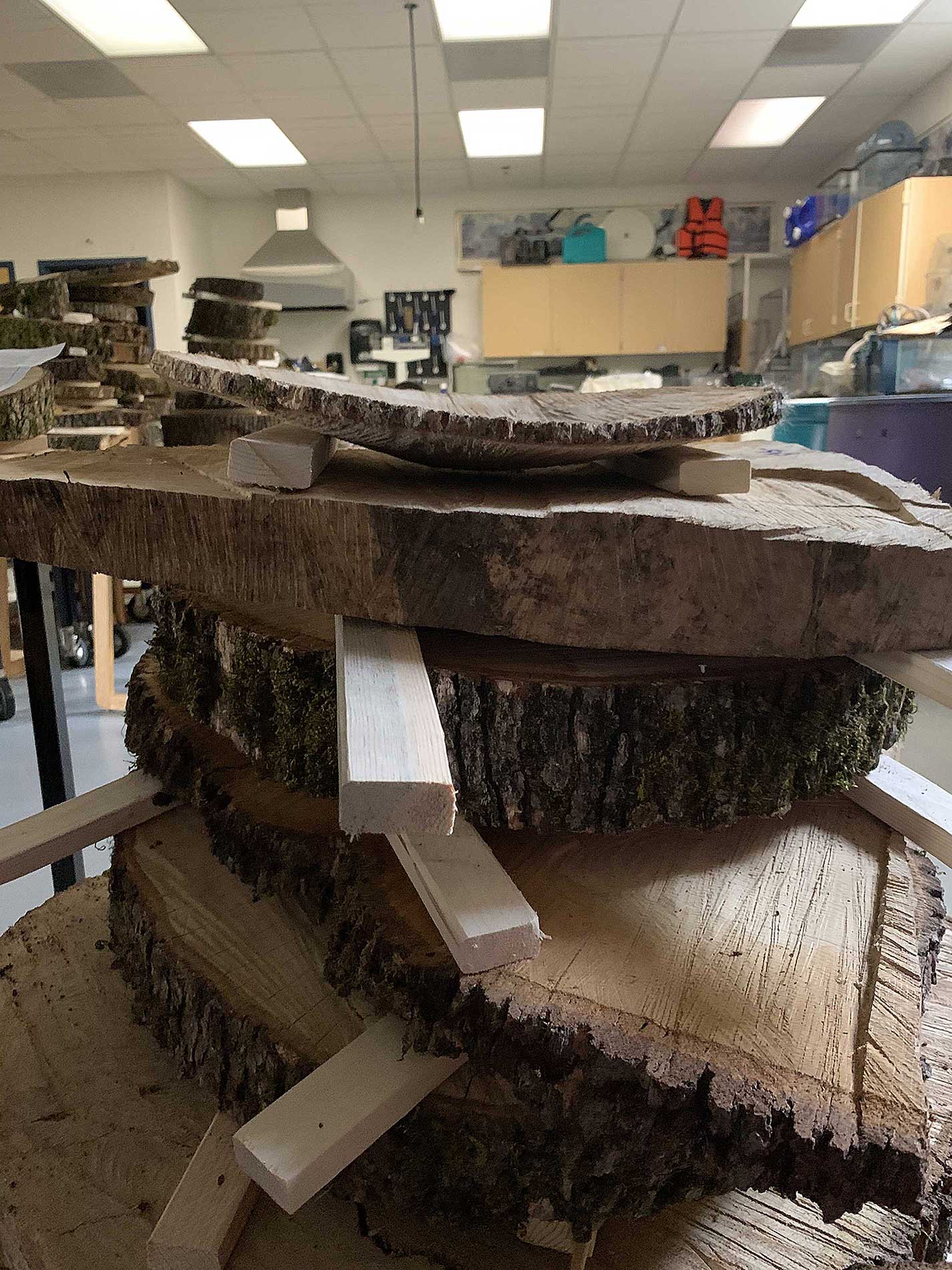 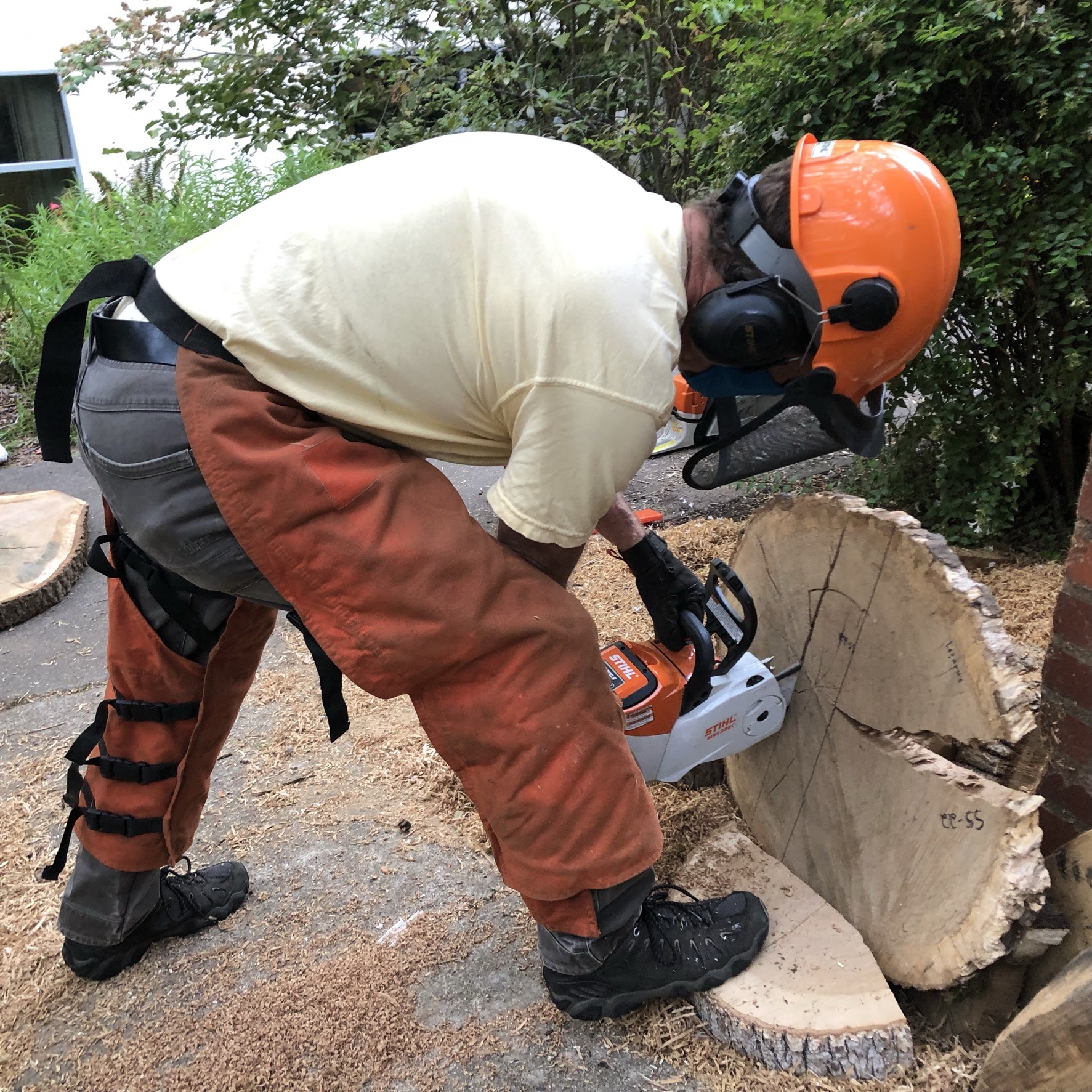 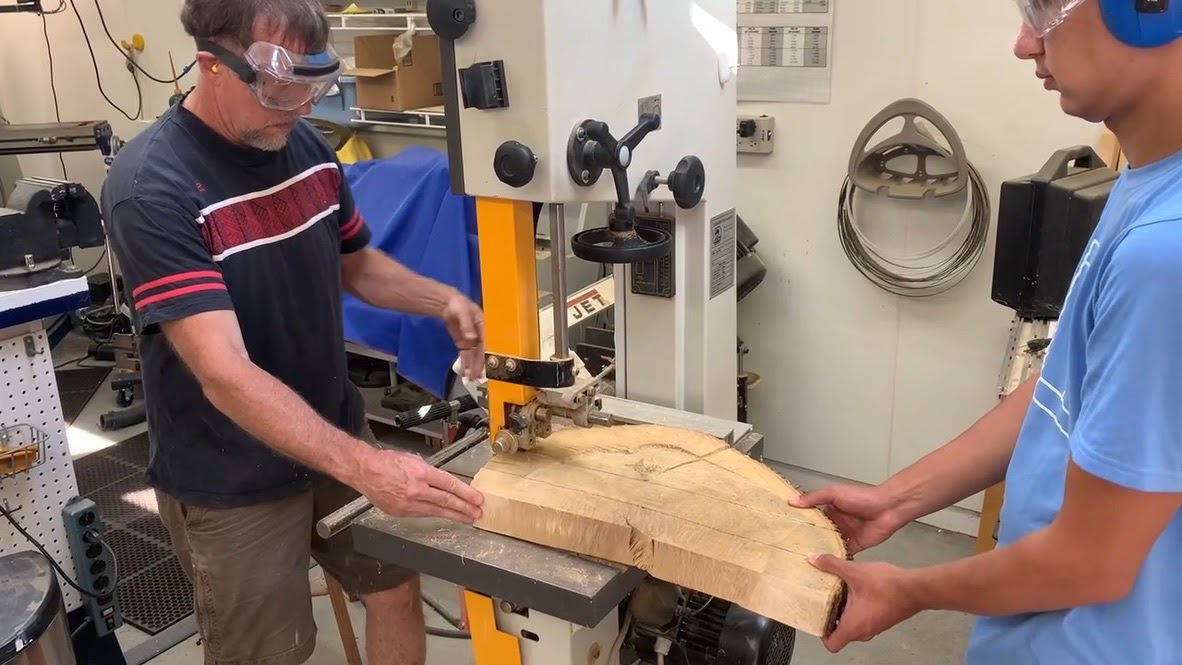 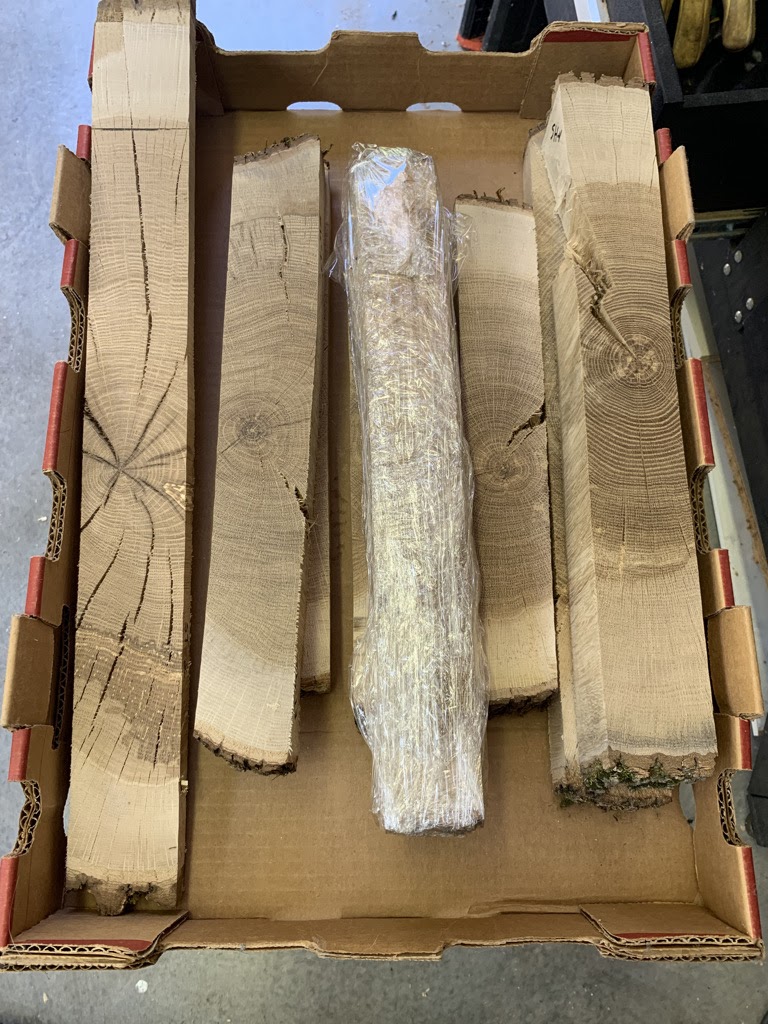 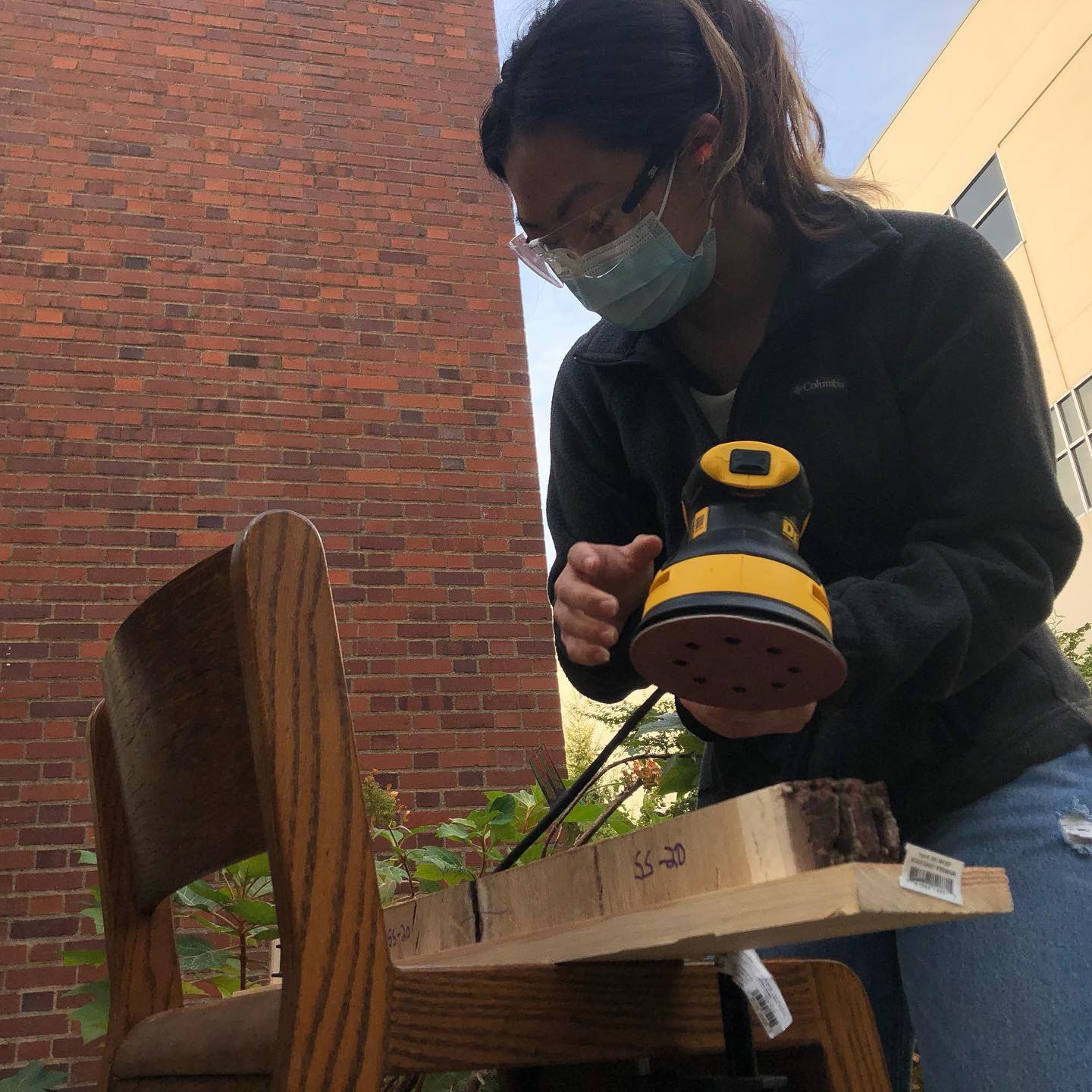 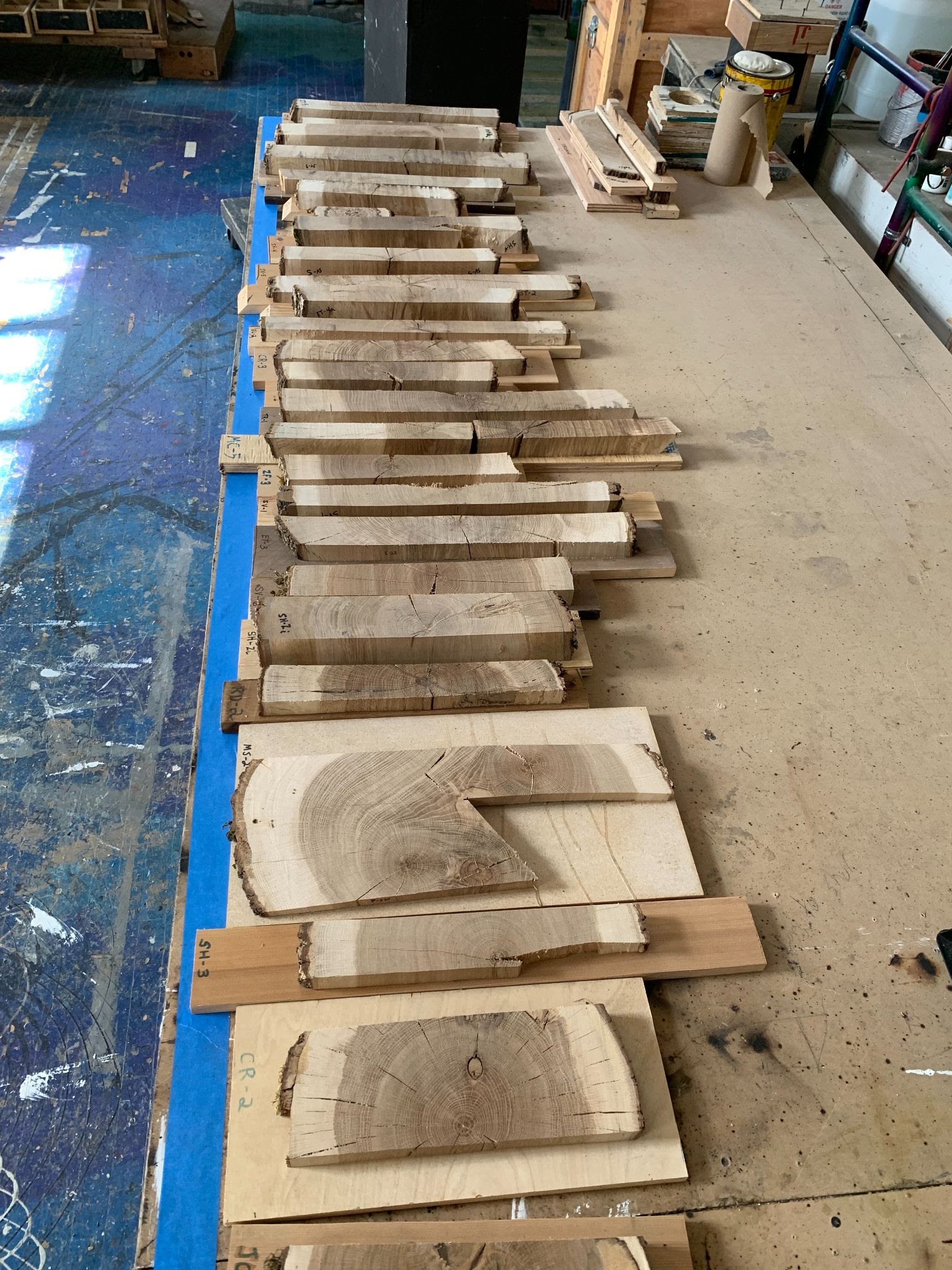 |
| May 28, 2021: Cookie Processing | We continue to collect, label, log, and dry all the samples (cookies) so many of you have contacted us about, and we now have 128 officially in the database. We estimate that there are still another 40-50 cookies out there that we need to pick up - thanks for your patience if you are one of the folks waiting for us! As the cookies are drying in the lab (see photo!) we are testing several different ways to prepare them for analysis. This involves sanding and/or planning the cookie surface so that it can be photographed. We plan to use high-resolution digital images of the cookies in a web-based system to count and measure rings. |
| April 2nd, 2021: The Oak Salvage Project is underway! | Professors Karen Arabas, Dave Craig, and Joe Bowersox are working with 6-8 students from Environmental Science and Biology to get the project off the ground. Since the ice storm in February, we have collected over 100 samples of Oregon White Oak from the Salem area and Willamette Valley. Currently, we are in the process of identifying, labeling and logging all of our samples. The samples need time to dry and will be prepared for analysis over the summer and students will begin analysis in the fall. Please check back for updates on our progress. We are still accepting samples from the Willamette Valley, so if you are interested please check out the Contribute to this Project page on our website; we would be happy to have your oak cookie as part of this project! |
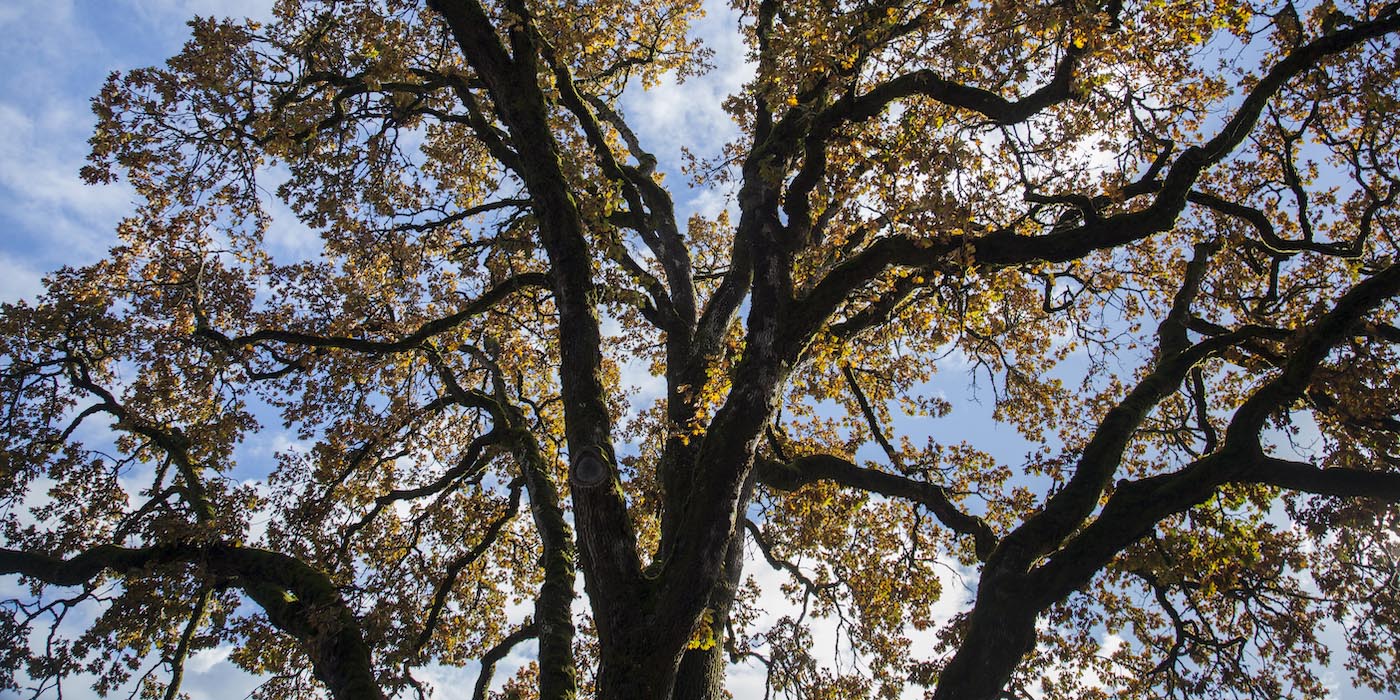
The Oregon white oak, or Garry oak (Quercus garryana), is native to the Salem area can grow up to 100ft and live for up to 500 years. Many of the Oregon oaks around Salem are large with rounded canopy shapes and long, far-reaching lower branches covered in mosses and lichens. Oregon White Oak is easily identified by its leaves with rounded lobes. In the wintertime, trees are bare. It produces a typical acorn, and the bark is light gray with thick furrows and ridges.
Oregon White Oak Quercus Garryana