Glossary: African Cinema
Take
The length of film exposed between each start and stop of the camera.Thus, a shot that goes on for a long time without an edit is called a “long take.” During filming the same piece of action may be filmed from the same camera setup several times (e.g., trying for different emotions on the part of the actors); each time is called a take.
Shot
A take, in part or in its entirety, that is used in the final edited version of the film. In a finished film we refer to a piece of the film between two edits as a shot. Whereas an edit can take the story to a different time or a different place, the action within a shot is spatially and temporally continuous. We can therefore think of a shot as a “piece of time.”
Scale
The “bigness” of the subject in a given shot, determined by the camera’s distance from it.
Extreme close-up (ECU)
Closer shot than a close-up; a single detail occupies most of
the screen image. e.g., a mouth, a gun. Sometimes called an “insert.”
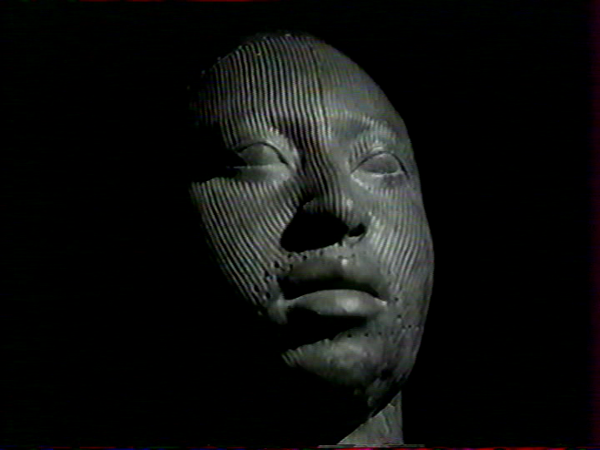
Close-Up (CU)
The camera is close to the subject, so that when the image is projected most of the screen shows a face and its expression, or some relatively small part of a larger whole.
Medium close-up (MCU)
Shot whose scale is between MS and CU: a character shown from the chest up.
Medium Shot (MS)
A human subject in MS is generally shown from the waist up; background begins to be visible and potentially important.
Medium Long shot (MLS)
Human subject is shown from the knees up. Also called an American Shot because Hollywood movies of the Thirties and Forties used it so often for dramatic action.
Long shot (LS)
The camera is a considerable distance from the subject(s) being filmed. The whole human figure from head to feet is included in the frame, with the surrounding environment very visible.
Extreme long shot (ELS)
The camera is very far away from the subject, giving us a broad perspective. Often used to create an “establishing shot,” setting up a new scene.
Camera Angle
The position of the camera (in terms of height from the ground) in relation to the subject being filmed.
Low-Angle Shot (LA)
The camera is positioned below the subject, and shoots upward at it. The effect is to make the subject look dominating, powerful, as if a child were looking up at an adult. An extreme low angle (ELA) would be an extreme variant.
Eye-Level Shot
The camera is located at normal eye level (five to six feet from ground level) in relation to the subject. Unless otherwise noted in the script, the camera will automatically be set up at eye level. When analyzing a scene, eye-level shots do not need to be indicated as such; the reader will assume that this is the position of the camera, unless otherwise indicated.
High-Angle Shot (HA)
The camera is positioned somewhere above the subject and shoots down at it. An extreme high angle would be an extreme variant. In a bird’s eye shot the camera is placed directly over the subject.
Dutch or Oblique Angle Shot
The camera is tilted so that on screen, the horizon appears to be tilted. Often used as a subjective shot to indicate stress, such as when a character is drunk or drugged.
Two-Shot
Medium or medium-long shot of two characters.
Three-Shot
Medium or medium-long shot of three characters.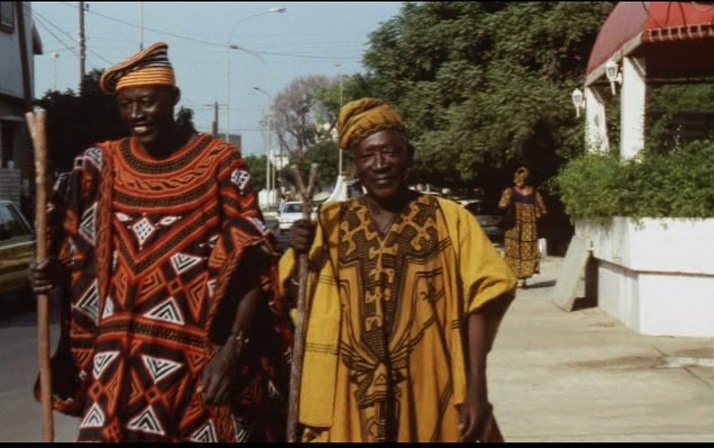
Moving Shot
Produced when the camera moves. When the camera remains fixed but swivels horizontally, it is called a pan; when it swivels vertically, it is a tilt. When the camera itself travels horizontally, it is a tracking shot. When the camera travels in closer to a subject or away from a subject, it is called a dolly shot. When the camera travels vertically, it is a crane or boom shot.
Crane Shot
Shot taken from a crane or boom (a sort of huge mechanical arm, which carries the camera and cameraman, and can move in virtually any direction–vertically, forward-backward, transversely, or in a combination of the above.
Tracking Shot
The camera is mounted on a dolly or truck, and moves horizontally on wheels or railroad-like tracks to follow the action being filmed or to survey the setting.
Dolly Shot
The camera is mounted on a dolly and moves forward (dolly-in) or away from (dolly-out) the subject.
Subjective Shot
The camera is positioned at an angle, or has something about its content (distortion through misfocus or strange color, etc.) to suggest that the shot is seen from the viewpoint of a particular character in the film, usually a character in an abnormal frame of mind (e.g., through drunkenness, or fear, or heightened sensitivity).
Long Take
A shot that lasts a long time (as distinguished from a long shot, where “long” refers to camera distance.
Mise-En-Scene
A theoretical term coming from the French, meaning, more or less, “staging.” In general, concerns everything within a shot as opposed to the editing of shots; includes camera movement, set design, props, direction of the actors, composition of formal elements within the frame, lighting, and so on. In film theory Mise-En-Scene is one of the two major categories of film analysis; “Montage” (Editing) is the other.