Iceland Summer Program 2026
DEADLINE: December 3, 2025.
See the How to Apply link for application due December 3, 2025.
The Icelandic Environments: Past, Present and Future summer program is an interdisciplinary program focused on how Iceland's volcanic hazards and climate have long shaped its landscapes and been part of the country’s cultural history.
For WU applicants: Take a look at the tips on the How to Apply page for links to the online study abroad application which is due by DECEMBER 3, 2025. Qualified WU students (Salem and PNCA) are given priority for this program.
For NON-WU applicants: Portal will open in October for space-available applications. While you're waiting, please work to get people to serve as your recommenders: academic advisor, faculty, and personal. Non-WU students must also have an official transcript sent to Willamette (900 State Street OIE, Salem, OR 97301). Deadline is the same for WU and non-WU applicants.
Summer programs are an opportunity to study abroad outside of the academic year. All offer credit, however each program is structured differently and planned by individual faculty members. The Willamette University Icelandic Environments summer program is an exciting opportunity to experience the wonders of Iceland in an interdisciplinary program.
***
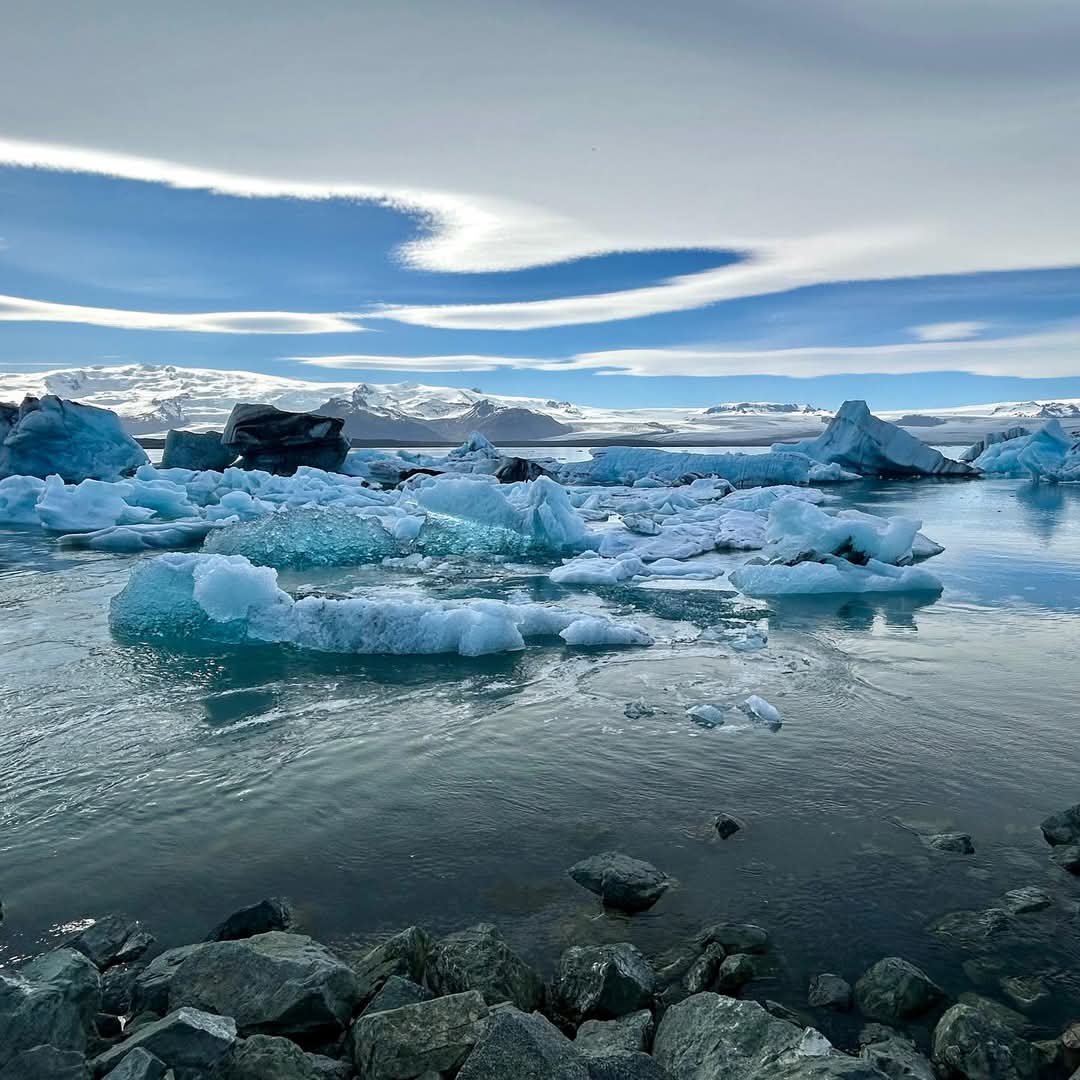
The Icelandic Environments summer program is an interdisciplinary exploration of Iceland’s past, present, and future. Iceland’s volcanic hazards and climate have long shaped its landscapes and been part of the country’s cultural history. This island nation is both a leader in climate action and experiencing the impacts of our rapidly warming world, making this an ideal destination to explore climate impacts and sustainability. During this program, students will explore Iceland’s changing environment through natural and social science perspectives and through its strong tradition of environmental writing. As they tour the island, students will observe Iceland’s wide ranging geology including volcanoes and volcanic rocks, glaciers, and fjords. In these diverse settings, students will explore the role of nature in Icelandic identity, and livelihoods. Students will also learn about Iceland’s renewable energy and Reykjavik’s sustainability and climate action planning.
The structure of this class is immersive, meaning students will be living and studying together and collaborating to keep each other safe and comfortable. While “class” times will be clearly-defined, students will be expected to participate to support the group’s wellbeing beyond the academic and creative work on the syllabus.
The program utilizes an interdisciplinary integration of the natural and social environmental sciences with the environmental humanities. We will engage these topics from multiple perspectives that allow for this integration. Most days will begin with a period of group instruction that will include an overview of topics and discussion of assigned readings, followed by a field trip or site visit, and then a debriefing discussion afterwards, resulting in a minimum of 4 hours of direct instruction each day.
Students will engage with a diverse set of materials for this course. From the environmental humanities this may include novels, short stories, poetry, folklore, and travel writing. From the natural and social sciences this may include academic articles, popular science & science-focused journalism, reports, and field guides. Written materials will be supplemented with films (to connect visually) and podcasts (to listen to and reflect on selected materials while moving in-country).
Students will be assessed based on participation, a travel notebook that will require responses in the form of fieldnotes, sketches, observations, reflections, and photos via daily prompts, and a final presentation. Students will be able to select if their final presentation is in the area of the natural sciences, social sciences, or environmental humanities, to allow them to engage more deeply with a particular area of interest.
Special Considerations |
|
Applicants for this summer program should understand that the program provides physical and emotional challenges common to the experience of studying abroad and some unique to Iceland. The safety of our participants is our top priority.
|
|
Location |
The Ring Road in Iceland with time in Reykjavik, Akureyri, the East Fjords, and the South Coast. Some key sites may include: Jökulsárlón Glacier Lagoon Geothermal Exhibition, Mývatn Nature Baths, and Vatnajökull National Park. |
|
Professors |
Prof. MINDY BUTTERWORTH (Environmental Science) holds a PhD in Geography, with expertise in the relationships between humans and the environment. Prof. KATJA MEYER (Environmental Science) holds a PhD in Geology, with expertise in climate science spanning temporal scales from the past to the future, as well as ocean environments. Prof. ANNETTE HULBERT (English, Writing Center) holds a PhD in English, with expertise in environmental literature, travel writing, and literary history. |
|
Credits |
This program is open to students from ALL majors but will be especially useful to students with interest in or background in Environmental Science/Humanities. ENVS: 282, Topics in Environmental Science (4.0 credits)
|
|
Grading |
Graded. Students will be assessed based on their participation, a travel notebook that will require responses in the form of fieldnotes, sketches, observations, reflections, and photos via daily prompts, and a final presentation. |
|
Dates |
2026 Dates: Tentatively May 13-26, 2026. Final dates will be set at acceptance. Arrival date: Accepted students will receive specific dates and arrival instructions at the pre-departure meeting during spring semester. Please DO NOT book travel until instructed by the OIE staff. |
|
Costs |
Program requires a minimum of 10 students to operate. Maximum is 16 students. 2026 cost: Tentatively set for $5,303 for WU students ($5,503 for non-WU students) based on 10 people. Cost can increase if we do not meet our minimum participation of 10 students. FINAL price will be set at acceptance.
|
|
Scholarships |
Students are eligible to apply for several scholarships coordinated by the OIE. Applicants will be invited to apply for scholarship consideration after the application deadline passes. |
To Apply: Current Willamette students will use the Willamette study abroad application portal. The program's name is Summer Iceland. The deadline is December 3, 2025 for summer 2026 participation.
For any questions or if you experience problems, please email oieadvising@willamette.edu.
All applicants can view general information about the Application Content and the Selection Criteria on the OIE website.
Information Session: Please see the events page for a list of study abroad information sessions.
For more information, email oieadvising@willamette.edu.
Non-Willamette students of all majors are welcome to apply.
Students from other universities (not Willamette) should use the "Non-WU Students - Apply" button. Specific questions about the program or the application? Email the Office of International Education at oieadvising@willamette.edu.
Since space is limited, priority is given to qualified WU students. We expect that non-WU students will be able to participate in the program each summer. Non-WU students are strongly encouraged to apply.
DEADLINE: December 3, 2025.
See the How to Apply link for application due December 3, 2025.