Roommate and Community Conflicts
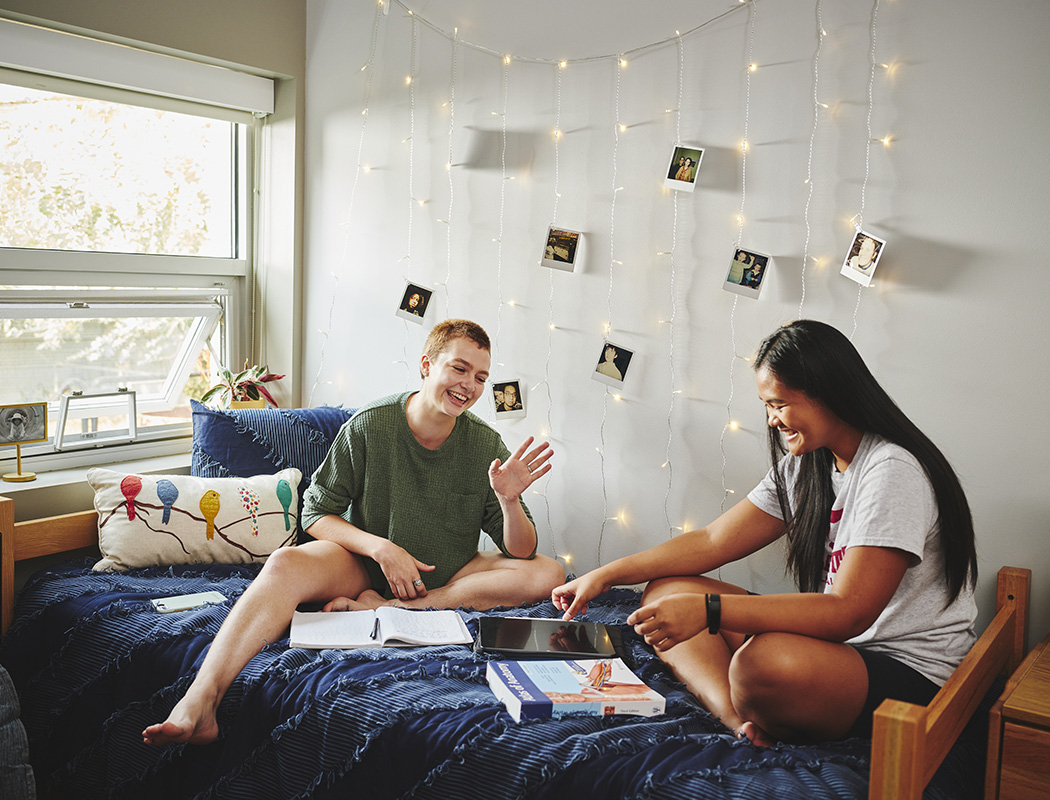
Because each person is unique with different needs and lifestyles, conflict arises when people live in close proximity and are interdependent on each other. We believe that the process of working through conflict with roommates and community members is an important part of the residential living experience — an opportunity to improve conflict resolution skills.
If you have a conflict with your roommate(s) or other community member(s) that you are unable to resolve, discuss your situation with a Resident Advisor. Your RA can help you develop a plan to address the problem or help have a conversation.
Usually, concerns can be successfully addressed through these methods. However, if after these efforts to resolve a situation are not successful, schedule an appointment with your Residence Life Coordinator to discuss your situation.
Residents requesting a room change must receive approval from their Residence Life Coordinator and complete the residential transfer process prior to moving. Room changes based on avoiding a roommate conflict will not initially be approved.
Behavior which intimidates or interferes with the quiet enjoyment of the premises by others, specifically but not limited to behavior which attempts to force a roommate to move out of the room, or to prevent a new roommate from moving in, and behavior which is disruptive in dining areas, classrooms or any other residential/campus facility, is prohibited.
-
Communicating with a roommate about shared expectations can help you navigate a conflict before it even begins. We recommend you have a conversation with your roommate before moving in that outlines expectations like what items will be shared, how you want to be notified about guests, and even how to bring up when something needs to change.
You'll be provided a formal opportunity to complete a Roommate Agreement after you move in. An early conversation is still recommended so differences can be settled before even sharing the space.
-
It's helpful to make a plan in how you will approach a roommate about something that is bothering you. Approaching your roommate in person, in a private space, while both of you have an appropriate amount of time is helpful to allow the opportunity to fully resolve an issue.
Being direct about an issue allows the other person to shift their behavior and potentially solve the problem. Revisiting and talking through additions to the Roommate Agreement can be a great way to ensure that agreements are written down in a mutually known place.
-
Your Resident Advisor is a great resource when it comes to navigating roommate conflicts. Your RA can not only talk through the issue with you to help fully understand what you're feeing, but can also practice conversations with you to better address your roommate directly.
As a next step, your RA can also facilitate a conversation between the residents of a room. The goal of this is to allow a neutral third party to provide a structured environment for residents to identify issues and come to mutual agreements about how to continue living with each other.